
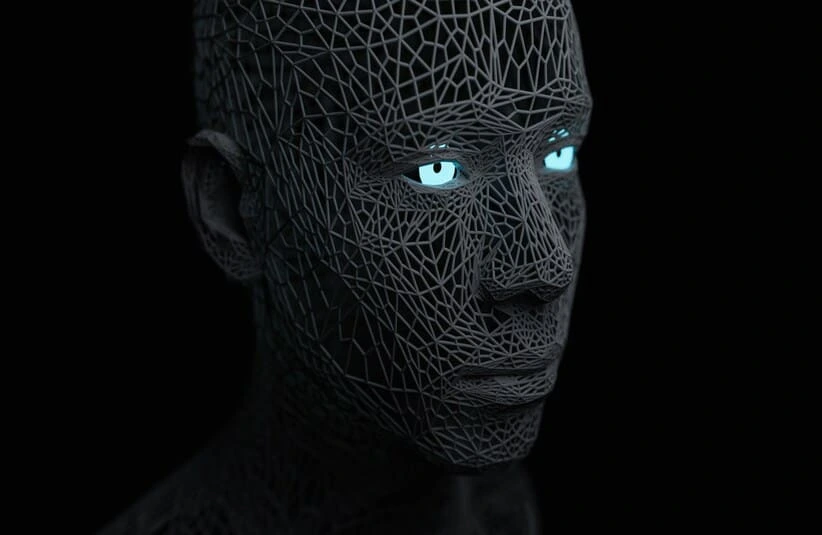
Legendary Director James Cameron Shares Strong Opinion, Saying AI Actors Are “Horrifying”

Let’s talk about James Cameron. The man, the myth, and the king of the world who brought us “Titanic,” killer robots from the future, and those towering blue cat-people from “Avatar.” When he speaks, Hollywood tends to listen, and right now, he’s sounding the alarm about generative AI in filmmaking. He finds the idea of AI creating actors from scratch “horrifying,” and when the director of the infamous AI story “The Terminator” warns you about machines, you should probably pay attention.
Why Cameron Calls AI Actors “Horrifying”
So, is James Cameron just a Luddite – a technology-naysayer – yelling at the digital clouds, or does he have a legitimate point? Let’s break down Cameron’s surprisingly complex, and dare we say, insightful take on the AI revolution.
For Cameron, this isn’t about being anti-technology. That would be absurd. This is the guy who pioneered visual effects and spent years perfecting the performance capture technology that made the Na’vi feel so alive. He sees that process as a “celebration of the actor-director moment,” a way to amplify an actor’s performance, not erase it. He argues that even under layers of CGI, the soul of the performance comes from the human actor – their quirks, their choices, their raw emotion.
Generative AI Dangers
Earlier this year, the “Avatar” movie mastermind was a guest on the “Boz to the Future” Podcast, giving some insight into the use of AI. He and Meta CTO Andrew Bosworth discussed its applications. Generative AI, in James Cameron’s view, is the exact opposite. It’s creating a “performance from scratch with a text prompt.” There’s no actor, no director collaboration, and no sacred moment of creation. It’s just an algorithm mashing together data from everything that’s come before it.
As Cameron puts it, you’re putting “all of human art and human experience into a blender, and you’ll get something that is kind of an average of that.” Ouch. He’s essentially calling AI-generated art a bland, uninspired smoothie of everything we’ve already seen.
The King’s Complex Relationship with AI
Here’s where it gets super interesting. You might think Cameron wants to unplug all the computers and go back to shooting on film. Not quite. The director actually sits on the board of Stability AI, a major player in the AI space. So, what gives?
James Cameron isn’t against AI as a tool. He’s actually quite pragmatic. He certainly acknowledges that AI could be a massive help in “making VFX cheaper,” which could save genres like sci-fi that are becoming too expensive for studios to risk on new ideas.
Cameron points out that in today’s risk-averse Hollywood, a brand-new IP like “Avatar” would never get made. Neither would “Titanic.” AI could potentially lower the financial bar, allowing for more creative, original blockbusters.
His stance is nuanced: use AI to handle the grunt work, to lower costs, to assist artists. But don’t let it touch the sacred ground of human performance and creativity. He stated to CBS in an interview:
“I don’t want a computer doing what I pride myself on being able to do with actors… I don’t want to replace actors, I love working with actors.”
It’s a passionate defense of the human element at the core of his craft.
The Inevitable Rise of the Machines?
James Cameron isn’t just shouting into the void. The entertainment industry is truly rattled. The debut of AI “actors” like Tilly Norwood sent turbulence through Hollywood, with many seeing it as a direct threat to their livelihood. Plus, major filmmakers like Guillermo del Toro and Denis Villeneuve have echoed Cameron’s concerns, stating that AI has absolutely no place in the creative process.
The fear is that studios, always looking to cut costs, will see AI actors as a cheap alternative to human talent. Why pay millions for a star when you can generate a digital one for a fraction of the cost? (And that’s not counting any hissy-fits or behind-the-scenes drama.) But Cameron believes this will ultimately backfire. He predicts that as AI art becomes more common, the real, human-made stuff – the “acoustic” version – will become even more sacred. The act of watching a real artist create something unique and personal will ultimately be what audiences truly value.
Fundamentally, James Cameron is now drawing a line in the digital sand. He’s not fighting the future; he’s fighting for the soul of his art form. He’s challenging creators to use this new technology not as a crutch, but as a catalyst to enhance and to push their own human creativity even further. The epic battle between human ingenuity and algorithmic imitation is just getting started, and you can bet the King of the Movie World will be on the front lines, fighting for the humans.
