How Sammy Davis Jr. Courageously Revolutionized Music and Entertainment

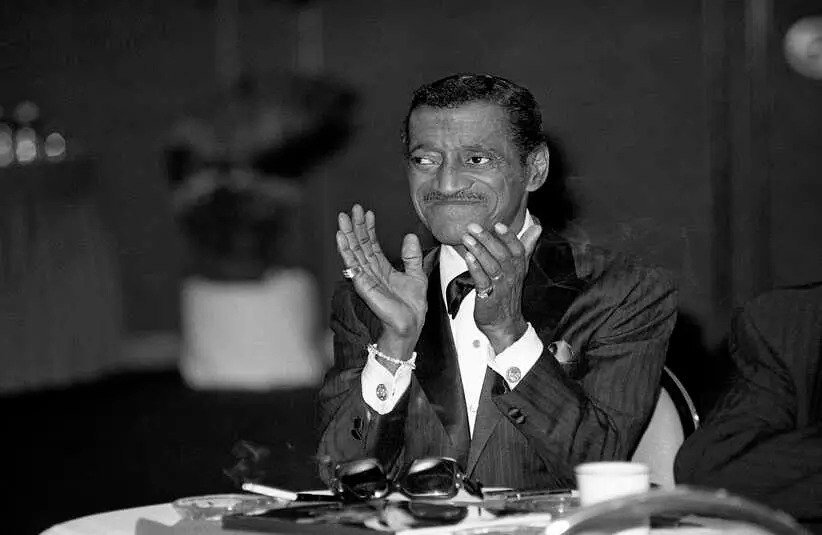
Singer, dancer and actor are just a few words to describe Sammy Davis Jr. A pioneering trailblazer, his versatility solidified him as one of the most prolific figures of all time. With his distinctive voice, quick wit, and charismatic stage presence, Davis kept audiences begging for more. A multi-faceted entertainer, Davis’s career spanned more than five decades.
The Origin of Sammy Davis Jr.
Born in Harlem, New York, Davis’s career began at the tender age of three. Along with his father, Sammy Davis Sr., he worked in vaudeville with the Will Mastin Trio. He then toured nationally, making his film debut in 1933. During World War II, Davis served in the United States Army. His experience was less than perfect, as he faced continuous racial abuse.
After being discharged, Davis returned to performing, eventually launching his solo career. He went on to star in Broadway productions such as “Mr. Wonderful” (1956) and “Golden Boy” (1964). The latter featured the first interracial kiss on Broadway. He also hosted his own television variety show in 1966.
The Introduction of the Rat Pack
In 1959, Davis became a core member of the iconic Rat Pack alongside Frank Sinatra and Dean Martin. Starring in films like “Ocean’s 11”, he was instrumental in breaking racial barriers in Hollywood and Las Vegas. Sammy Davis Jr. was a central figure in this group of entertainers which also included Peter Lawford and Joey Bishop. Originally, the term “Rat Pack” originally to a group of friends centered around Humphrey Bogart in the late 1940s. At this time, the group included Bogart, Judy Garland, Lauren Bacall, David Niven, and Frank Sinatra.
During gatherings at Bogart’s Los Angeles residence, the group was given their name by Bacall. Just by observing the group, she playfully said they resembled a “rat pack”. The group’s informal gatherings and their identity as the “Rat Pack” were further established during this time. The name was eventually adopted by the media to describe the most iconic 1960s ensemble led by Frank Sinatra. Once Davis first met Sinatra in 1941, their friendship deepened soon after.
Big Screen Success With “Ocean’s 11”
Davis’s involvement with the Rat Pack was solidified during the 1960 filming of “Ocean’s 11”. In the film, he starred alongside Sinatra, Dean Martin, Peter Lawford, and Joey Bishop. After filming, the group regularly performed nights at The Sands Hotel in Las Vegas. This created a legendary stage show known as “The Summit,” which attracted a multitude of celebrities including John F. Kennedy. In the film, Davis played Josh Howard, a sanitation worker, and performed the musical number “Eee-O Eleven”. The song became a commercial success and the 8th highest-grossing film of 1960.
The Rat Pack’s Legacy
The Rat Pack’s humorous camaraderie has sparked controversy through the years. Davis, often the butt of jokes on stage, maintained a deep bond with both Martin and Sinatra. The group’s name further gained popularity in 1961. This was through an exposé by author Richard Gehman and the public’s fascination with the group’s lifestyle. As the only Black member of the Rat Pack, Davis broke numerous racial barriers.
Scoring First Major Hit With “The Candy Man”
Released in April 1972, “The Candy Man” became the biggest hit of his career. Originally written by Anthony Newley and Leslie Bricusse, the song was featured in “Willy Wonka & the Chocolate Factory”(1971). The song was first performed in the movie by Aubrey Woods. Despite Woods giving a notable performance, Davis’s cover became the definitive version. The song features backing vocals by the Mike Curb Congregation.
Reaching No. 1 on the Billboard Hot 100 for three weeks in 1972, it also topped the Easy Listening chart. Eventually, the song went Gold in the United States for selling over a million copies. His success with the song created his nickname “Mr. Show Business”. Ultimately, “The Candy Man” became one of Davis’s signature songs earning him a Grammy nomination for Best Male Pop Vocal Performance.
Additional Accolades
Sammy Davis Jr. has received numerous accolades throughout his career reflecting his status as a multifaceted entertainer. In 1960, he received a star on the Hollywood Walk of Fame. In 1977, he received a Golden Globe for Best Actor in Sammy and Company. In 1965, he received a Tony Award nomination for his performance in the Broadway musical Golden Boy. In 1990, Davis won one Primetime Emmy for “Sammy Davis Jr.’s 60th Anniversary Celebration”.
In his music career, Davis was nominated for many Grammys, never winning any during his lifetime. However, he has received multiple Grammy nominations. In 1963, he was nominated for Male Solo Vocal Performance and Record of the Year, for “What Kind of Fool Am I?” In 1972, he received another nomination for Pop Male Vocalist for his number one hit, “The Candy Man”. In 2001, He posthumously received the Grammy Lifetime Achievement Award. One year later, his song “What Kind of Fool Am I?” was inducted into the Grammy Hall of Fame.
The Legacy of Sammy Davis Jr.
Davis was force in American entertainment. His mastery reshaped the possibilities of overall performing. He was also a prominent figure in the Civil Rights Movement. In 1963, he participated in the March on Washington. On May 16, 1990, at the age of 64, Davis died from complications of throat cancer.
After departing this life, he left behind a cherished legacy. Davis, who would have celebrated his 100th birthday on December 8, remains one of the best to ever do it. His courage in confronting racial barriers elevated his influence tremendously. Even during moments of uncertainty, Davis repeatedly showcased resilience. His body of work left a permanent imprint on pop culture, inspiring multiple generations to come.