
‘Russians’: The 1985 Sting Song That Is Just As Relevant Today As It Was Then—The Daily Earworm

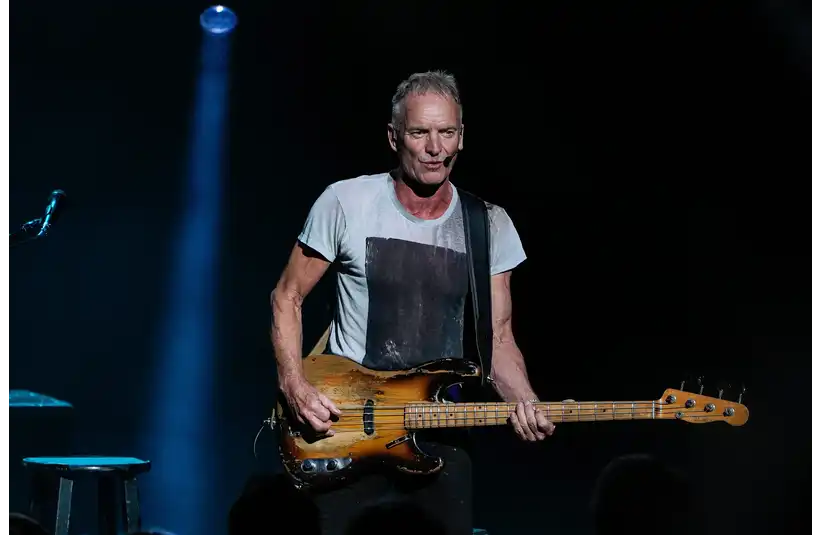
In 1985, the United States and Russia were still six years away from the collapse of the Soviet Union and the end of the Cold War. English musician Sting released a song, “Russians,” that made some very poignant and salient points about the politics of the time between the two nations. Today’s Daily Earworm takes a look back at the song and the political climate of the day, and then fast-forwards to the present day to examine the song’s continued relevancy.
The Cold War
To understand “Russians,” one first has to understand the Cold War. While the conflict is generally said to have started in 1947, it had roots back to the events following the end of World War II. The Potsdam Conference in 1945, Churchill’s “Iron Curtain” speech and George Kennan’s “Long Telegram” in 1946, the Truman Doctrine and the Marshall Plan in 1947, and the Soviet blockade of Berlin, all built up tensions between the Russians and the United States (and their European allies).
By the 1980s, the U.S. and Russia had not only continued to build tensions, but also weapons. Both sides had begun stockpiling nuclear bombs. Political rhetoric had begun to escalate to include phrases like “mutually-assured destruction” that neither side condoned, nor wanted to back down from. That was the political environment that spawned Sting’s unsettling hit.
“Russians”
Sting had a friend at Columbia University who used a satellite receiver to steal the signal from Russian TV. The two used to sit around and watch at night (in New York), at a time when the broadcasts in Russia were mostly children’s programming. The political climate of the day made Sting think about the children of both nations. Were all the threats (by both sides) the right thing to do, “if the Russians love their children too”? The song was quick to point out the errors in foreign policy on both sides.
“Russians” begins with snippets of the Romance theme from the “Lieutenant Kijé Suite” by Russian composer Sergei Prokofiev and the Soviet news program “Vremya.” The song also has audio from the joint U.S.-Soviet Apollo–Soyuz mission. The song references Reagan, Khrushchev, and Oppenheimer.
The music video for the song, directed by Jean-Baptiste Mondino, splices together scenes of Sting and stern-looking Russian men, both thinking of their children, as Sting sings about the escalation toward mutually-assured destruction. Throughout the video, you can hear the ticking of a clock that is implied to be the Doomsday Clock. It is very surreal.
The Song’s Success
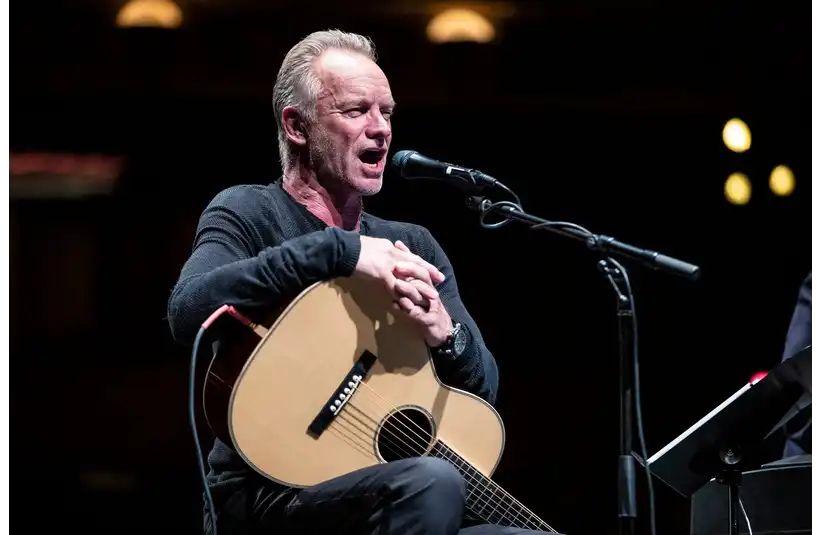
The song seemed to connect well with how people felt about the situation at the time. It was especially well-received by Europeans. The song broke into the Top 10 on seven European charts. It peaked at #16 on the Billboard Hot 100 in the United States.
Today’s Relevance
The entertainment world has definitely noticed how the song has stayed current with the times. Two examples of that are “Terminator 2: Judgment Day” (1991) and “Oppenheimer” (2023). James Cameron said that “Russians” was the reason for T2’s child-centric plot. Likewise, Christopher Nolan cited Sting’s song as an inspiration for his Cillian Murphy-led biographical thriller.
Given the current situation between Russia and Ukraine, and the involvement of the United States and its NATO allies, “Russians” seems just as relevant today as it was when Sting released it. The Doomsday Clock was recently moved closer to midnight than it has ever been. If you changed out the names of world leaders, the song could have just as easily been written today.
Sting actually re-recorded the song in 2022 during the initial Russian invasion of Ukraine. The proceeds from the new version were earmarked for humanitarian and medical aid in the war-torn country. Sting said in a video statement on Instagram that he “never thought [the song] would be relevant again. But, in the light of one man’s bloody and woefully misguided decision to invade a peaceful, unthreatening neighbor, the song is, once again, a plea for our common humanity.”
