

Dexys Midnight Runners And The Obsession Over ‘Come On Eileen’—The Daily Earworm

English pop/folk rock band Dexys Midnight Runners hit it big in the United States with their smash “Come On Eileen” in 1983. The song was their only major hit stateside, but far from their only hit back home. So, while most Americans call the band a one-hit wonder, they were actually far from it. That one hit, though, nearly cost the band everything. Learn the whole story of the band, the hit, and the struggle in today’s Daily Earworm.
The Success of “Come On Eileen”
“Come On Eileen” was the fifth single released from Dexys Midnight Runners’ second studio album, Too-Rye-Ay. The song topped the charts in eight countries, including the U.S. and the UK. The song knocked Michael Jackson’s “Billie Jean” out of the top spot in the U.S., though Jackson would regain the spot a week later with “Beat It.”
“Come On Eileen” held the top spot back home for four weeks. It went on to be the best-selling song in the UK in 1982 (it was released in the UK much earlier than in the U.S.), and it took home the 1983 Brit Award for Best British Single. The song went triple-platinum in the UK and was certified gold in Denmark, Australia, Canada, and Germany. Largely due to the success of the song, Too-Rye-Ay became the band’s biggest album. The album was certified platinum in the UK, Australia, and New Zealand, and gold in Canada.
Not a One-Hit Wonder
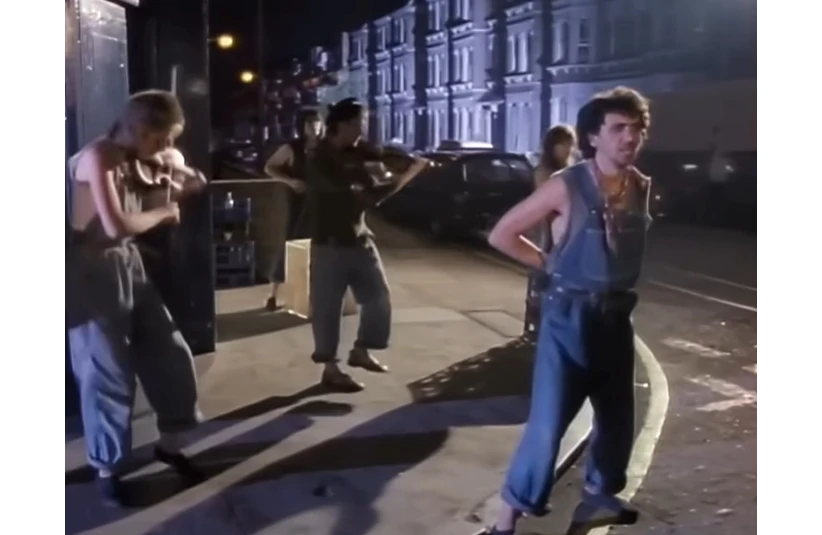
Dexys Midnight Runners were more than just the “Come On Eileen” band outside of the United States. The band hit #1 in 1980 with “Geno” in the UK, and they had a total of nine songs reach the Top 40 back home, four of which reached the Top 10. They have amassed six Top 20 albums in the UK, as well.
The Obsession That Nearly Destroyed Dexys Midnight Runners
While Dexys, as they have gone by since their reformation in 2003, had found plenty of success in the UK, things did seem bleak for the band for a while in 1980 and 1981. They hit a streak where four of their singles did not chart at all, and two more didn’t reach the Top 40. Lead singer Kevin Rowland had begun doubting his ability to write a hit song and was thinking he might have to hang it up as a singer and find another vocation.
So, when he wrote “Come On Eileen,” he viewed it as an all-or-nothing situation. He obsessed over the song for months. Six of the band’s members had left the group during the slow streak, and though Rowland had replaced them, two more parted ways when he began to fixate on this one song. To make things worse, Mercury Records had initially rejected “Come On Eileen,” forcing Rowland to obsess even more. Eventually, after some revisions and a little help from a local radio DJ, Rowland was able to convince Mercury execs that the song had the potential to be a hit.
Who Was Eileen?
For years, Rowland told the story that Eileen was his high school sweetheart, but eventually he recanted and admitted that Eileen did not actually exist. Eileen was just a composite that he used to make a point about Catholic repression. We do, however, know who played Eileen in the original music video for the song. She was played by Máire Fahey, the sister of Siobhan Fahey (founder of Bananarama and Shakespears Sister).
Dexys Today
Dexys has reformed several times through the years, and they broke up for more than 15 years. Rowland, though reunited with trombonist and original member Jim Paterson in 2003. The rest of the band currently consists of Sean Read on guitar, Michael Timothy on keyboards, and Lucy Morgan on violins. The band released a live 2 CD/3 LP compilation entitled The Feminine Devine + Dexys Classics: Live! in May of 2024.
The Daily Earworm is a daily column that tells the stories, from the historic to the lesser-known, of some of the music industry’s greatest songs, albums, and artists. Here are some other music tales that you may find interesting:
Pearl Turns 55: Janis Joplin’s Final Album Still Resonates
5 Things You May Not Know About The Eagles’ Smash Hit “Hotel California”