Explaning Donald Trump’s 100% Tariffs on Foreign Films

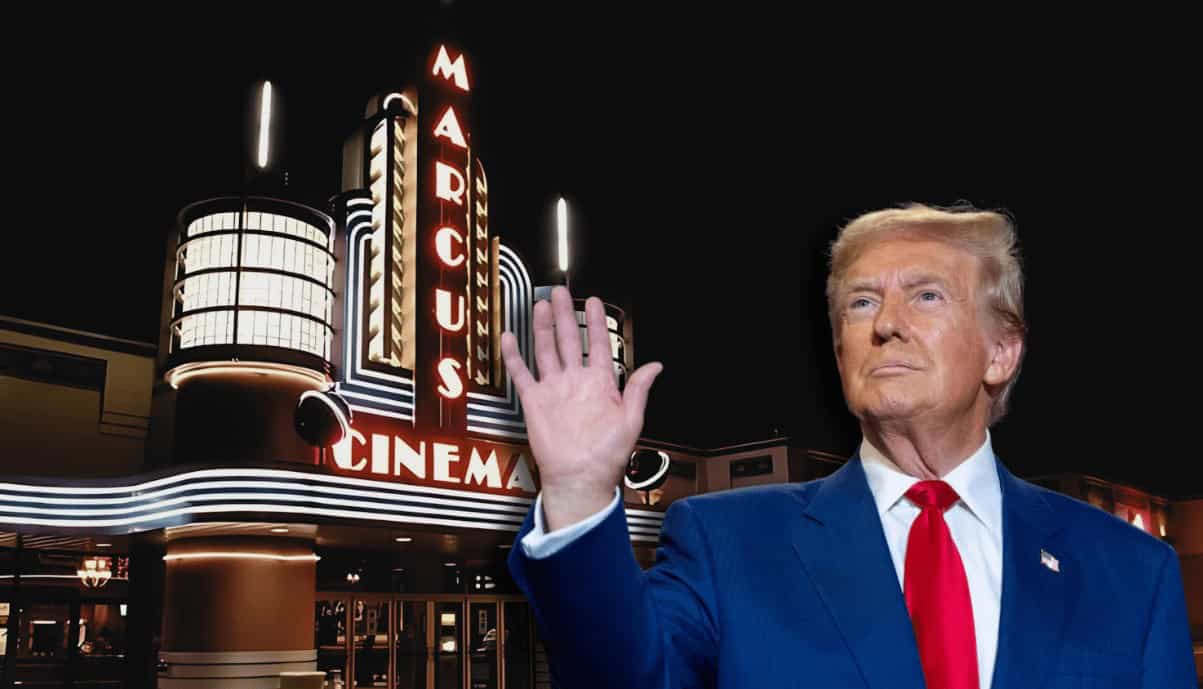
Donald Trump just dropped a political bomb on the entertainment world, announcing 100% tariffs on every foreign film coming into the U.S.—and Hollywood is reeling. The move, unveiled on May 5, is already making waves across social media and news sites as studios scramble to understand what it means for their bottom line. With fears of trade wars and rising production costs, Donald Trump’s foreign film tariffs have instantly become one of the most talked-about policies of the week.
Trump’s Tariff Push: What’s Behind It?
President Donald Trump’s call for 100% tariffs on foreign films wasn’t just a policy announcement—it was a warning shot aimed squarely at what he sees as a weakened, outsourced American film industry. At a press event on May 5, Donald Trump declared that foreign governments were “cheating” U.S. filmmakers by luring big-budget productions overseas with lucrative tax breaks, grants, and incentives. “They’re killing our business,” he said. “We’re bringing it all back.”
The proposal would place a 100% tariff on any film primarily produced outside the United States. That includes everything from British Oscar contenders to international blockbusters co-financed by American studios but shot abroad. According to AP News, Donald Trump framed the measure as an effort to restore Hollywood’s global dominance and protect American jobs. But critics argue it’s more about nationalism than economic policy.
Hollywood’s reaction was swift. Streaming giants like Netflix and Disney saw stock prices dip immediately after the announcement, as reported by Business Insider. These companies have increasingly relied on international production hubs like the U.K., Canada, and South Korea for everything from tax savings to access to local talent. A sudden cost surge could lead to delayed releases, fewer global partnerships, and restructured production slates.
Beyond Hollywood, foreign governments and producers are sounding alarms. In the U.K., where Hollywood spends billions annually on studio rentals and crews, Donald Trump’s tariffs are being called “cultural sabotage.” A piece from The Times warned the policy could damage long-standing creative partnerships and provoke retaliatory tariffs on U.S. content abroad.
There are still more questions than answers. Will the tariffs apply to streaming-only titles? What about co-productions filmed overseas but funded by U.S. companies? And can such a sweeping trade policy be implemented without congressional approval?
For now, the film industry is bracing for impact. Lobbyists are already at work, and legal challenges are expected if the tariffs go forward. Whether this reshapes the entertainment landscape or fizzles out as a campaign-season headline grab remains to be seen.
What It Could Mean for Hollywood and Beyond
If Donald Trump’s foreign film tariffs become reality, the ripple effects could reshape everything from how movies are made to what ends up in your Netflix queue. On the surface, the policy is aimed at boosting domestic production—but the real-world consequences may be far more complicated.
First, there’s the issue of cost. Hollywood studios often rely on filming abroad not just for scenery, but for serious savings. Countries like the U.K., Canada, and Hungary offer tax incentives that can shave millions off a movie’s budget. A 100% import tariff would effectively cancel out those savings and then some, making foreign shoots far less attractive. That could lead to a surge in U.S.-based filming—but only if studios can find the infrastructure, crews, and permits to support it at scale. As anyone who’s worked in production knows, that’s not exactly a quick pivot.
This could throw a wrench into international collaborations, too. For years, U.S. studios have leaned on global partners to help finance and produce everything from buzzy award contenders to big-budget blockbusters. But if other countries fire back with their own tariffs or restrictions, those cross-border deals could dry up in a hurry. And that’s a big deal—especially for films that depend on overseas box office to break even, which is the case for most of them these days.
There’s also a cultural cost to consider. In a scathing piece for The Times, British producers argued the tariffs amount to “a cultural embargo.” Limiting access to foreign films could shrink the diversity of stories available to U.S. audiences and isolate American cinema at a time when global storytelling is more vital—and celebrated—than ever.
Still, not everyone’s sounding the alarm. Some indie filmmakers in the U.S. actually see a potential win here: if fewer foreign films are coming in, maybe there’s more space for homegrown projects to get noticed. But whether smaller studios can really step up and fill the gap left by massive international productions—that’s a whole other challenge.
Looking ahead, industry insiders are keeping a close eye on upcoming festivals like Cannes, where many affected studios are expected to speak out. If Donald Trump’s tariffs take effect, they won’t just change the business of film—they could redefine what stories get told and who gets to tell them.
What Comes Next?
Right now, Hollywood’s holding its breath. Donald Trump’s call for foreign film tariffs has sent shockwaves through the industry—but no one knows exactly how or when it’ll actually roll out. Studios are scrambling to game out what it means for upcoming projects, international partners are raising red flags, and everyone’s bracing for what could be a messy, drawn-out fight.
Here’s the thing: if this really goes through, it won’t just shift where movies get made. It could change which stories get told, who tells them, and how we all watch them.