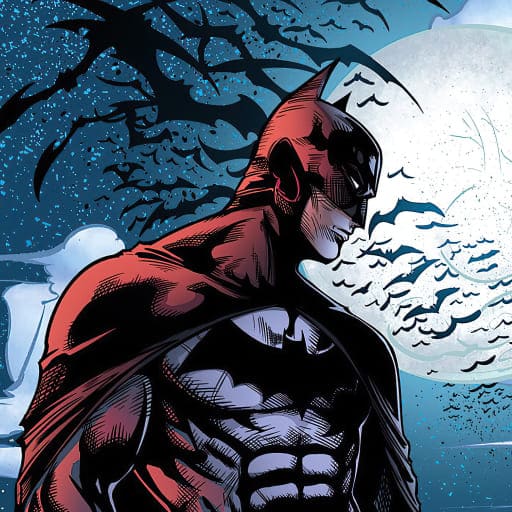
Batman: Ranked from Worst to Best

Batman’s been rebooted more times than your Wi-Fi router—and not every Dark Knight has delivered. Some actors gave us raw, layered performances straight out of the comics. Others? Let’s just say they looked better out of the suit than in it.
We’re ranking every major live-action Batman from worst to best based on five core traits:
- Comic Book Accuracy
- Realism
- Screen Presence
- Voice & Physicality
- Emotional Depth
From Pattinson’s brooding detective to Clooney’s bat-nipples, here’s who is the Batman—and who’s just playing dress-up.
OFFICIAL SUMMARY
Here is the final ranking of every major live-action Bruce Wayne/Batman portrayal in film and television—from worst to best:
-
Lewis Wilson – Batman (1943)
-
Robert Lowery – Batman and Robin (1949)
-
George Clooney – Batman & Robin (1997)
-
Val Kilmer – Batman Forever (1995)
-
Iain Glen – Titans (2019–2021)
-
Ben Affleck – Batman v Superman, Justice League, The Flash (2016–2023)
-
Adam West – Batman (1966–1968), Batman: The Movie (1966)
-
Kevin Conroy – Crisis on Infinite Earths (2019)
-
David Mazouz – Gotham (2014–2019)
-
Christian Bale – The Dark Knight Trilogy (2005–2012)
-
Michael Keaton – Batman (1989), Batman Returns (1992), The Flash (2023)
-
Robert Pattinson – The Batman (2022)
This ranking is based on a five-point system: comic accuracy, realism, presence, voice/physicality, and emotional depth.
OFFICIAL ANALYSIS
Lewis Wilson – Batman (1943)
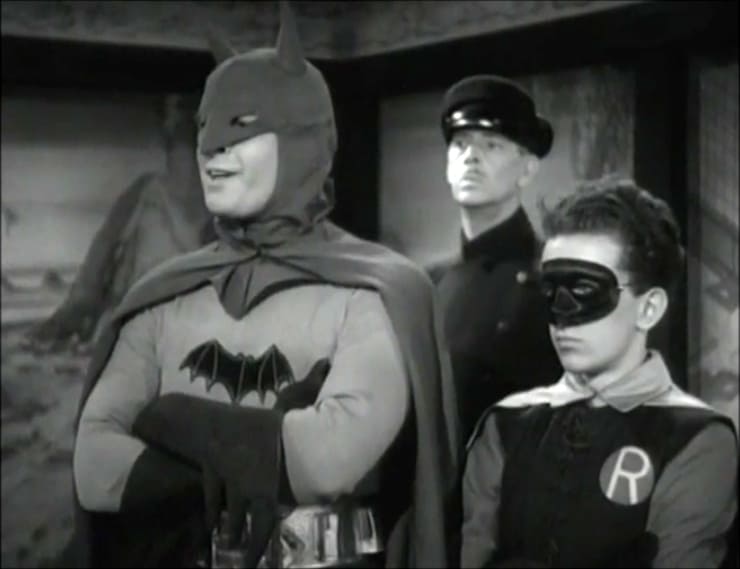
Lewis Wilson will always hold the honor of being the first live-action Batman, but that’s about where the praise ends. At just 23 years old, Wilson brought no gravitas to the role, no real presence, and no sense of who Bruce Wayne or Batman was. His portrayal feels like a kid wearing his dad’s trench coat, play-acting seriousness without actually embodying it.
The 1943 Batman serial is less a superhero story and more a piece of wartime propaganda, with Batman acting as a government agent battling Axis spies. The costume is a wrinkled onesie, the action is clunky, and the tone is stiff and humorless. Wilson’s Bruce Wayne is just a civilian version of Batman, minus the mask—there’s no contrast, no psychological layering, just different outfits.
To be fair, this was a different era, long before Batman became a symbol of psychological complexity or cultural mythology. Still, Wilson does little to elevate the material. His delivery is wooden, his movement awkward, and his Batman lacks any real identity beyond “guy who punches bad guys.” He earns a footnote in Bat-history, but not much more. The foundation he laid was shallow—and quickly paved over by better, bolder takes.
Robert Lowery – Batman and Robin (1949)
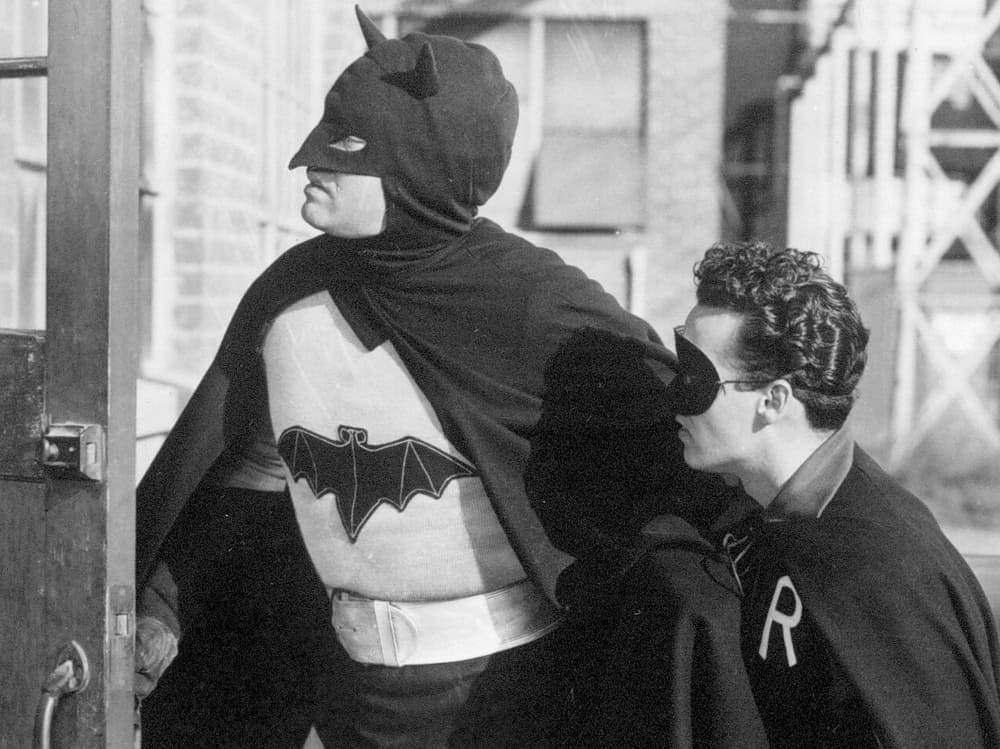
Robert Lowery’s Batman is less “dark avenger” and more “detective in a Halloween costume.” Taking over from Lewis Wilson in the 1949 serials, Lowery inherited slightly better production values—but only slightly. His Batman is a daytime sleuth, running around sunlit backlots in a floppy-eared suit that does little to inspire fear or awe.
Performance-wise, Lowery is competent but uninspired. He delivers lines with the energy of someone reading cue cards between cigarette breaks. There’s no menace, no mystery—just exposition and perfunctory fight scenes. His Bruce Wayne is similarly flat, showing up for scenes where he’s mostly asked to wear a suit and blend into the background. There’s no real duality, no psychological weight, and definitely no sense of a man haunted by trauma.
Of course, the era plays a role here. Superheroes hadn’t yet evolved into mythic figures—they were serialized adventurers, and the performances reflect that simplicity. But even by those standards, Lowery’s take lacks punch. He doesn’t redefine the role, deepen it, or leave any lasting mark. He’s not bad in a catastrophic way—just bland. Functional. Disposable. In a franchise where Batman is defined by intensity, Lowery’s version coasts on autopilot.
George Clooney – Batman & Robin (1997)
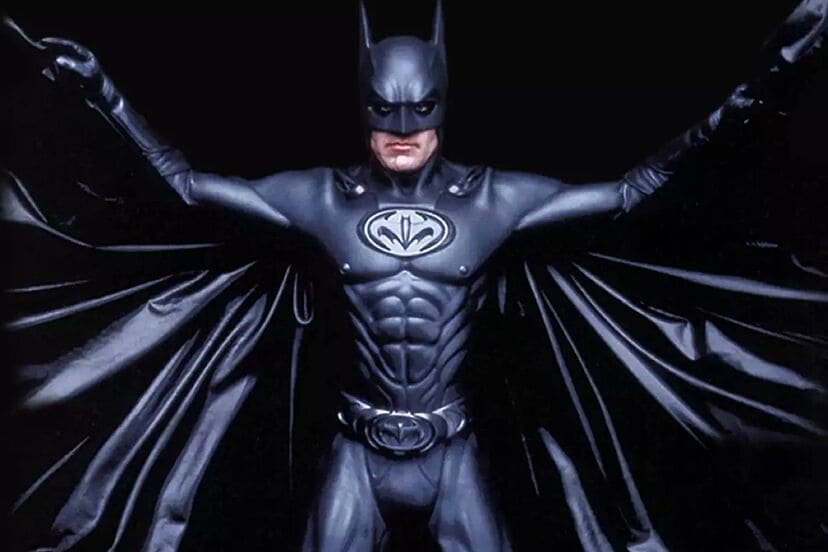
George Clooney’s Batman is the textbook case of style over substance—and not even good style. Batman & Robin is infamous for many things (bat-nipples, ice puns, neon everything), but Clooney’s performance stands out as especially tone-deaf. He has the charisma, the look, the voice—everything on paper says “great Bruce Wayne.” But once he suits up, all of that charm evaporates.
His Batman feels like he wandered in from a rom-com set and decided to cosplay. He quips mid-fight, grins through dramatic scenes, and delivers lines like he’s pitching Nespresso, not grappling with Gotham’s criminal underworld. Even emotional beats—like Alfred’s illness—barely register. You get the sense that Clooney knows he’s in a bad movie and is doing his best not to care.
To be fair, the script gives him nothing to work with. This Batman isn’t allowed to brood, investigate, or feel. He’s a mascot in molded rubber, selling toys more than story. Clooney has since apologized repeatedly for the film, and honestly? Respect for owning it. But as a performance, it’s one-note, flat, and hopelessly disconnected from what Batman is supposed to be. He’s Bruce Wayne in name only—Bruce Lite in a Day-Glo disaster.
Val Kilmer – Batman Forever (1995)
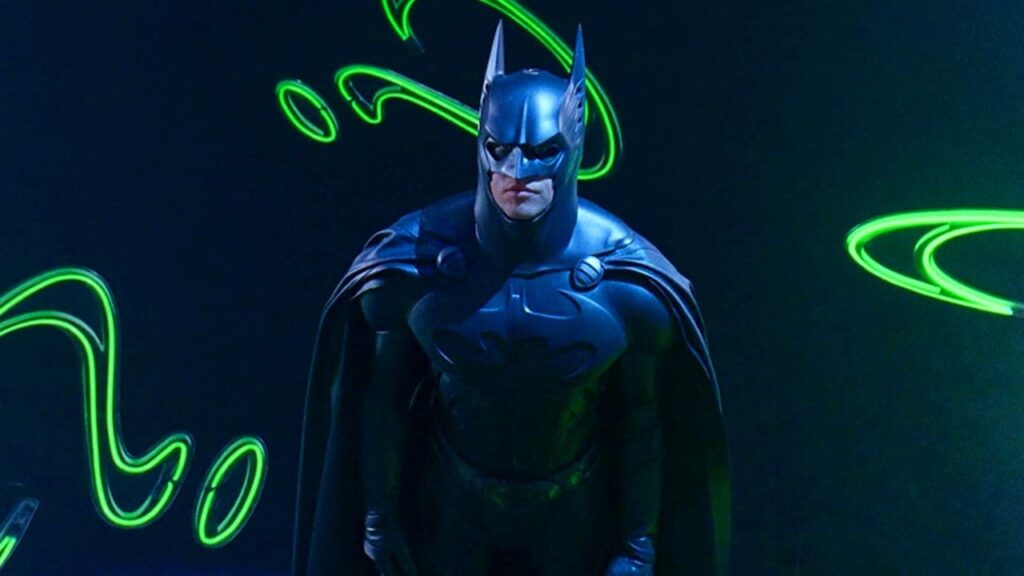
Val Kilmer’s Batman exists in a cinematic no man’s land—wedged between the brooding Gothic of Tim Burton and the toy-commercial chaos of Joel Schumacher. He’s not the worst Batman ever, but he might be the most forgettable. His Bruce Wayne is emotionally anesthetized, drifting through flashbacks and romantic subplots like he’s trying not to wrinkle his tux. The film wants to explore psychological depth, especially through repressed childhood trauma and questions of dual identity—but Kilmer never quite shows us what’s happening under the surface.
Physically, he wears the suit well, and the bat-jaw is strong. His Batman is competent, calm, and occasionally charismatic, but there’s no grit, no vulnerability, no tension. It’s all just… fine. And that’s the problem. There’s no fire. No real conviction. Even his chemistry with Nicole Kidman’s Dr. Chase Meridian feels scripted rather than sparked.
Kilmer doesn’t sink the film, but he never elevates it either. In a franchise filled with extremes—campy disasters, genre-defining triumphs—Kilmer’s Batman is the shrug between them. He’s the guy holding the line while the tone collapses around him. Not offensive, not iconic—just a Bat-phase we collectively moved past.
Iain Glen – Titans (2019–2021)
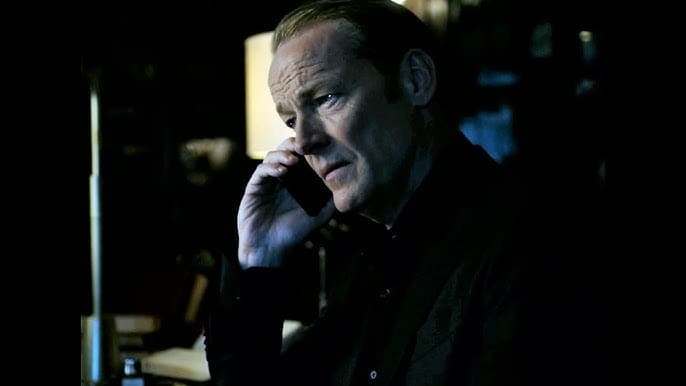
Iain Glen’s Bruce Wayne is an anomaly: he plays Batman after the Batman story is basically over. In Titans, Glen embodies an older, retired Bruce who’s hung up the cape and is trying—awkwardly—to mentor the next generation of heroes. He’s weary, authoritative, and constantly trying to nudge Dick Grayson and Jason Todd toward maturity without falling back into the shadows himself. It’s an intriguing concept, but one that leaves little room for full Batman moments.
Glen brings a sort of Shakespearean gravitas to the role, and his scenes often drip with tension and regret. He sells the idea of a man who’s spent decades waging war on crime, only to wonder if he made any real difference. However, there’s no cape, no detective work, no rooftop brooding—just conversations in Wayne Manor and flickers of flashbacks.
The absence of any real “Batman-ing” hurts his placement, but Glen’s emotional performance does leave an impression. He’s thoughtful, somber, and genuinely trying to evolve—something rare in portrayals of Bruce Wayne. Still, for a series called Titans, he remains more ghost than guardian. You feel his presence, but he never takes the stage.
Ben Affleck – Batman v Superman, Justice League, The Flash (2016–2023)
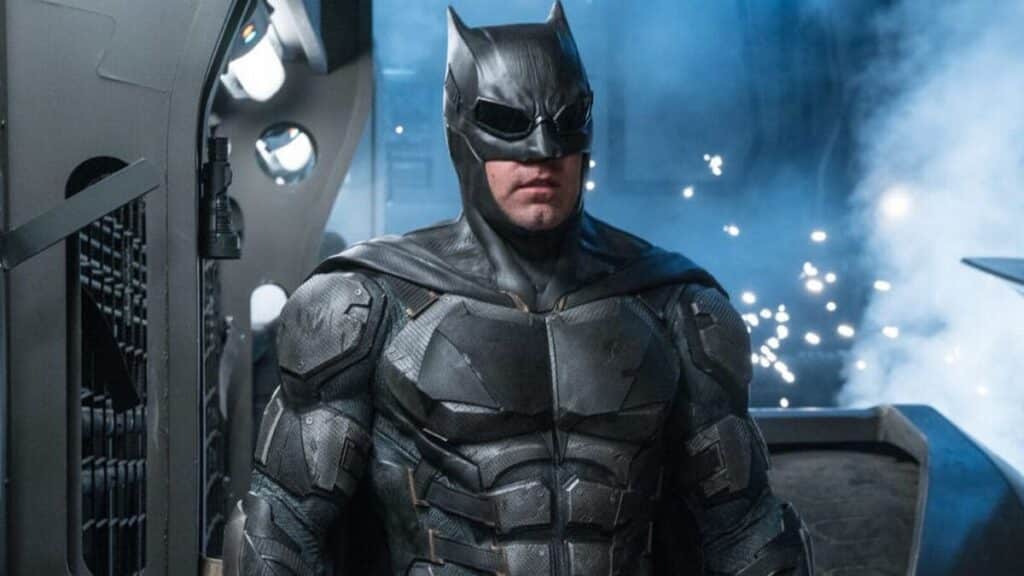
Ben Affleck’s Batman is divisive for a reason: he looks the part, but the soul of the character often feels MIA. Physically, he’s one of the most comic-accurate Batmen ever put on screen. The bulky, brutal suit inspired by Frank Miller’s The Dark Knight Returns, the gray-and-black color scheme, the gadgets—it’s all there. And in Batman v Superman, that warehouse fight remains one of the best live-action Batman combat sequences. But once you dig beneath the surface, cracks start to show.
This version of Bruce Wayne is more jaded than any before him—so much so that he’s branding criminals, mowing down bad guys with machine guns, and casually tossing around phrases like “if there’s even a 1% chance…” when plotting Superman’s murder. That might fit an Elseworlds take, but in a mainline portrayal, it feels unmoored from Batman’s moral core. He’s not a detective, not a mentor, not even really a hero in the traditional sense.
Affleck himself has the chops. He nails the look, the brooding, even flashes of vulnerability in Zack Snyder’s Justice League. But the writing doesn’t serve him. His arc feels rushed, and his Batman feels more like a symbol in a larger universe than a fully fleshed-out character.
Adam West – Batman (1966–1968), Batman: The Movie
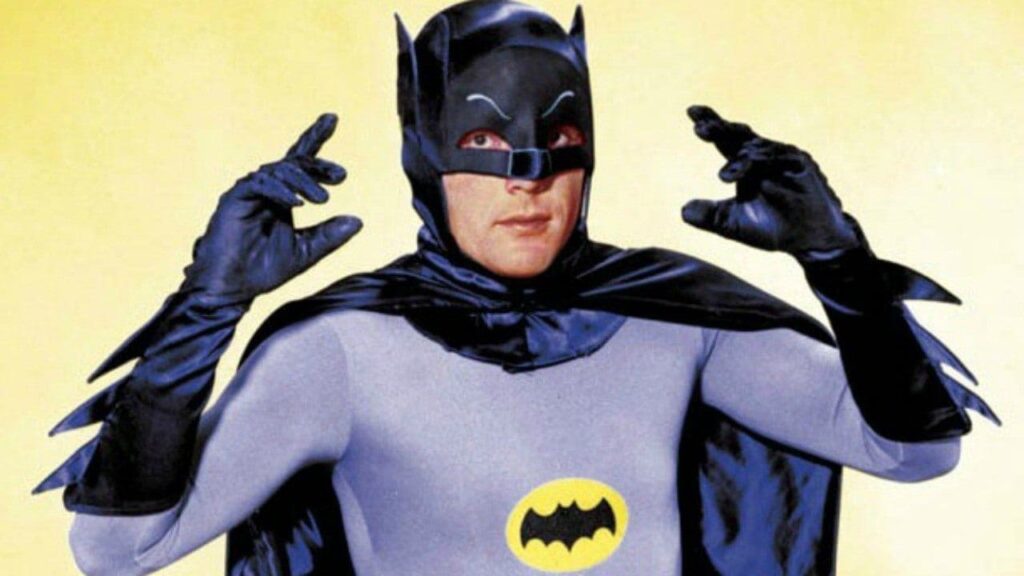
Adam West’s Batman is the definition of iconic. For an entire generation, he was the Dark Knight. And while modern fans might scoff at the camp, the bright colors, and the “BAM! POW!” graphics, West’s performance isn’t just goofy nostalgia—it’s the backbone of Batman’s mainstream popularity. Without him, we probably wouldn’t have the Bat-renaissance we enjoy today.
West brought a unique charisma to the role. His Batman was calm, moral, and unwavering in his commitment to justice. He took ridiculous situations—shark repellent spray, exploding rubber ducks, giant typewriters—and played them completely straight. That’s not an accident. That’s a performance choice, and it takes serious control to sell that level of absurdity without winking at the camera. His Batman wasn’t tortured, but he was disciplined, noble, and endlessly competent. There’s no emotional arc here, but there is consistency and command.
What really earns West his ranking is his sheer presence. He walks into a scene and owns it, whether he’s delivering public service announcements or defusing a bomb. It may not be the most “comic-accurate” portrayal by today’s standards, but it is true to a version of Batman that existed—and thrived—for decades.
Kevin Conroy – Crisis on Infinite Earths (2019)
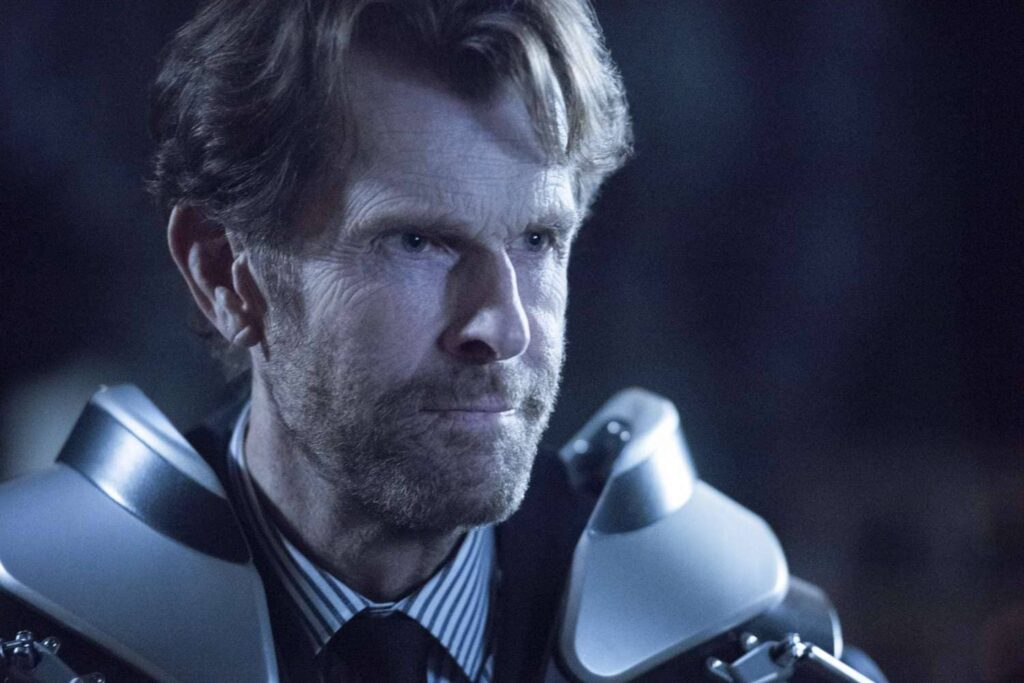
Kevin Conroy’s legacy as Batman is already legendary, thanks to Batman: The Animated Series, Justice League, and the Arkham games. But in 2019, he finally suited up (sort of) in live action for Crisis on Infinite Earths—and what we got was a Bruce Wayne unlike any other. This wasn’t the heroic Batman of our childhoods. This was a broken, bitter man in an exoskeleton, haunted by years of pain and disillusionment. In just a few short scenes, Conroy gave us a glimpse of what Batman might look like if he lost his moral compass entirely.
It’s a bold, almost Shakespearean take—a “what if?” version of the character inspired by Kingdom Come. Despite the brief screen time, Conroy’s signature gravitas carries the role. His voice is instantly recognizable, and his physical presence—older, slower, more menacing—adds a layer of tragedy. This Bruce Wayne has become the thing he swore to fight, and Conroy makes that realization land with real weight.
This isn’t the definitive Batman, but it’s a fascinating alternate future. More importantly, it gave Conroy fans a long-overdue chance to see him embody the role in the flesh. It’s short, yes—but unforgettable.
David Mazouz – Gotham (2014–2019)
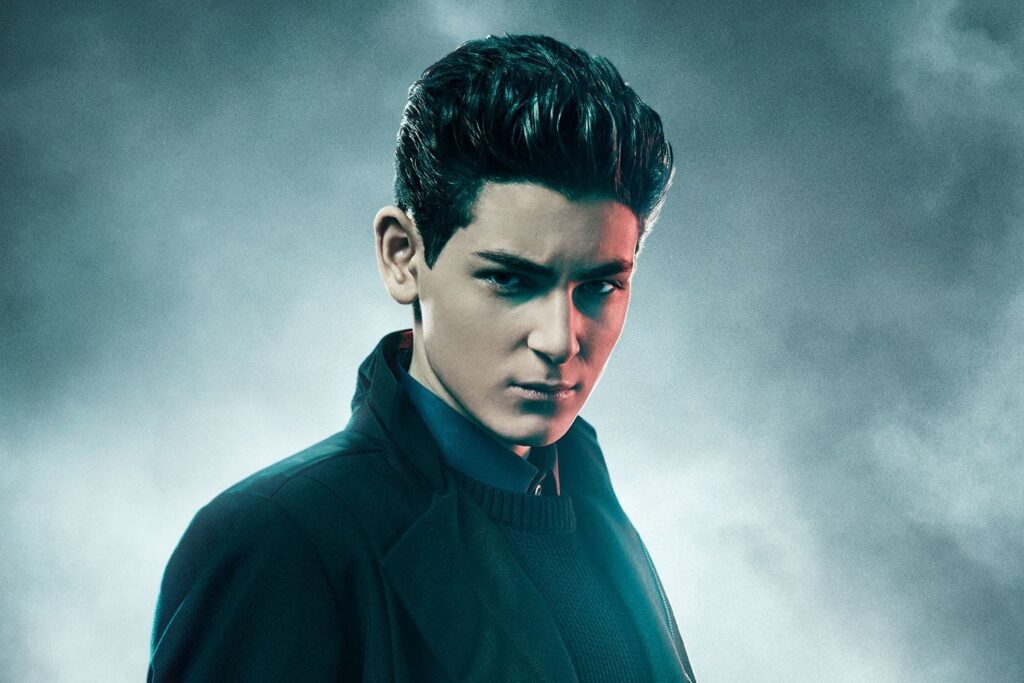
David Mazouz is often left out of mainstream Batman discussions—and that’s a mistake. While Gotham never gave him the budget or screen time to become a full-blown caped crusader in the traditional sense, his portrayal of young Bruce Wayne is one of the most emotionally layered in any adaptation. What sets Mazouz apart is the sheer amount of character development we witness. Across five seasons, we don’t just see Bruce reacting to his parents’ murder—we see him process it, obsess over it, train for years, build relationships, lose people, and ultimately forge himself into someone capable of being Batman.
Yes, he’s only technically “Batman” for a few final moments in the series finale, but that brief glimpse pays off a years-long arc. Unlike most cinematic takes, Gotham gives us the slow burn: a troubled teenager growing into the myth. Mazouz strikes a difficult balance—playing Bruce with quiet calculation, fierce determination, and growing darkness without tipping into melodrama. His dynamic with Alfred, Selina, and Jim Gordon adds weight to every choice he makes.
Sure, Gotham’s tone can be chaotic and the realism questionable—but Mazouz himself? He’s arguably the best Bruce Wayne origin story we’ve ever gotten.
Christian Bale – Batman Begins, The Dark Knight, The Dark Knight Rises
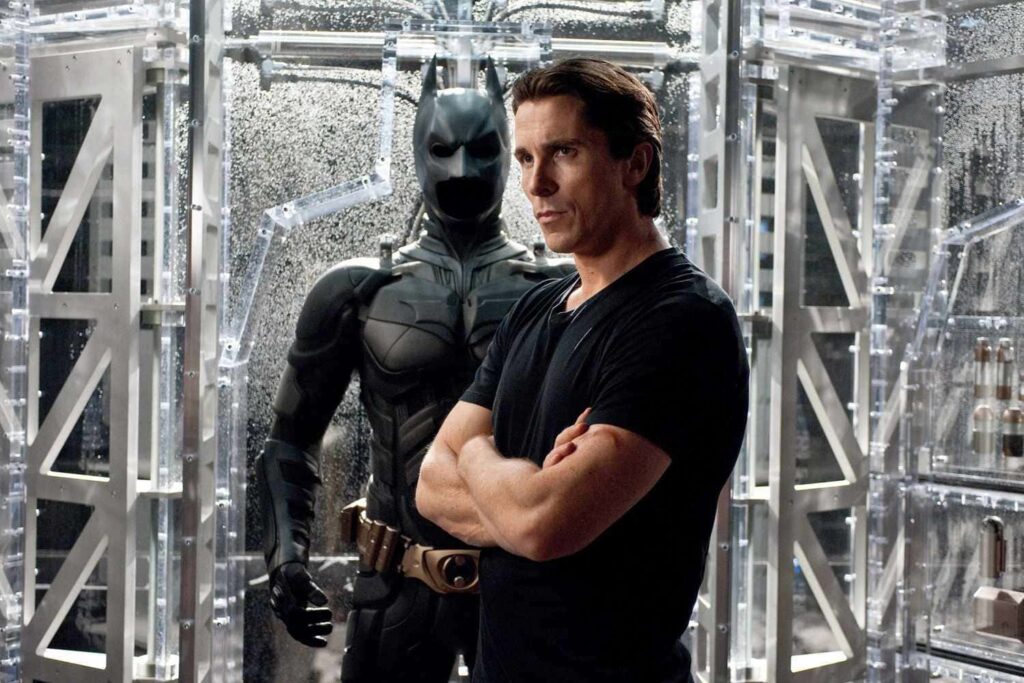
Christian Bale’s Batman is the most grounded in reality—and depending on what you value, that’s either a huge strength or a subtle flaw. With Christopher Nolan’s trilogy, the focus was less on comic-book spectacle and more on building a Batman that could exist in the real world. Bale’s Bruce Wayne is the most fully realized version of the man behind the mask. We see his training, his failures, his emotional breakdowns. He’s not just fighting crime—he’s struggling to live with grief and forge a purpose from pain.
Bale nails the psychological complexity of Bruce. In Batman Begins, his transformation from angry rich kid to disciplined vigilante is one of the most thorough origin stories in the genre. In The Dark Knight, we see the burden of dual identity weighing on him—how being Batman costs him his love life, his morality, and, ultimately, his sense of peace. By The Dark Knight Rises, he’s a broken man trying to rebuild not just his city, but himself.
Still, he’s not perfect. Bale’s Batman sometimes feels overshadowed by Nolan’s dense plots and standout villains (cough cough Heath Ledger’s Joker cough cough). And yes, the Bat-voice became a meme. But as a three-film arc about trauma, redemption, and sacrifice? Bale delivers one of the most emotionally complete Batmen ever put on screen.
Michael Keaton – Batman (1989), Batman Returns (1992), The Flash (2023)
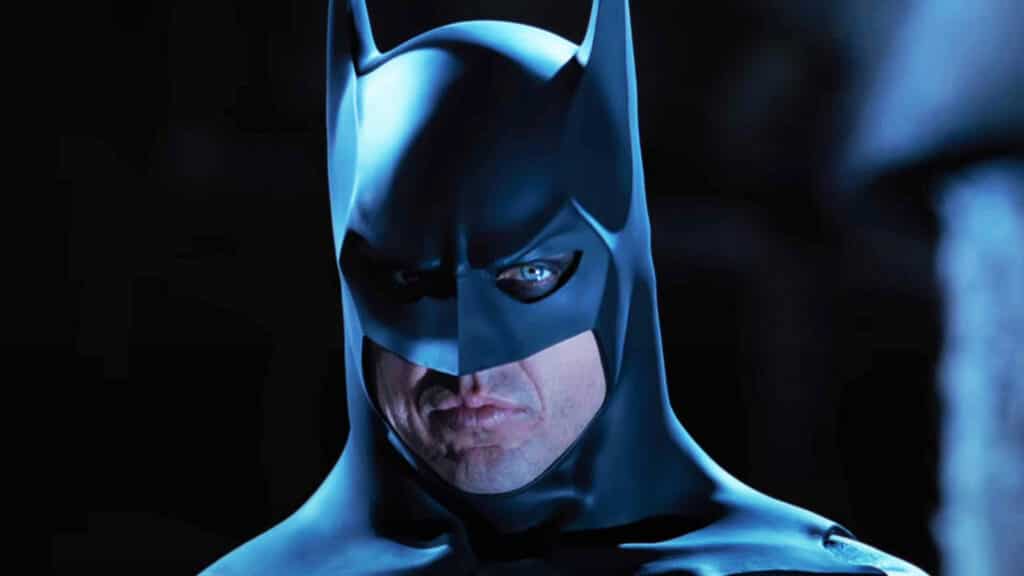
Michael Keaton didn’t just change how people saw Batman—he saved him. Before Tim Burton’s Batman hit theaters in 1989, the Caped Crusader was still a punchline in tights. Casting Keaton, a comedic actor known for Mr. Mom, sparked outrage. But when the cowl came on? Doubts disappeared.
Keaton’s Batman is quiet, eerie, and totally unreadable. He doesn’t posture or growl—he watches, waits, then strikes. It’s a performance built on subtlety: a twitch of the eye, a shift in posture, a stare that says more than a monologue ever could.
As Bruce Wayne, he’s as strange. Awkward, reclusive, emotionally closed off. Not your typical billionaire playboy—and that’s what makes it work. He feels like someone still wrestling with trauma, not just covering it up with champagne and smirks.
Even in The Flash (2023), decades later, Keaton brought the same cold intensity to an older, battle-worn Bruce. It wasn’t just fan service—it was proof that his version of Batman still holds weight in any era.
Robert Pattinson – The Batman (2022)
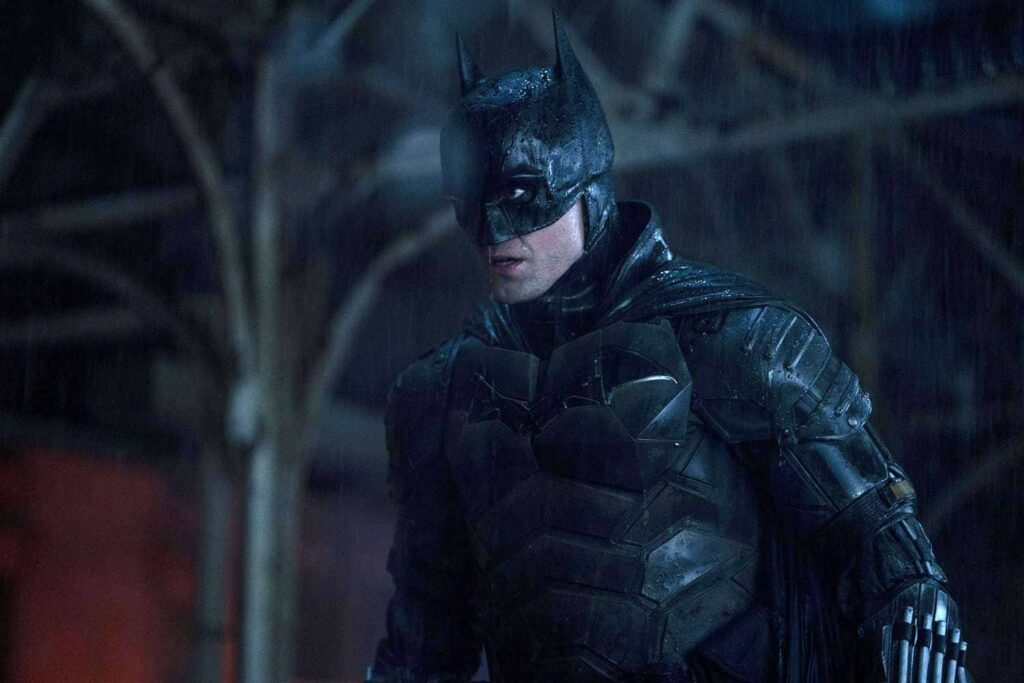
Robert Pattinson didn’t just play Batman—he became him, flaws and all. In Matt Reeves’ noir-soaked reboot, we meet a Bruce Wayne deep in his second year of vigilante work. No billionaire bravado, no slick tech empire—just an emotionally wrecked guy in eye makeup beating criminals half to death because he doesn’t know how else to process trauma.
This Batman isn’t polished. He journals like Rorschach, stalks crime scenes like a horror villain, and whispers threats through gritted teeth. And somehow, it all clicks. Pattinson’s take leans hard into Year One and The Long Halloween territory, giving us a Batman who’s still raw, obsessive, and deeply haunted.
What really sets him apart is his vulnerability. He’s not hiding behind Bruce Wayne—he’s abandoned him. There’s no mask, no playboy persona—just pain, anger, and a mission that’s devouring him. It’s a choice that feels truer to the comics than almost any portrayal before it. Critics griped about the lack of Bruce Wayne’s charm, but that’s the point. This Batman doesn’t care about being liked. He cares about being feared.
And that cold focus? That’s what makes him #1.
FINAL THOUGHTS
Robert Pattinson takes the crown for best live-action Batman, blending comic book roots with grounded storytelling and a haunted, layered performance. Michael Keaton still holds his own, while Christian Bale offers the best Bruce Wayne arc. At the bottom, Clooney and the early serials serve more as historical footnotes than true Batmen.
For more Bat-content, check out our articles on HBO Max’s Penguin or a potential Pattison Batman sequel.
And remember: it’s not just about the suit. It’s about who wears it like they mean it.
External sources:
- IGN: Batman Actors Ranked
- The Hollywood Reporter: Keaton’s Return in The Flash
- Deadline: What’s Next for The Batman Sequel