Rob Reiner’s Boundary-Pushing Legacy on “All in the Family”

It is rare that a television character becomes so ingrained in the American consciousness that they define an entire generation’s political divide. Yet that is exactly what Rob Reiner did. For nearly a decade, he wasn’t just an actor; he was Michael “Meathead” Stivic, the liberal conscience sitting across the dinner table from Carroll O’Connor’s conservative Archie Bunker in “All in the Family.”
Rob Reiner’s View on Politics
Following the horrific news of the murders of Rob Reiner and his wife Michele – allegedly at the hands of their son, Nick – it is impossible to look back at his work without a heavy heart. The tragedy has cast a long, dark shadow over a career that was defined by laughter, sharp wit, and a desperate plea for understanding across the political aisle.
Rob Reiner, “All in the Family,” and the Culture War
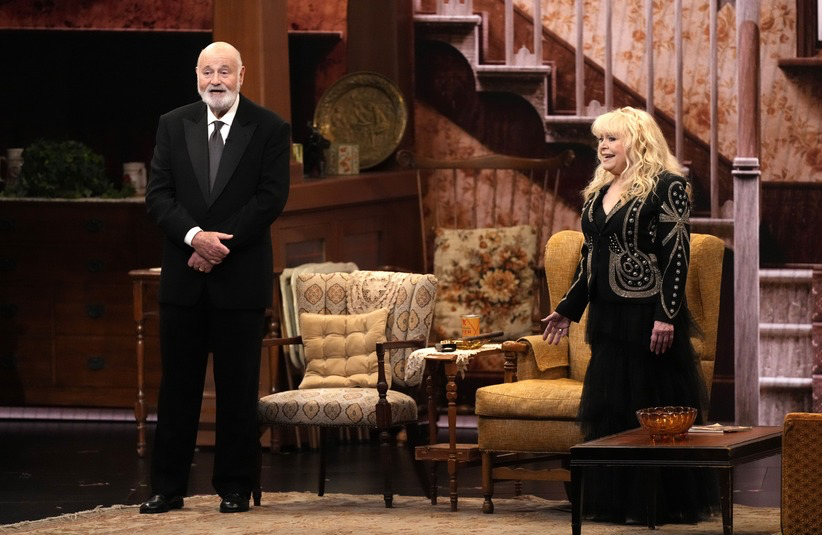
When “All in the Family” premiered in 1971, television was a landscape of safe, inoffensive family comedies. Norman Lear changed all that, and Rob Reiner was his vessel for the counterculture. While Archie Bunker represented the often fearful and sometimes angry “Silent Majority” clinging to the past, Reiner’s Mike Stivic was the voice of the future; he was messy, loud, and passionately progressive.
Reiner had an impossible job. He had to stand toe-to-toe with Carroll O’Connor, a titan of character acting, and not get swallowed up. He had to take the insults – the endless barrage of “Meathead” and “pinko” – and fire back with logic and humanity. It’s a testament to Reiner’s talent that he didn’t just play a caricature of a hippie; he played a man who genuinely loved his father-in-law, even while hating everything he stood for.
That incredible dynamic is what makes the show timeless. It wasn’t just about shouting matches over Nixon or Vietnam; it was about the painful reality of loving family members with whom you fundamentally disagree.
A Haunting Scene Resurfaces
In the wake of the recent tragedy, a specific scene from the show’s first season has resurfaced, taking on a prophetic and chilling new meaning. Internet sleuths and heartbroken fans have pointed to a moment in the episode “Edith Has Jury Duty,” which originally aired in March 1971.
In the clip, shared by Robin Hood 702 via X (formerly known as Twitter), Archie and Mike are debating capital punishment. Archie, in his typical coarse fashion, poses a hypothetical scenario to his son-in-law: “Suppose you was to come home some fine day and find your wife’s throat cut.” He asks Mike if he wouldn’t want to “fry” the killer.
Mike’s response was characteristically principled: “No, what good would that do? If I killed that murderer, would that bring [my wife] Gloria back?”
Watching that scene today is a visceral, uncomfortable experience. It is a grim irony that Reiner, who spent his early career arguing against violence and for compassion through his character, would meet such a violent end in his own home. The parallels between the fictional debate and the real-world horror involving his son Nick are the kind of thing you’d dismiss as bad writing in a movie, yet here we are facing it in reality.
From Sitcom Star to Hollywood Legend
It would be a huge disservice to let the circumstances of his death entirely overshadow the brilliance of his life. Rob Reiner did what few sitcom stars ever manage to do: he escaped the shadow of his iconic character, Meathead.
He didn’t just survive leaving “All in the Family;” he thrived. He went on to become one of the most versatile directors in Hollywood history. We are talking about the man who gave us “This Is Spinal Tap,” “The Princess Bride,” “When Harry Met Sally,” and “A Few Good Men.” He had a rare gift for capturing the human condition, whether it was the painful hilarity of a rock band in decline or the nostalgic ache of childhood friendship and adventures in “Stand by Me”
A Final Bow
The chemistry between Reiner and O’Connor remains the gold standard for sitcom duos. The finale of Reiner’s run on the show, where Mike finally tells Archie, “You’ve been like a father to me,” and Archie can barely choke out a response, is one of the most earned emotional moments in TV history.
Rob Reiner in “All in the Family” taught us how to fight with our words, how to stand up for the marginalized, and how to love people even when they make it incredibly difficult. It’s sad beyond words that a man who brought so much joy and insight to this world left it in such a horrific and violent manner. As we process the news and our grief, we should remember Reiner not for the headlines of his final days, but for the decades of humor and the thought-provoking art he created.