PBS Just Lost All Its Federal Funding: Why You Should Care

On May 1, President Trump signed an executive order that cuts all federal funding to PBS, NPR, and the Corporation for Public Broadcasting by the end of June. The announcement has triggered a firestorm online, with #SavePBS trending across TikTok, X, and Reddit. For millions of families—especially in rural and low-income areas—PBS isn’t just TV, it’s school, a babysitter, and a safe space. The move has reignited a decades-old debate over what public media is worth, and who it’s really for.
Why PBS Matters More Than You Think
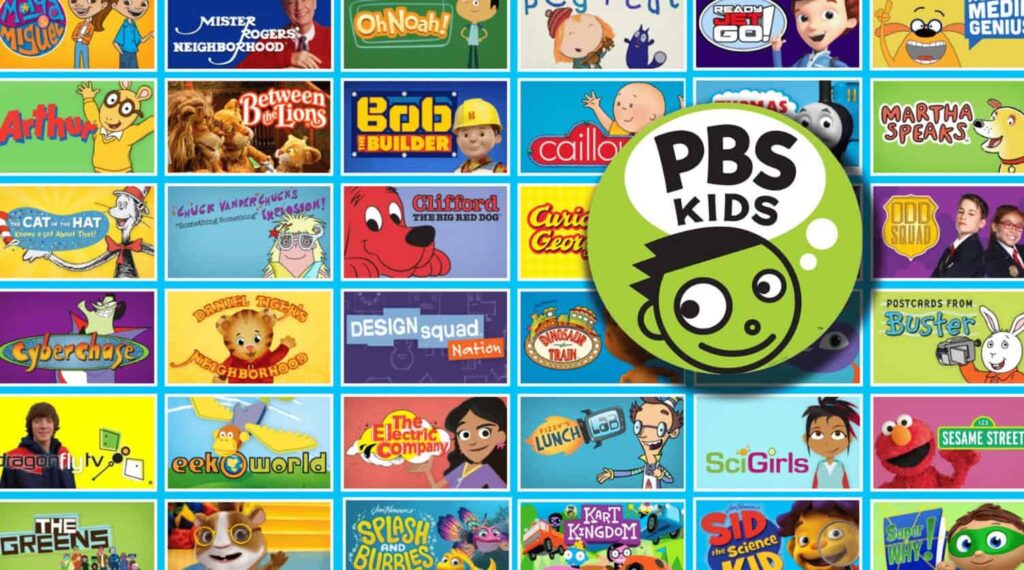
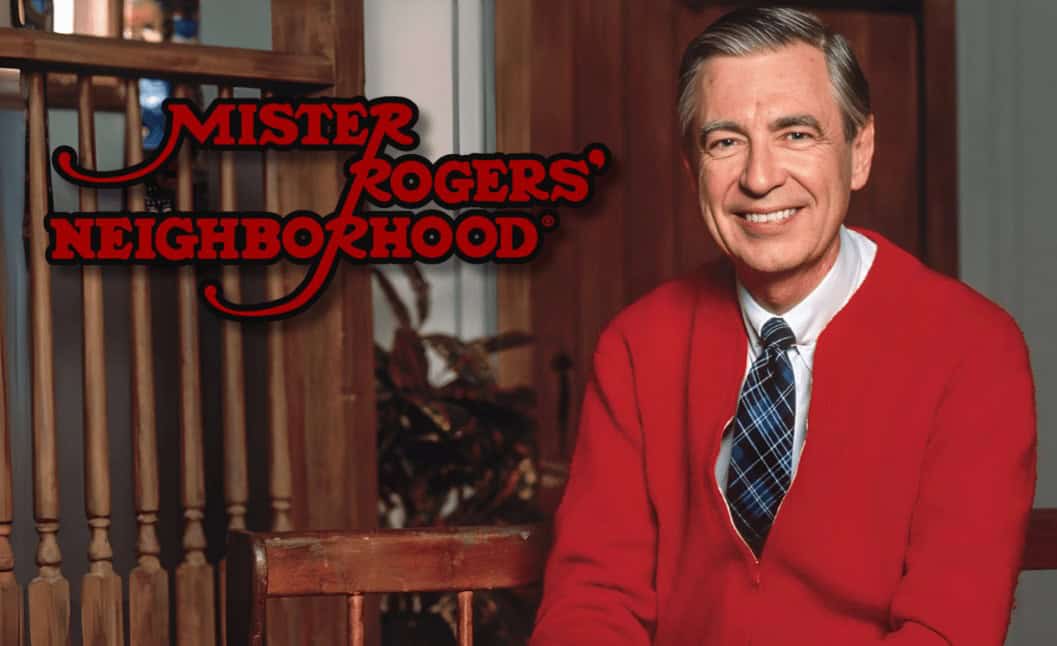
If you grew up in the U.S., chances are PBS helped raise you. From Mister Rogers’ Neighborhood and Sesame Street to Arthur, Between the Lions, Cyberchase, Clifford, Zoom, and Reading Rainbow, PBS has spent decades quietly doing what no other network has: offering free, educational, ad-free programming to children—regardless of their zip code or household income.
And that’s not just a warm, fuzzy memory. It’s an ongoing mission.
Unlike streaming platforms or cable channels that require subscriptions, PBS is free, accessible over the air, and available to 97% of American households. That might not mean much if you’ve got Netflix, Disney+, and an iPad in every room. But for millions of families, especially those in rural areas or living paycheck to paycheck, PBS is still the only reliable source of early childhood education available on TV. A 2025 study from the Corporation for Public Broadcasting found that over 87% of PBS Kids viewers come from homes unable to afford internet.
For these kids, PBS isn’t background noise. It’s school. It’s safety. It’s a second chance.
The “Sesame Street” Effect
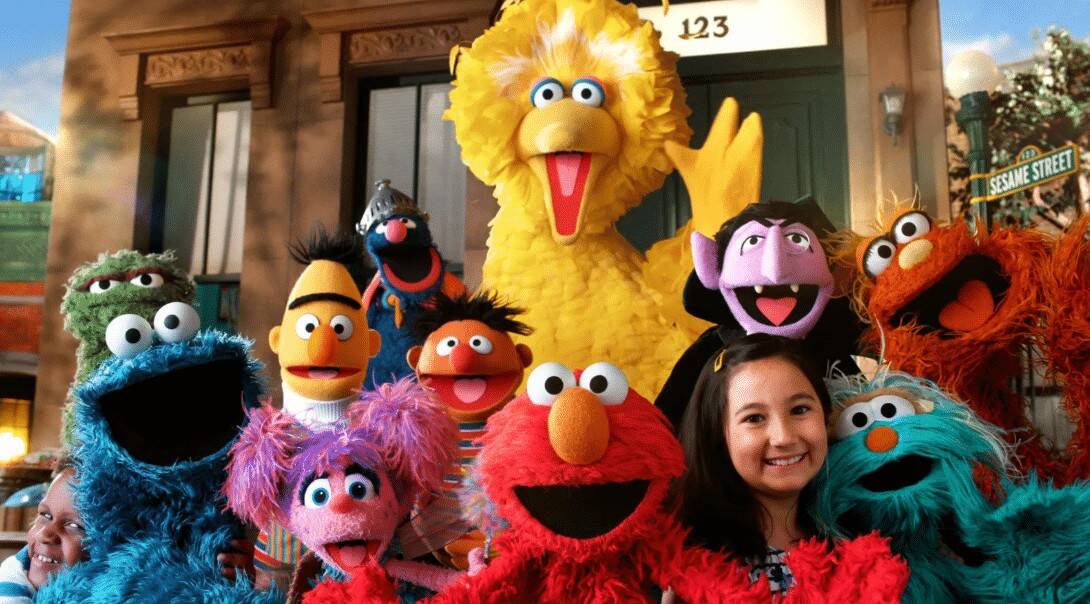
Let’s take Sesame Street as a case study. Developed in 1969 in partnership with child psychologists and educators, it was deliberately designed to close the achievement gap between low-income kids and their wealthier peers. By mixing fun characters with literacy, numeracy, and life skills—think brushing your teeth, sharing, or dealing with big emotions—Sesame Street became a tool as powerful as any preschool.
And it worked. Multiple studies over the decades have shown that watching Sesame Street correlates with improved school readiness, particularly among children in under-resourced communities. One landmark study by the University of Maryland even concluded that regular viewers of the show were just as prepared for kindergarten as their peers who had attended formal preschool.
That’s the kind of impact PBS has had—measurable, meaningful, and life-changing.
The “Arthur” Generation
If you were born anytime between 1996 and 2010, Arthur probably taught you how to apologize, how to stand up to a bully, or what it means to have a friend who’s different from you. The show tackled big topics—divorce, illness, disabilities, even same-sex marriage—with a level of emotional intelligence that most adult shows still can’t match.
And again, it was free. No password. No parental controls. No monthly charge. Just lessons, stories, and empathy—broadcast directly into living rooms, shelters, and rural homes where kids might not have a therapist, a school counselor, or even stable internet access.
Educational Access, Not Entertainment
What makes PBS unique isn’t just the programming—it’s the public service model. Every major children’s show on PBS is backed by research, community engagement, and educational outreach. That means the shows are just one part of a much larger ecosystem.
PBS member stations regularly partner with local libraries, schools, and nonprofit organizations to offer:
-
Free books and literacy workshops
-
Summer learning programs
-
Parent education seminars
-
Digital media training for teachers
And all of this is geared toward closing the educational equity gap.
So when critics call PBS “just TV,” they’re missing the point. It’s not just what’s on the screen—it’s everything that surrounds it. For every Curious George episode or Wild Kratts adventure, there’s a team of educators working to make sure that content is translated into real-world learning. And that work costs money.
The Pandemic Proved the Point
If you want a more recent example of PBS’s importance, look no further than 2020. When schools shut down during the COVID-19 pandemic, and millions of kids were suddenly forced into remote learning, PBS stations across the country became an educational lifeline.
In Los Angeles, PBS SoCal and KCET teamed up with the Los Angeles Unified School District to launch “At-Home Learning,” a broadcast curriculum that aired academic content by grade level. The goal? Reach students without internet access or devices. That program reached an estimated 700,000 kids per week.
In places like Mississippi, West Virginia, and rural Texas, local PBS stations followed suit—airing math lessons, reading programs, and science segments designed to keep kids learning, even if they had no Wi-Fi, no laptop, and no Zoom.
Tell us again that PBS isn’t essential.
The Digital Divide is Still Real
Yes, it’s 2025. But not everyone has broadband.
As of last year, roughly 18 million Americans still lacked reliable access to high-speed internet. That number jumps dramatically in tribal lands and rural areas. For those families, “just stream it” isn’t a solution. It’s a dismissal. And it’s exactly why PBS’s over-the-air broadcasts remain so crucial.
Think of it this way: Netflix is a subscription. YouTube is an algorithm. PBS is a public good.
And It’s Not Just Kids
PBS also serves adults—especially older adults—with high-quality journalism (PBS NewsHour), documentaries (Frontline, American Experience), arts coverage (Great Performances, Masterpiece), and civic education (Washington Week). In many communities, it’s the only station still airing in-depth reporting and fact-checked news without ads or partisan spin.
In short, PBS isn’t just background noise—it’s one of the last remaining institutions in American media that exists purely to inform, educate, and serve the public interest. And without federal funding, much of that will disappear—not just in theory, but in practice.
The Politics and the Precedent

If this all feels familiar, it should. Cutting PBS funding has been a political football for decades—used as both a budget-slashing tactic and a culture war talking point. But what makes this moment different is how far it’s actually going.
On May 1, 2025, President Donald Trump signed an executive order instructing the Corporation for Public Broadcasting (CPB) to end all federal funding to PBS, NPR, and affiliated public media stations by June 30. The order also directs federal agencies to cut off indirect support, and tasks the FCC with investigating whether PBS and NPR have “engaged in unlawful discrimination or political bias.”
It’s the most aggressive move against public broadcasting in U.S. history—and it’s already being challenged in court.
What the Executive Order Says
The official line from the White House is that taxpayer money shouldn’t be used to “subsidize biased media.” In a press release, the administration accused PBS and NPR of spreading “radical woke propaganda” under the guise of educational content. It’s part of a broader attempt to slash $163 billion from non-defense federal programs in the 2026 budget proposal.
But here’s the kicker: the CPB—the very organization being ordered to shut off the spigot—was created by Congress in 1967 to be an independent, nonprofit buffer between politics and programming. It exists specifically to prevent political interference in public media.
Legal experts argue that the executive order oversteps presidential authority by trying to override a law passed by Congress. And CPB itself has already pushed back, filing a lawsuit to block the order and warning that the consequences will be immediate and devastating—especially for smaller, rural PBS stations.
How Local Stations Will Be Hit
Federal funding only makes up about 15% of PBS’s national budget—but that number is wildly misleading.
For rural and underserved communities, that number can climb as high as 60–70%. That’s because small-market stations—like KLRN in San Antonio or Idaho Public Television—don’t have the wealthy donor base or corporate sponsors that big-city stations like WGBH in Boston or WNET in New York can rely on.
Take KLRN, for example. In 2024 alone, the station served more than 3.7 million viewers across 33 counties, and its free early learning programs reached 64,000 children and caregivers. Losing CPB funds could literally force it off the air.
We’re not just talking about a few fewer episodes of Antiques Roadshow. We’re talking about entire stations going dark.
History Repeats—Mister Rogers to the Rescue (Then)
This isn’t the first time PBS has had to fight for its life.
Back in 1969, President Richard Nixon proposed slashing public media funding by 50%, claiming it was fiscally irresponsible. At the time, CPB was barely two years old. Enter: Fred Rogers.
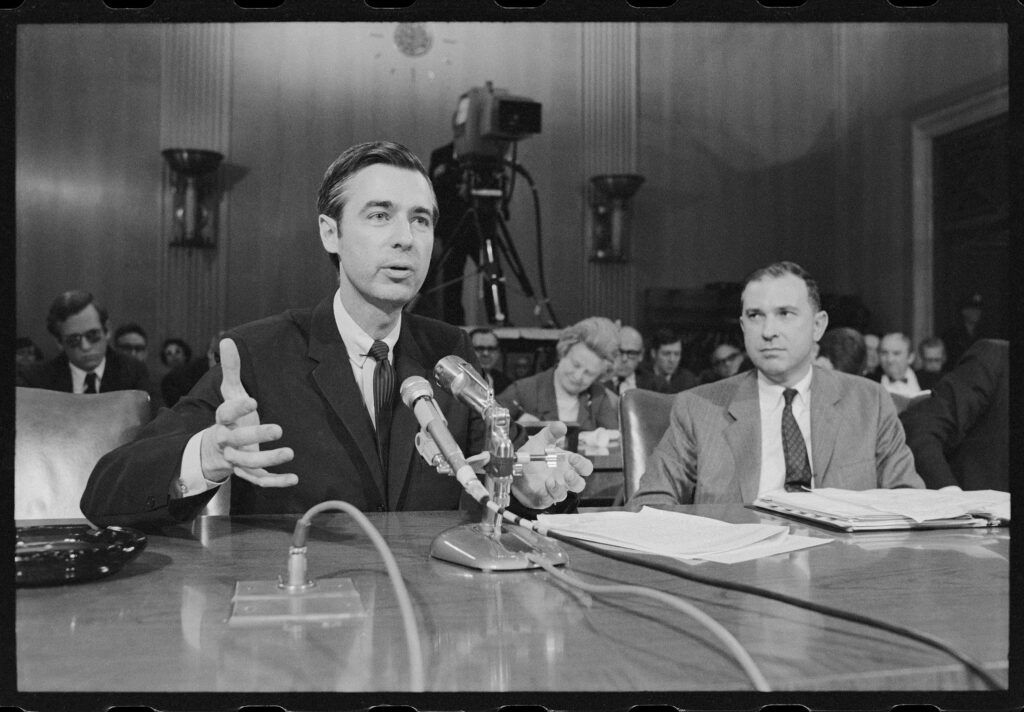
In one of the most iconic moments in television history, Mister Rogers testified before the U.S. Senate Subcommittee on Communications. In calm, earnest tones, he explained how PBS helped children express difficult emotions and develop empathy. Then he recited the lyrics to one of his songs—“What Do You Do with the Mad That You Feel?”—to demonstrate the show’s educational power.
By the end of the six-minute speech, Senator John Pastore, who had walked in skeptical, famously said, “Looks like you just earned the $20 million.”
It was a mic-drop moment—gentle, powerful, and incredibly effective. PBS funding was saved.
But that was then. And Fred Rogers isn’t here to make the case this time.
A New Era of Political Targeting
What makes today’s situation different isn’t just the budget angle—it’s the politicization. PBS and NPR have long been painted as liberal-leaning by some conservative commentators, even though independent studies repeatedly rank their content among the most trusted and least biased in American media.
Still, in an era where school boards are banning books and state legislatures are defunding DEI programs, PBS has become an unexpected target. Why? Because it dares to feature content that includes:
-
LGBTQ+ families
-
Bilingual programming
-
Racism, mental health, and social justice themes
Episodes of Arthur and Sesame Street have been pulled from some states over perceived “agendas.” And in 2022, several PBS stations faced political pressure for airing documentaries on Black history and gender identity during primetime hours.
So this executive order? It’s not just about dollars. It’s about control—who gets to define what’s “educational,” and who gets a voice on public airwaves.
What Happens Next
The CPB lawsuit could buy time. Congress could also intervene, especially since public media have historically enjoyed bipartisan support (yes, even Reagan funded it). But until something changes, local stations are being told to prepare for the worst.
That means layoffs. That means fewer hours of kids’ programming. That means community outreach and education efforts going dark—not slowly, but all at once.
And that means millions of families are losing access to the one place they can count on for trusted content, 24/7, free of charge.
Conclusion
I was one of those kids who turned to PBS because we couldn’t afford anything else. And I’m guessing a lot of you were, too. It was there after school, during the summers, and on the weekends—teaching us how to count, how to say sorry, how to be human. It didn’t care what our parents made or whether we had Wi-Fi. In the words of Mister Rogers: “You’ve made this day a special day, by just your being you.” That’s the kind of message every child deserves to hear—no matter how much money their family makes.
So when people say this is just about politics or budgets, don’t buy it. This is about access. This is about who gets to learn and who gets left behind.
If PBS disappears, it won’t be the loudest or wealthiest kids who feel it—it’ll be the quiet ones, the rural ones, the hurting ones, the poor ones, the ones still figuring out their world through Big Bird, Daniel Tiger, and a cardigan-wearing neighbor who just wanted us to feel safe.
That’s why this matters. And that’s why you should care.