
Michael J. Fox Explains Skipping Michael Jackson and Mick Jagger Wild Scene in “Back to the Future”

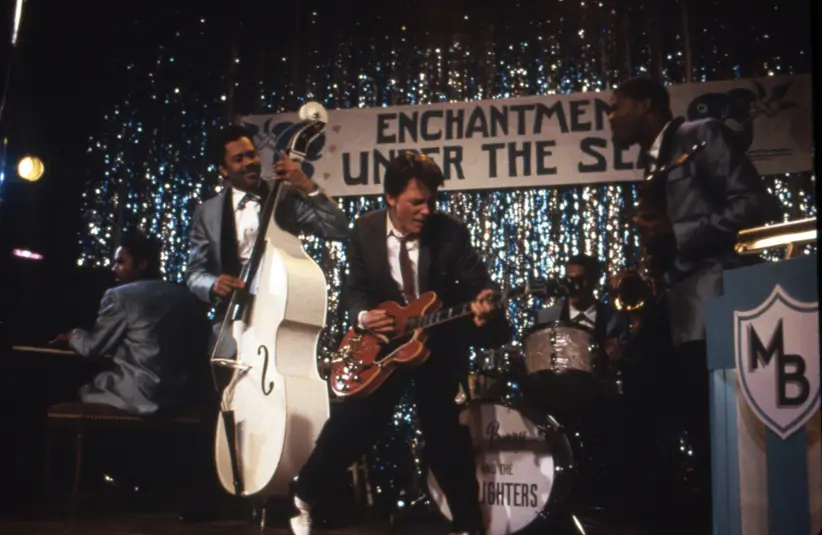
If there is one moment in cinema history that screams “1980s perfection,” it’s Marty McFly shredding a Gibson ES-345 at the Enchantment Under the Sea dance. That “Back to the Future” scene is legendary. It’s the climax of the movie’s energy, where the past meets the future in a blaze of rock ‘n’ roll glory. But according to Michael J. Fox’s new memoir, “Future Boy,” that scene almost looked very, very different – and probably a lot worse.
A Moonwalking McFly?
Fox recently revealed that the original script for “Back to the Future” had some… interesting ideas for how Marty should behave on stage. Specifically director Robert Zemeckis and the writers wanted Michael J. Fox to channel the dance moves of pop icons Michael Jackson and Mick Jagger. Yes, really. Imagine Marty McFly moonwalking while trying to invent rock ‘n’ roll. It sounds like a fever dream, and not the good kind.
Why Michael J. Fox Ditched the Pop Icons for Rock Gods
In “Future Boy,” Michael J. Fox didn’t mince words about his reaction to the original choreography notes. The “Back to the Future” script explicitly called for Marty to “cavort like Little Richard,” pull some “Elvis pelvis moves,” and then transition into a Mick Jagger strut before finishing with a Michael Jackson style. Interesting.
Fox’s response? Absolutely not. According to Entertainment Weekly, his reasoning was sound, authoritative, and frankly, saved the “Back to the Future” scene: “I ditched the idea of mimicking Michael Jackson and Mick Jagger (not guitarists!) and replaced them with tributes to my own rock guitar gods.”
He has a point. Marty isn’t a pop star; he’s a guitarist. Mimicking the King of Pop while holding a guitar would have looked awkward at best and disastrous at worst. Instead of going for the easy pop culture gag, Fox decided to honor the actual legends of the fretboard.
Michael J. Fox Channels the Spirit of Van Halen and Hendrix
So, who did Michael J. Fox actually channel during that high-voltage performance? If you look very closely at the “Johnny B. Goode” sequence, you can see the DNA of rock guitar royalty woven into every move. Fox worked with choreographer Brad Jeffries to meticulously craft a performance that paid homage to the greats.
- Jimmy Page: When Marty drops to his knees without missing a chord? That’s pure Led Zeppelin power.
- Jimi Hendrix: The move where he slings the guitar behind his head? A direct nod to the psychedelic rock pioneer.
- Pete Townshend: The windmills were, of course, a tribute to The Who’s legendary guitarist.
- Eddie Van Halen: Fox specifically worked on an “intense right-hand hammering” technique to honor Van Halen.
- Slash: Yep. Looking back we can see Marty even threw in a bit of Guns N’ Roses flair with a rumbling slide down the E string.
This attention to detail is exactly why that “Back to the Future” scene works. It’s not just an actor pretending to play; it’s a musician respecting the craft. Fox notes that Zemeckis allowed him the “personal freedom” to paint outside the lines, and thank goodness he did. The result is a performance that feels chaotic and authentic to the character of Marty McFly.
The Mystery of the Missing Gibson
The “Johnny B. Goode” scene has actually been back in the headlines recently for another reason: the guitar itself. Gibson launched a global search for the specific Cherry Red Gibson ES-345 that Michael J. Fox played in the movie, which has apparently gone missing. (Guitarsleuths, where are you?)
Fox also touched on a funny little plot hole regarding that guitar in his memoir. Fans have pointed out for decades that the ES-345 wasn’t actually introduced until 1958 – three years after the “Back to the Future” scene takes place in 1955. It’s a “temporal inconsistency” that haunts guitar aficionados, but when the performance is that good, we can forgive a tiny time-travel paradox.
In the end, Michael J. Fox’s decision to ignore the script and trust his gut gave us one of the best musical moments in film history. It wasn’t about mimicking the trends of the 80s; it was about honoring the spirit of rock ‘n’ roll. And that is why we are still talking about it 40-plus years later.
Author
