How Star Trek: The Original Series Revolutionized Sci-Fi, Television, and the World

Back in 1966, Star Trek: The Original Series showed up on NBC looking like just another oddball sci-fi experiment. Nobody—seriously, nobody—thought this weird little space show with foam rocks and beeping consoles would stick. But it did way more than that. Star Trek cracked open what sci-fi could be, shook up how TV tackled real-world issues, and somehow predicted half the tech we use today. It didn’t just build a fandom—it built a future.
Star Trek Wasn’t Just First—It Was Different
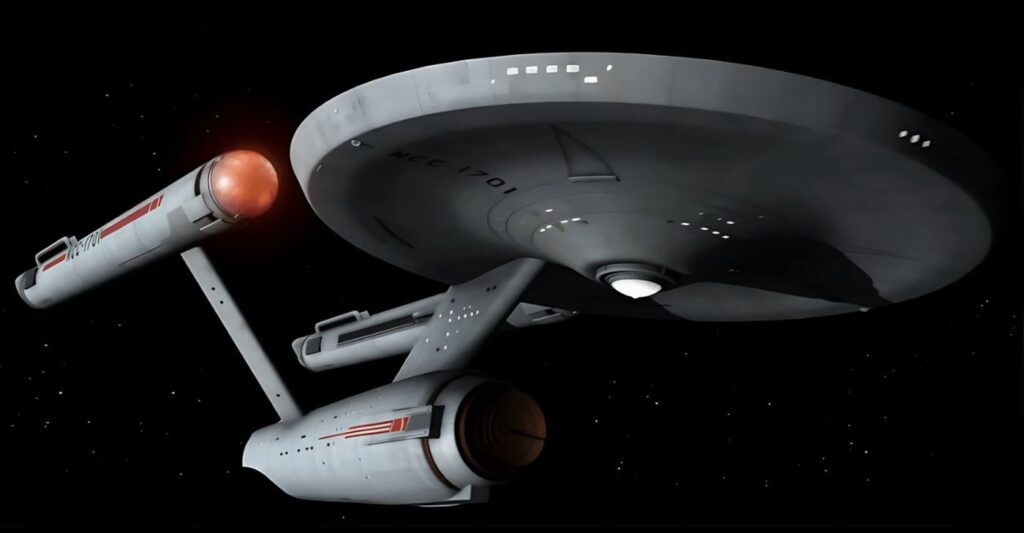
When Star Trek: The Original Series launched in 1966, TV had never seen anything quite like it. Sure, there were other sci-fi stories floating around—The Twilight Zone, Lost in Space, a few old movie serials—but nothing that felt like this. Star Trek wasn’t just about aliens or adventure. It was about ideas. Big, bold, world-shaking ideas. And it wasn’t afraid to take its time to tell them.
At a glance, the show was simple: a starship, a captain, a crew, and a galaxy full of planets to explore. But under that surface, it was quietly revolutionary. It flipped the script on what science fiction could be—and what television could dare to do.
A Western in Space (But Smarter)

Gene Roddenberry famously pitched Star Trek to executives as “Wagon Train to the stars.” At the time, Westerns were everywhere on TV, and Roddenberry knew that to sell a sci-fi show, he needed to frame it in terms studios could understand. So he gave them what sounded like a standard formula: a crew traveling from place to place, solving problems, encountering strange new “towns” (aka planets), and learning something along the way.
What they got, though, was way more than space cowboys.
Roddenberry used that setup to explore complex, sometimes controversial ideas under the guise of alien encounters and futuristic technology. Diplomacy instead of shootouts. Philosophy instead of fistfights (well… mostly). Morality plays wrapped in shiny silver jumpsuits and blinking consoles.
This was science fiction not just as spectacle, but as a lens—a way to talk about the world we live in by showing us a world that doesn’t exist yet.
Serialized, But Not Serialized
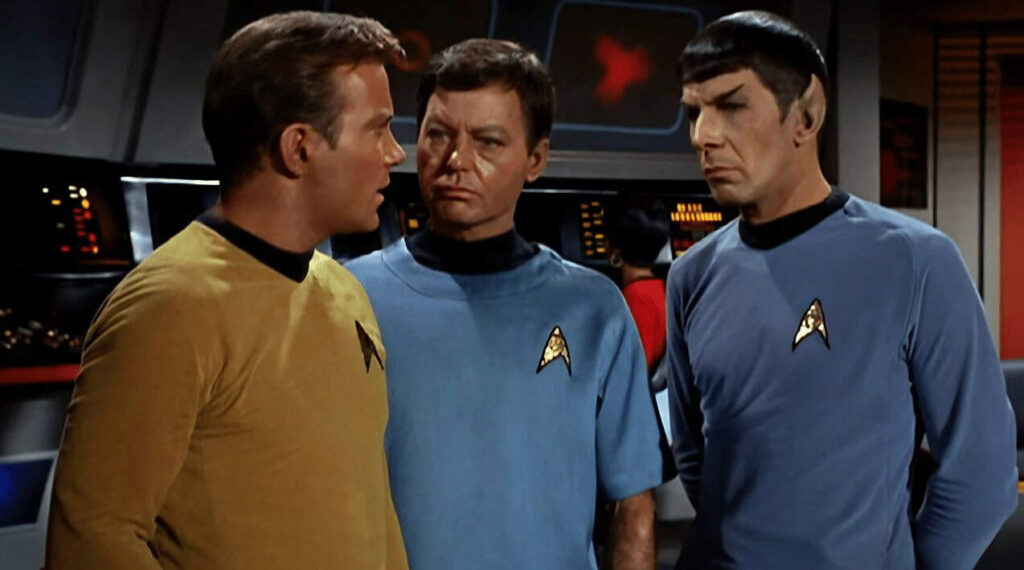
One of the most radical things about Star Trek in the ‘60s was how it treated its characters like they actually remembered things. Most shows back then were episodic to a fault—characters hit the reset button every week. Nobody grew. Nobody changed. Nothing carried over.
Star Trek wasn’t exactly serialized in the modern sense, but it felt like it was. You got the sense that these people had a history together. That their relationships meant something. That they’d been through stuff.
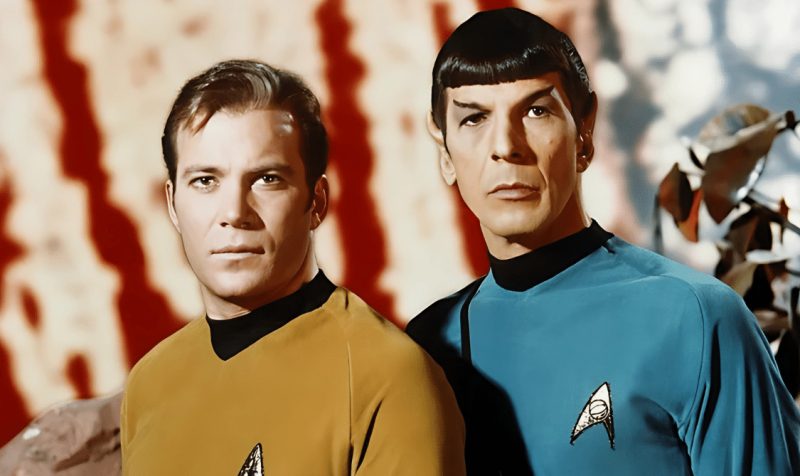
Kirk, Spock, and McCoy weren’t just a trio of leads—they were a friendship triangle (or a romantic one, depending on who you ask), constantly pushing and pulling each other into better versions of themselves. Episodes like “Amok Time,” “The Galileo Seven,” and “Balance of Terror” weren’t just about aliens or technology; they were about them. Their choices. Their ethics. Their bonds.
That emotional continuity was rare. It helped build the kind of connection with audiences that most sci-fi at the time just didn’t bother with.
Breaking the Mold of ‘50s Sci-Fi
Up to that point, most science fiction in pop culture had one goal: entertain. Whether it was creature features in theaters or campy serials on TV, the genre was mostly just pulpy fun. Monsters, laser guns, bug-eyed aliens—it was more about thrills than thoughts.
Star Trek broke that mold wide open. It wasn’t afraid to slow down. To get quiet. To ask the audience to think. Episodes like:
-
“The Devil in the Dark”: Asked whether a creature destroying property might actually be intelligent—and worth saving.
-
“The Corbomite Maneuver”: Deconstructed Cold War fear and bluster into a message of understanding and mercy.
-
“The Menagerie”: Played with perception, memory, and the morality of keeping people alive against their will.
Even when the dialogue got clunky (and let’s be honest, it did sometimes, but it was just as poetic as it was campy), the ideas behind each episode were sharp. Star Trek was playing 4D chess while everyone else was tossing ray guns at rubber-suited monsters.
Sci-Fi with a Soul
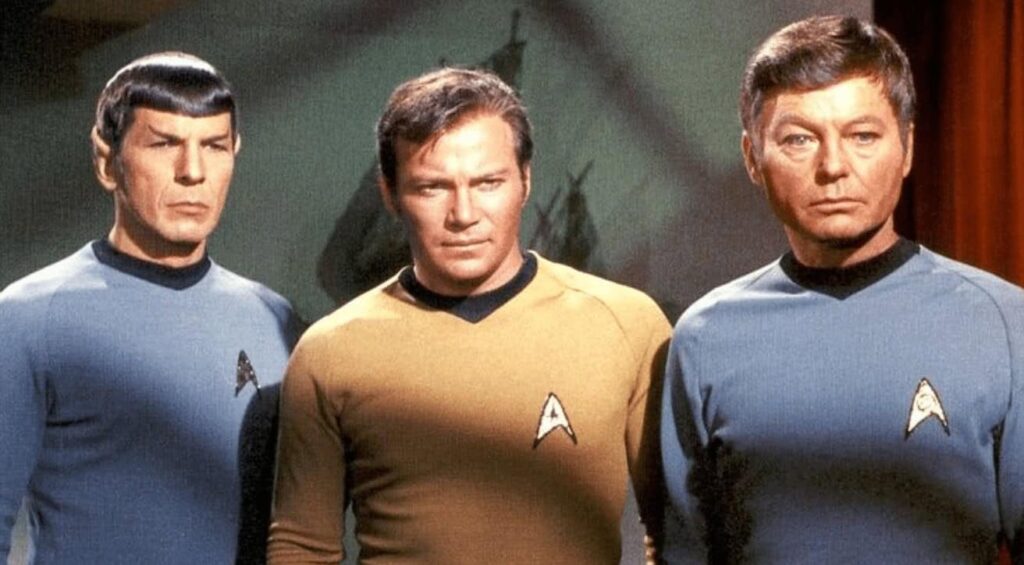
The heart of Star Trek wasn’t warp drives or transporter beams—it was humanism.
Roddenberry envisioned a future where humanity had gotten past its worst instincts. No more war, no more poverty, no more racism. Earth had cleaned up its act, and now we were out in space trying to do some good. That hopeful outlook set it apart from almost everything else on television, sci-fi or not.
In a time when the world felt on the edge of collapse—Vietnam, civil rights clashes, nuclear dread—Star Trek said: What if we actually figure it out?
What if the future isn’t dystopian?
What if it’s… better?
That kind of optimism wasn’t just refreshing—it was quietly radical. It didn’t preach. It didn’t lecture. It just showed a crew of wildly different people working together, solving problems, and treating each other with respect. That was its own kind of protest.
A Universe You Could Live In
Another thing Star Trek did first—and best—was build a world that felt real.
This wasn’t some vague, catch-all “future.” It was specific. There was a Starfleet. A United Federation of Planets. Klingons. Vulcans. Starbases. Transporter rooms. Warp factors. The show dropped you into this world and never stopped to explain everything—and that was part of the magic.
The consistency of it all—the uniforms, the ship design, the rules of engagement—made it feel like a functioning universe. Fans didn’t just watch Star Trek. They lived in it.
That depth of worldbuilding set the standard for every major sci-fi franchise that followed. Star Wars, Babylon 5, The Expanse, Firefly, even Marvel’s space stuff—all of them owe a debt to the way Star Trek built a believable future from the ground up.
When Space Got Real: Star Trek as a Mirror for Earth
Let’s be honest—most TV in the 1960s wasn’t exactly subtle. You had sitcoms with laugh tracks, Westerns where the good guys always wore white hats, and cop dramas that tied up every conflict in 48 minutes flat. Serious social commentary? That was for the news. Definitely not for a show with aliens, phasers, and a guy with pointed ears.
And yet, Star Trek did it. Over and over again.
Week after week, behind all the blinking lights and sci-fi lingo, this strange little show was holding up a mirror to the world outside your living room—and asking some pretty uncomfortable questions.
The Boldest Allegories on Network TV
From the start, Gene Roddenberry made it clear: Star Trek wasn’t just about space adventures. It was about us. The show used alien planets and future tech to talk about race, war, poverty, fear, and power—at a time when most shows wouldn’t touch that stuff with a ten-foot boom mic.
And it didn’t do it with a hammer. It snuck the truth in under the radar.
Take “Let That Be Your Last Battlefield.” Two alien men, locked in endless conflict, are brought aboard the Enterprise. One is black on the left side of their body and white on the right. The other is black on the right of their body and white on the left. Their hatred for each other is absolute and irrational. Kirk and crew are baffled.
The message? Pretty damn clear: Racism is stupid, destructive, and completely arbitrary.
Was it subtle? Not exactly. But it didn’t have to be. It aired in 1969—just months after Martin Luther King Jr. was assassinated. America was burning, literally and figuratively. And here was a sci-fi show saying, “This isn’t just bad—it’s insane.”
That was the beauty of Star Trek’s allegories. They let you talk about hot-button issues without triggering the censors—or your uncle.
Time Travel, Love, and the Price of Peace
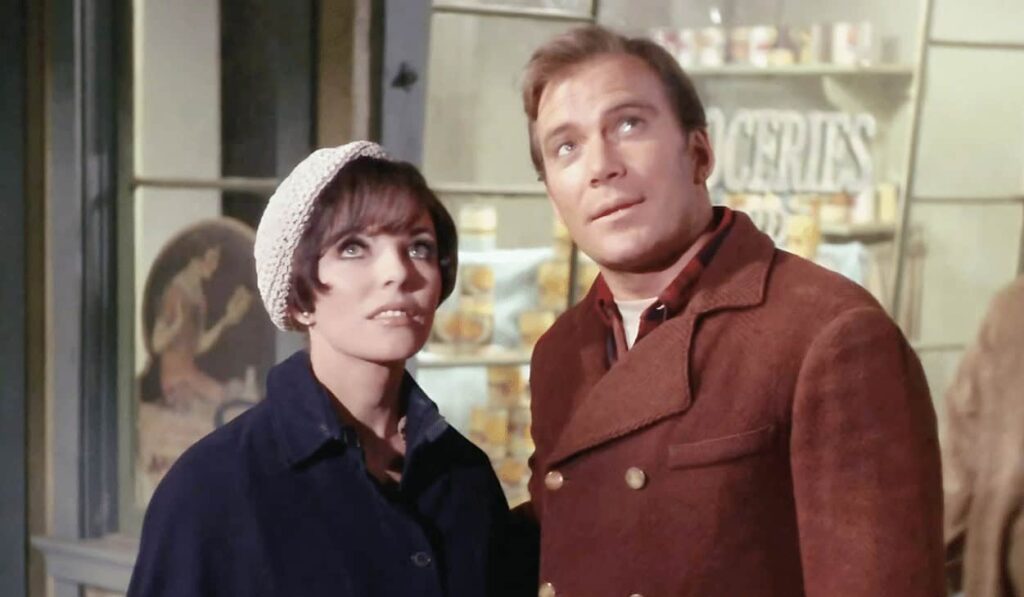
Then there’s “The City on the Edge of Forever.” Widely regarded as one of the best episodes in the franchise, this one wasn’t just smart—it was gutting.
Kirk and Spock travel back to 1930s New York. Kirk falls in love with a kind, idealistic woman named Edith Keeler—who’s destined to die in a car accident. If she lives, the U.S. stays out of World War II, Hitler wins, and millions die. Kirk has to let her die to preserve the future.
It’s a devastating meditation on pacifism, fate, and moral compromise. And it asked a question no other show on TV would have dared at the time: What if doing the right thing costs you everything?
This wasn’t just “space drama.” It was Shakespeare in a Starfleet uniform.
Vietnam, the Cold War, and the Fog of Moral Gray
You want direct political commentary? Try “A Private Little War.” This episode takes place on a neutral planet where two sides are being armed—one by the Klingons, one (reluctantly) by the Federation. Sound familiar? It’s an overt allegory for the Vietnam War, with Kirk reluctantly escalating the arms race in the name of “balance.” There’s no triumphant ending, no clear villain. Just the quiet horror of realizing you’re fueling a war you can’t stop.
That kind of moral gray wasn’t just rare—it was almost unheard of. Most shows picked a side and wrapped things up neatly. Star Trek said, “Yeah… it’s more complicated than that.”
And it kept going there—over and over.
-
The Cold War? See “Balance of Terror”, a tense standoff with the Romulans that plays like a naval thriller.
-
Nuclear paranoia? That’s “The Doomsday Machine.”
-
Government surveillance and control? “Return of the Archons.”
Star Trek wasn’t just using sci-fi as window dressing. It was using it as armor—to tell the truth about the real world without getting pulled off the air.
That Kiss Changed Everything
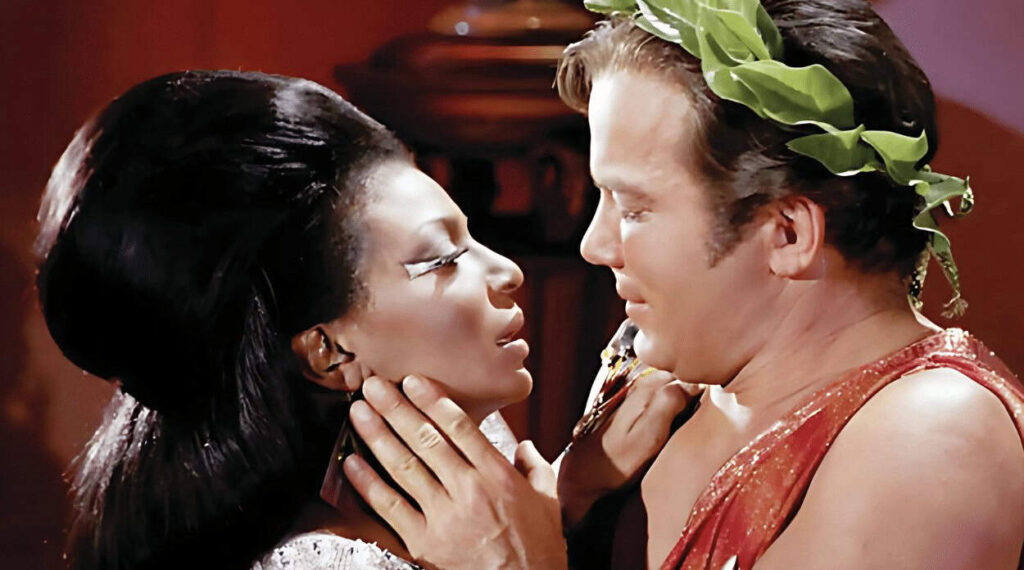
Then there’s the kiss.
In 1968, during the episode “Plato’s Stepchildren,” Captain Kirk and Lieutenant Uhura are forced to kiss. It wasn’t a romantic moment—it was mind control—but it still made history: the first interracial kiss on American television.
Let that sink in.
In the middle of the civil rights movement. While segregation was still being fought tooth and nail. While interracial relationships were still illegal in some states. Star Trek put a Black woman and a white man in a lip-lock in prime time.
NBC panicked. Southern affiliates threatened to pull the episode. The network reportedly begged Roddenberry to film alternate versions. He did—but only used the kiss in the final cut.
The world didn’t end. The episode aired. And something shifted.
It wasn’t about the kiss itself—it was about showing it. About saying, “This is normal. This is human. This is the future.”
Representation That Mattered
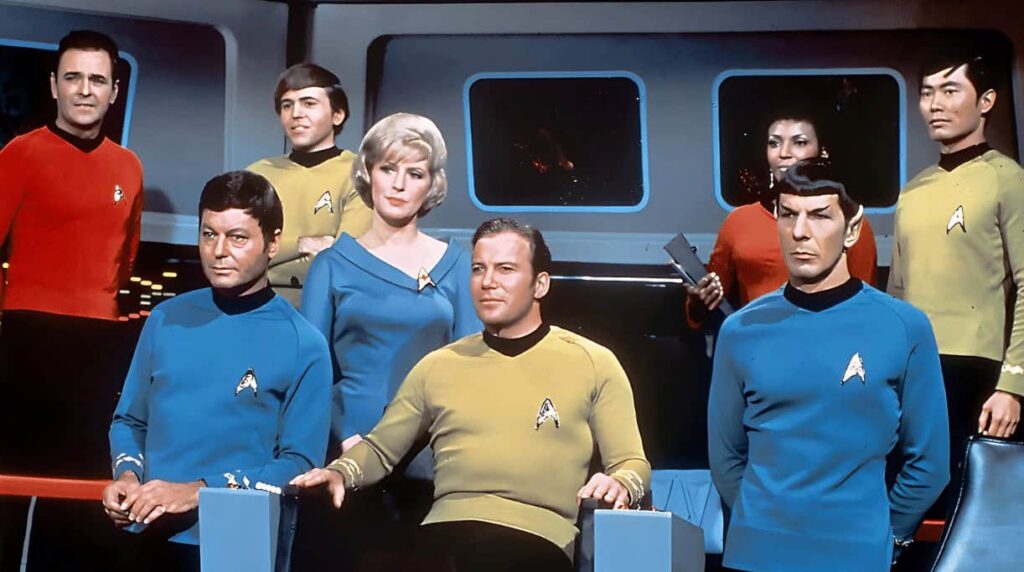
Of course, it wasn’t just one kiss. It was the whole bridge. When you looked at the crew of the Enterprise, you didn’t just see a sci-fi squad—you saw the future you wanted to believe in.
-
Lt. Uhura: A Black woman, in uniform, on the bridge, holding rank, giving orders. Not a maid. Not a sidekick. Not a background extra. She was essential.
-
Mr. Sulu: A Japanese-American officer, treated with respect and portrayed as intelligent, calm, and competent—not a caricature. He was also played by the legendary George Takei, a gay man in a time being LGBTQ was heavily taboo and even criminalized.
-
Ensign Chekov: A Russian crew member during the Cold War. Think about that. America was in a space race with the Soviets, and Star Trek put a Russian guy at the controls of the starship. And made him one of the most loveable character while also having a consistent love for his home country.
-
Even Spock, with his half-human, half-Vulcan identity, became a metaphor for anyone who felt caught between cultures, norms, or identities. He was the outsider who was essential to the mission.
That cast wasn’t just diverse—it was deliberately diverse. Roddenberry didn’t do it for clout. He did it because he believed that a future worth fighting for was one where everyone had a seat at the table.
MLK and Nichelle Nichols: A Moment That Mattered
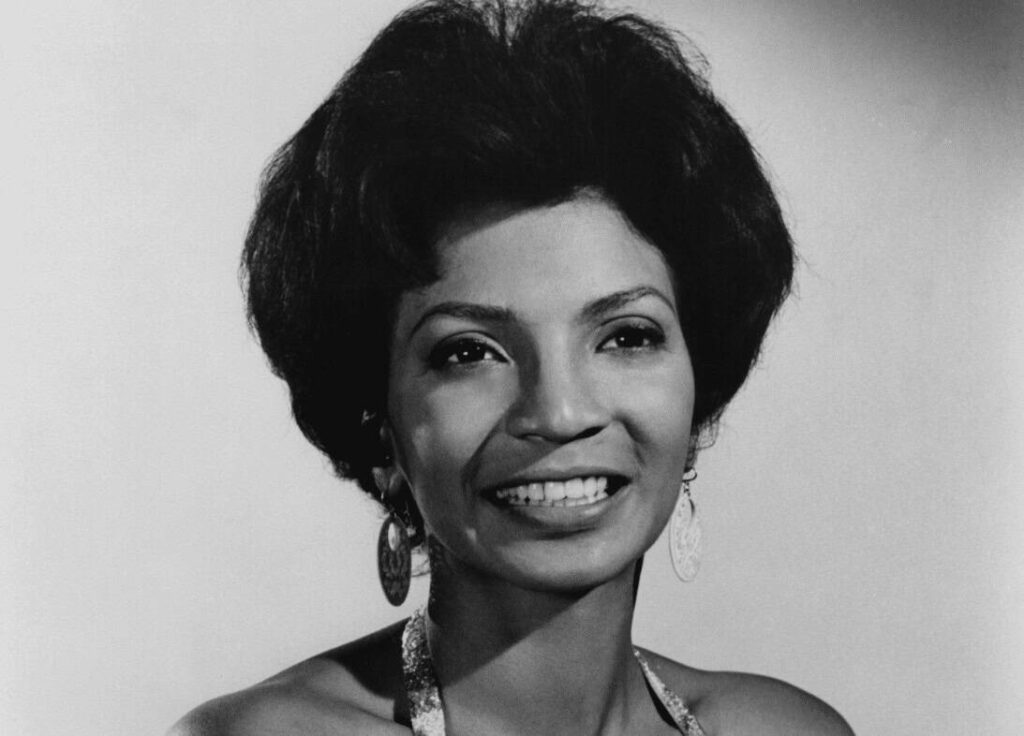
One of the most famous behind-the-scenes stories from Star Trek is the one Nichelle Nichols told about meeting Dr. Martin Luther King Jr. She had been thinking about leaving the show. She felt like her role was shrinking. That she wasn’t doing enough.
Then, at a fundraiser, she met King.
He told her he was a fan. That his family watched the show religiously. And then he said something that stopped her in her tracks: “You cannot leave. You are part of history.”
To him, Star Trek wasn’t just a show. It was a vision of what the future could look like—and seeing a Black woman on the bridge of the Enterprise was proof that it was possible. That’s the kind of impact most shows only dream of having.
Sci-Fi with a Purpose
Here’s the wildest part: none of this was required. Star Trek could’ve just been a flashy adventure show. It could’ve played it safe, stuck to alien-of-the-week plots, and cashed in on the novelty of space stuff.
But it didn’t.
Roddenberry and his writers used science fiction as a way to speak truth to power. They snuck difficult conversations into living rooms across America—disguised as alien conflicts and time travel dilemmas.
And somehow, they got away with it.
That spirit—using genre storytelling to say what can’t always be said out loud—is now a defining trait of science fiction. But back then, it was revolutionary. It was the first.
From Starship to Smartphone: How Star Trek Became Real Life
Here’s the thing about Star Trek. It didn’t just predict the future—it built it.
Most sci-fi shows throw out a few lasers and blinking lights and call it a day. Star Trek was different. It dreamed up entire systems—technological, political, social—that didn’t exist yet. Then it put those systems in front of millions of people every week and said, “Here’s where we’re going.”
The wildest part? We actually listened.
More than 50 years later, Star Trek isn’t just a piece of pop culture—it’s a blueprint. From the tech in your pocket to the way we imagine space exploration, this show’s fingerprints are everywhere.
Tech That Jumped Off the Screen and Into Your Hands

Okay, here’s where it gets spooky. A bunch of the tech that seemed outlandish in the 1960s? We’ve got it now. For real.
And in many cases, the people who invented it literally said, “Yeah, I saw that on Star Trek.”
-
Communicators → Cell Phones
The iconic flip communicator didn’t just look like a future gadget—it became one. Martin Cooper, the man behind the first mobile phone, has said outright that Star Trek inspired him. The original flip phones? Basically Kirk’s gear, with better ringtones. -
Tricorders → Medical Scanners
Dr. McCoy’s all-in-one diagnostic tool seemed like pure fantasy in the ‘60s. Now we have handheld devices that check vitals, run diagnostics, and scan for internal damage—just without the cool sound effects (yet). -
Tablets → iPads
Spock tapping away on flat data pads in the ‘60s looks almost comically normal now. But back then, it was sci-fi brilliance. Apple didn’t invent the idea of the tablet—they just made Star Trek’s version real. -
Voice-Activated Computers → Siri, Alexa, Google Assistant
“Computer, locate Ensign Chekov.” That casual voice command stuff? TOS did it long before Amazon and Apple. The Enterprise computer had full voice interactivity—and no weird activation word. -
Universal Translators → Real-Time Language Apps
The show’s handheld translator seemed impossible in 1966. Today, we’ve got earbuds and apps that do on-the-fly translation in dozens of languages. It’s not perfect, but it’s close—and getting better every day. -
Video Calling → Skype, Zoom, FaceTime
It wasn’t just the fact that they could talk to other ships—it was that they saw the other person. That little detail? It quietly rewired how we imagined communication. Now video calling is so normal, it’s boring. But back then? It was bold. -
Warp Drive → Theoretical Propulsion
No, we’re not cruising at warp speed just yet. But the concept isn’t a joke anymore. Scientists at NASA have seriously looked into warp fields and Alcubierre drives. It’s theoretical, sure—but it’s real science, chasing a Star Trek idea. -
Automatic Sliding Doors → Everywhere
It’s such a tiny detail—but when Star Trek showed those doors swishing open and shut, it blew people’s minds. That tech is now standard in airports, malls, and supermarkets. Every time you walk through one, thank the Enterprise. -
Hyposprays → Jet Injectors
Bones never used needles. He used a painless, pressure-based device that looked sleek and clean. Today’s jet injectors deliver vaccines the same way. Medical designers cite Trek often as inspiration for creating less intimidating tools.
It wasn’t just tech for tech’s sake. The show introduced these gadgets in a way that felt functional and practical. They weren’t magic—they were tools. And that’s why real-life engineers and designers took them seriously.
Warp Drives and Diplomats: Tropes That Became the Genre Standard
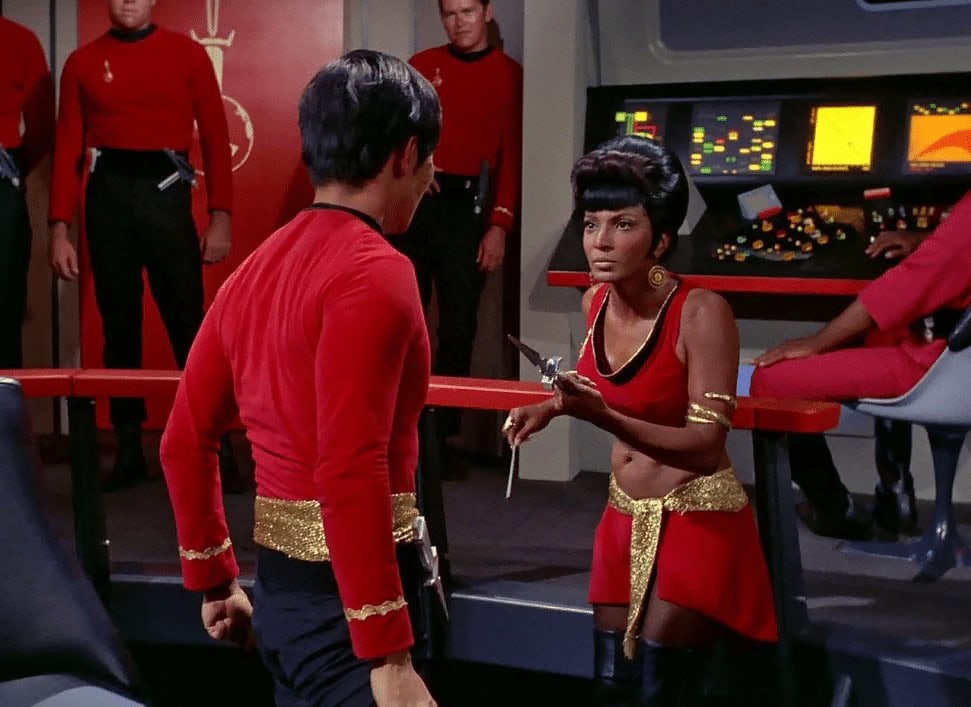
Let’s start with the obvious: Star Trek basically invented the modern sci-fi toolkit.
Before it, most science fiction on screen was either post-apocalyptic, monster-of-the-week stuff, or alien invasions with zero nuance. But Star Trek laid down the groundwork for how space stories are told today—and the tropes it introduced are now baked into everything from Star Wars to Mass Effect.
You know them, even if you’ve never watched the show:
-
Mirror Universes:
“Mirror, Mirror” didn’t just give us Spock with a goatee. It introduced the entire concept of alternate universes with dark versions of familiar characters. That one episode sparked an entire sci-fi subgenre. Fringe, Community, Rick and Morty, Doctor Who—they all owe it something. -
Evil Twins and Body Doubles:
In “The Enemy Within,” a transporter accident splits Kirk into two personas: one kind and hesitant, one aggressive and impulsive. The result? An unforgettable exploration of internal conflict—one that paved the way for clone drama, doppelgänger plots, and “which one’s the real one” mysteries across all of genre TV. -
The Redshirt Phenomenon:
Want to show danger without sacrificing a main character? Invent the redshirt. TOS made a habit of sending unnamed crew members to their doom in Act One. It became such a trope that today it’s literally called “being a redshirt,” and it still shows up in shows like The Boys, Lower Decks, and Galaxy Quest (which spoofed it brilliantly). -
Alien Societies as Social Allegory:
From the racial divide of “Let That Be Your Last Battlefield” to Cold War tensions with the Klingons, TOS used alien cultures to reflect real-world issues. It gave writers permission to explore politics, race, war, and religion through a sci-fi lens without directly naming names. -
First Contact Dilemmas:
How do you meet a new species for the first time—and not screw it up? TOS pioneered the idea that first contact is a tense, delicate moment, often with moral implications. Now it’s a foundational concept in every modern space saga. -
The Prime Directive:
Starfleet’s non-interference rule created automatic conflict: What do you do when helping a civilization would break the rules? This wasn’t just a plot device—it was an ethics engine. You see echoes of it in Mass Effect, The Expanse, and even The Mandalorian. -
Time Travel with Consequences:
In “The City on the Edge of Forever,” Kirk falls in love with a woman destined to die to preserve the timeline. That emotional gut punch became the gold standard for time-travel morality. No reset button. No clean escapes. Just heartbreak and hard choices. -
Sentient Computers:
TOS gave us computers that could think, argue, panic, and even kill. “The Ultimate Computer” and “The Changeling” laid the groundwork for stories about rogue AIs, machine consciousness, and the ethics of automation—well before HAL 9000 or Skynet showed up. -
Illusion Worlds and Simulations:
Episodes like “Shore Leave” and “The Cage” introduced the concept of artificial environments that feel real—long before the word “holodeck” existed. They were early takes on immersive simulations and VR realities, a trope that’s now a sci-fi staple. -
Psychic Powers and Telepathy:
Vulcan mind melds weren’t just cool—they introduced a deeper way to explore emotion and empathy. TOS made telepathy a serious narrative tool, not just a magic trick. That paved the way for everything from X-Men to Stranger Things.
Without these building blocks, modern sci-fi wouldn’t just look different—it might not exist in its current form at all.
Normalizing the Future
Before Star Trek, most people saw futuristic tech as fantasy. It was flying cars and ray guns and silver jumpsuits. Fun to dream about—but not realistic.
Star Trek changed that.
By grounding its future in logic and science—however theoretical—it helped audiences (and future inventors) normalize the idea that these things were possible. That we’d one day talk to computers. That we could explore other planets. That space travel wouldn’t just be for astronauts, but for everyone.
This wasn’t a dystopia. It wasn’t a cautionary tale. It was aspirational sci-fi. That vibe—science fiction as something to aim for—set Star Trek apart. And it continues to influence the tone of progressive, future-forward storytelling even now.
NASA, Engineers, and the Shuttle Called Enterprise
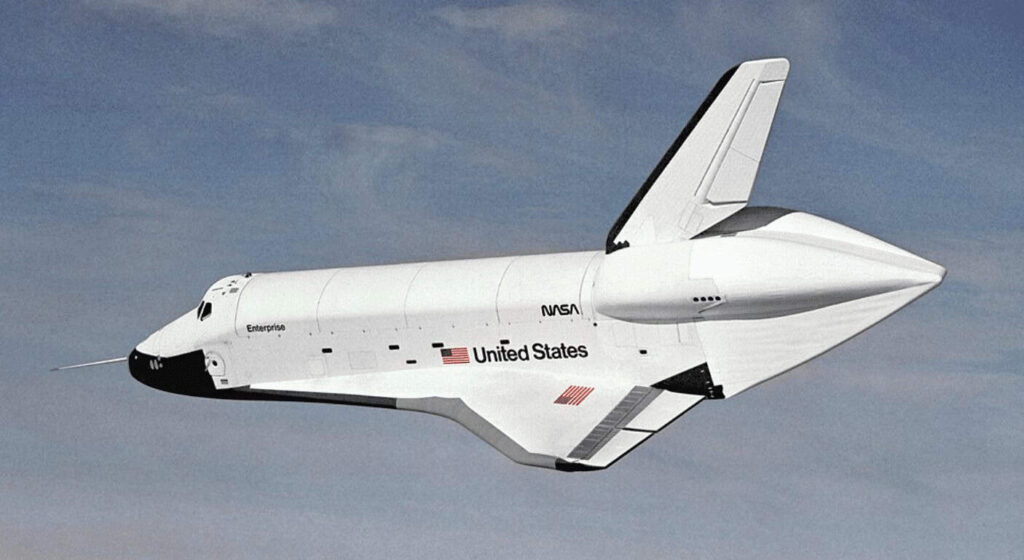
The cultural impact didn’t stop at Hollywood. Star Trek got all the way to NASA.
In 1976, the space agency was preparing to unveil its new space shuttle prototype. The original plan was to call it Constitution. Fans had other ideas.
A letter-writing campaign began. Thousands of Trekkies bombarded NASA with one request: name it Enterprise.
NASA listened.
The Enterprise became the first shuttle, even though it never went to space. It was a gesture—an acknowledgment that the line between sci-fi and real-world exploration was getting blurrier by the minute. Gene Roddenberry and much of the Star Trek cast were there for the rollout. It was a full-circle moment.
And the love story between NASA and Star Trek didn’t stop there. Nichelle Nichols (Uhura) later worked with the space agency to help recruit a more diverse astronaut corps—including women and people of color. One of those recruits? Dr. Mae Jemison, who later became the first Black woman in space—and who also appeared in an episode of Star Trek: The Next Generation.
That’s legacy. That’s impact.
Everyone Wants to Be Star Trek
Let’s talk ripple effect. Because once Star Trek hit, nothing in the sci-fi world was ever quite the same again.
You can draw a straight line from Star Trek to almost every major sci-fi property that followed. Not because they copied the show—but because it cracked open the possibility of what sci-fi on screen could be.
-
Star Wars? Sure, it’s more fantasy than science. But without Star Trek proving there was an audience for space stories, George Lucas doesn’t get that budget.
-
Battlestar Galactica? The reboot especially is a spiritual descendant—moral dilemmas, military structure, political subplots.
-
The Orville? A direct love letter to TNG and classic Star Trek. Same format, same spirit—just with more fart jokes.
-
The Expanse? Arguably the most realistic modern space series—but it still follows the “crew of a ship, trying to do the right thing in a messy galaxy” formula that Star Trek built.
-
Black Mirror, Doctor Who, Stranger Things, Mass Effect, Foundation—all of it carries DNA that traces back to that funky little show from the ‘60s.
Even shows that aren’t sci-fi have borrowed from Star Trek’s storytelling format—tight, ethical dilemmas, diverse teams solving problems, and arcs that challenge worldviews.
This franchise didn’t just inspire other creators. It raised the bar.
From Fan Clubs to Fandoms
And then… there’s the fandom.
Before Star Trek, the idea of a “fandom” was loose at best. You had fan clubs, maybe some newsletters. But the Trekkies? They built the mold.
They organized the first fan conventions. They published fanzines. They wrote early fan fiction. They sent letters to networks by the tens of thousands to save the show from cancellation (and it worked—temporarily).
They created the now-common idea that fans could own a piece of a franchise. That they could be part of it. Today, every major property from Marvel to Game of Thrones to BTS has an organized, global fandom. But it all started here.
And the loyalty hasn’t faded. From cosplay to convention panels to Reddit threads dissecting transporter ethics, Star Trek fans continue to build community, critique canon, and imagine what comes next.
In a way, Star Trek didn’t just predict the future—it created a future that people actually wanted to join.
Star Trek Didn’t Just Predict the Future—It Dared Us to Build It
Let’s be honest—Star Trek had every reason to flop. It was a weird little ‘60s show with clunky sets, rubber aliens, and some truly questionable wigs. It should’ve faded into TV trivia. But instead? It exploded. Somehow, this scrappy, low-budget series turned into a cultural game-changer. It didn’t just dream up cool gadgets and spaceships—it mapped out a future where things actually got better. A future where diversity wasn’t token, science was something to cheer for, and exploring the galaxy meant confronting the messy stuff about being human.
And here’s the crazy part—it didn’t stay fiction. So much of what it imagined actually happened. Communicators became cell phones. Talking computers became Alexa. The idea that people from every background could work side by side? That hit people hard. Still does. The values it pushed are just as important now as they were back then. And the fandom? It basically invented what we now think of as fan culture—conventions, cosplay, the whole nine yards.
But more than anything, Star Trek gave people hope. Real hope. In the middle of civil unrest, war, and existential dread, it pointed to the stars and said, “Hey—what if we get it right?” That message still hits. Maybe now more than ever.
So yeah, it started with a starship, a crew, and a mission. But what it really launched was a movement. A way of thinking. A universe fans could live in—and a future they could fight for.
More than 50 years later, we’re still beaming up.
Still dreaming bigger.
Still boldly going.
And honestly? That’s the best legacy any show could ever hope for.