Three days ago, Paramount announced a new deal with Activision to adapt the Call of Duty universe for film. In a press release, the company promised an experience for both dedicated fans and newcomers but carefully avoided any specific details regarding the setting within the franchise’s sprawling timeline. So, why exactly does the gameplay take place in historical World War II battles and futuristic sci-fi conflicts?
Steven Spielberg, Call of Duty‘s Lost Hero
The exact direction of the Call of Duty live-action project is currently a mystery, as the company passed on the opportunity to work with one of cinema’s most legendary directors on his own creation. According to a report from Puck, Activision had previously turned down a proposal from Steven Spielberg, who had partnered with Universal Pictures. Although he’s a successful Hollywood film director, Spielberg is reportedly an avid PC gamer with multiple connections to the games industry.
For example, his foundational role in creating Medal of Honor is notable for being a primary inspiration for the early Call of Duty games. Furthermore, his vision for the film adaptation was evidently compelling due to his unparalleled reputation and direct lineage to the genre. Although Spielberg’s stature makes him an attractive collaborator, it also creates an insurmountable hurdle for the corporate giant. Spielberg typically commands what industry insiders call the famous Spielberg Deal, a package that includes:
- top-tier financial terms
- final cut privileges
- complete authority over all production and marketing decisions
Microsoft-owned Activision apparently balked at surrendering that level of control. Instead, the company chose the offer from Paramount, an arrangement presumably granting the publisher much greater influence over the final product. For many observers, the decision struck as remarkably short-sighted, prioritizing corporate oversight over auteur-driven quality. Therefore, does Activision’s desire for control ultimately undermine the potential artistic merit of the film?
From Schindler’s List to Shunned List
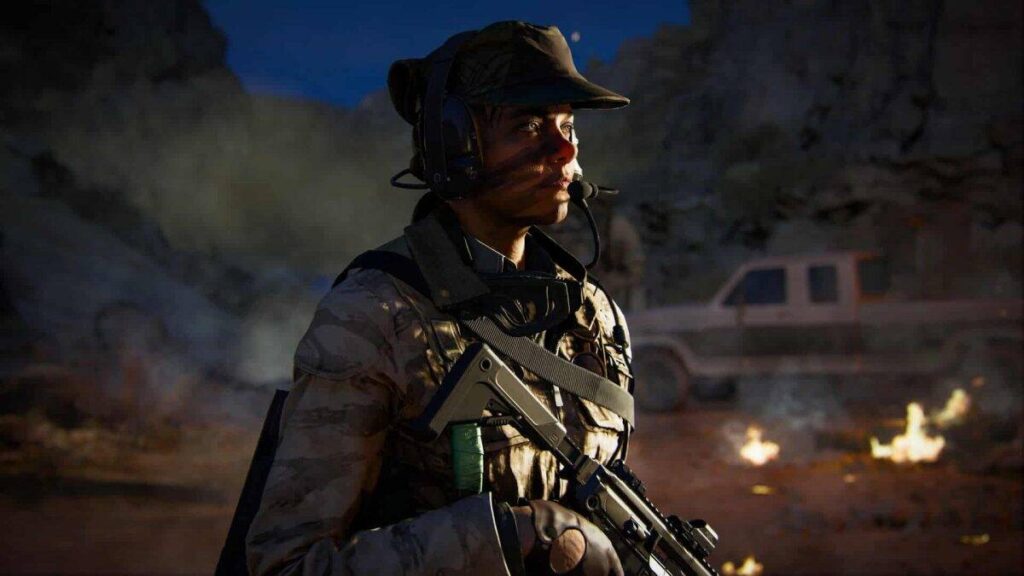
Image of Call of Duty Infinite Warfare courtesy of ActivisionThe Call of Duty community had conflicting attitudes towards Activision’s decision, given the swift and critical reactions to the news. In defense of Spielberg, one popular comment noted the irony of rejecting the director of Saving Private Ryan for the studio behind the Halo television series. So, while this comparison may be unfair to Paramount on the surface, it effectively underscores the perceived gap in prestige and proven capability.
To his credit, Spielberg has created many defining war films. In fact, his filmography’s profound and repeated mastery of the genre’s emotional and historical weight can be attributed to his executive producer role on the revered Band of Brothers miniseries and his direction of Schindler’s List. Putting his fandom aside, Spielberg makes a great choice to develop a live-action Call of Duty, given his track record of being a genuine originator of war drama.
When the Suits Outranked the Boots
His film, Medal of Honor, was conceived when he sought to bring a more serious historical tone to military shooters by immersing himself in World War II research. Personally, his son playing GoldenEye also became one of the director’s inspirations for the film. While Spielberg produced the first three games in that series, key developers from Medal of Honor: Allied Assault were later poached by Activision to form the core of Infinity Ward, the very studio that created Call of Duty.
With that, how can anyone claim to understand the material’s essence better than Spielberg himself, given that he helped birth the entire genre? In this context, the decision is no longer a simple business choice, but a profound rejection of creative heritage. Besides being a famous director, Spielberg is also a pivotal figure in the very existence of the military shooter.
No other filmmaker can realistically claim to possess an intrinsic understanding of the source material’s tone and history than the man behind E.T. Activision’s choice to partner with Paramount may be financially or logistically sensible from a corporate perspective. However, the company completely missed a unique opportunity to have the genre’s founding father return to shape Call of Duty‘s cinematic destiny.
 Don't stop here
Every Score. Every Story. One Home.
Breaking sports, entertainment and news from across the Total Apex network, updated all day.
Get the Full Story →
Don't stop here
Every Score. Every Story. One Home.
Breaking sports, entertainment and news from across the Total Apex network, updated all day.
Get the Full Story →