
Attila the Hun: 6 Facts About History’s Most Feared Conqueror


Attila the Hun is one of the most noted conquerors in history. He terrorized Europe on horseback more than 1,500 years ago. We know a great deal about his conquests; we remember him sometimes with reverence, sometimes with terror. But we know little about his death, and we do not have a body. While historians know where Attila ruled, the ultimate origins of the Huns remain debated. This article will present six facts about him that should elucidate some important things.
Attila the Hun was nicknamed “The Scourge of God.” Here are some other facts about the man we think about so much but know so little about. He reigned from 434 until he died in 453. He was also the leader of an empire consisting of Huns, Ostrogoths, Alans, Gepids and several others in Central and Eastern Europe. How often do you think about him?
A Conqueror Whose Story Is Still Partly Lost to History
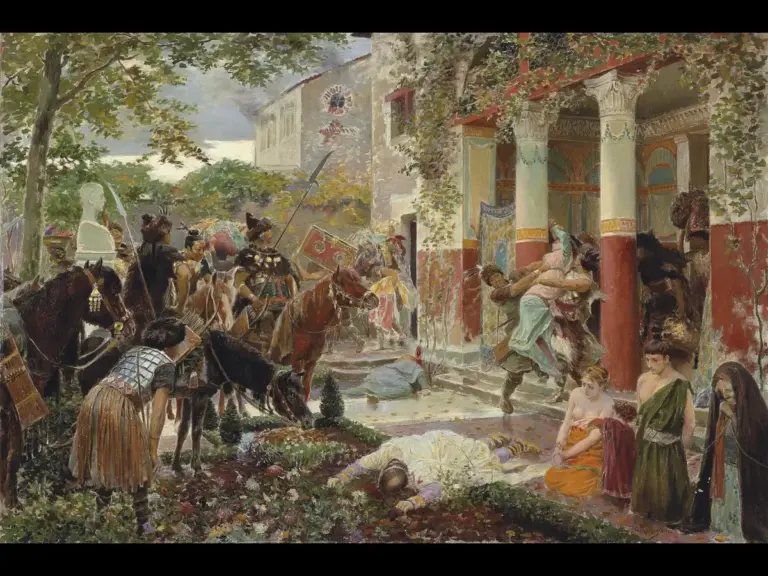
Attila the Hun had a massive impact on our world, but we know little about him. What we do know is that the Huns were among the most feared people of all time. They were expert horsemen and attacked that way.
Where did they come from? They were nomadic and conquered much of Europe. The Huns’ origins remain uncertain. Many historians have suggested that they may have descended from, or been connected to, the Xiongnu of the Central Asian steppe, though no consensus exists. One thing is for certain: they did not stay in one place for very long.
First, Attila reportedly had multiple wives, the last of whom was Ildico, whom he reportedly married just hours before dying of a nosebleed. Marrying a woman was often a pretext for him to invade. Perhaps none was more noteworthy than his failed attempt to conquer Rome and win the hand of Justa Grata Honoria, the sister of Roman Emperor Valentinian III, in marriage.
Second, Honoria was unhappy with the arranged marriage that had been arranged for her to a Roman senator. She sought Attila’s help in getting out of the engagement. She sent him both a letter and her ring. Attila interpreted her actions as both a plea for help and a marriage proposal. He accepted this supposed proposal, demanding half of the Western Empire as his dowry. Valentinian was furious and had to be persuaded to merely exile Honoria rather than execute her. However, he never conquered Rome and never married Honoria.
Third, Attila and his army invaded Italy in 452. They sacked cities like Aquileia en route to Rome. When he arrived in the capital, three men were sent to negotiate with the Hunnish king: Gennadius Avienus, Memmius Aemilius Trygetius, and, most significantly, Pope Leo I. This was quite possibly one of the most significant meetings ever. Though the details of their meeting are lost to history, what is known is that Attila immediately withdrew; he never conquered Rome.
Fourth, Attila the Hun is known to have suffered only one major recorded battlefield defeat. That was on June 20, 451. Ancient sources describe large armies on both sides, though exact numbers remain debated. But his opponents, the Romans, allied with the Visigoths and King Theodoric I. Though the battle was lost to the Huns, with the combined strength of the Romans and the Visigoths, Theodoric was killed. There was unbelievable carnage in this battle as Theodoric was but one of the casualties.
Fifth, he was not related to Genghis Khan. Though both were great conquerors and both led armies on horseback, Genghis lived some 700 years after Attila, and they were not related. The Mongol Empire of Genghis was the largest land empire in human history. In fact, there is no historical evidence that the two rulers were related.
Sixth, the Empire of the Huns fell apart soon after the death of Attila. He reportedly died on his wedding night of a nosebleed. His empire was divided amongst his sons: Dengizich, Ellac, and Ernakh. They waged war on each other, and Ellac was killed in one of the battles. It’s thought that what remained of his brothers’ Empire was gone within a year or two, and the Huns are not mentioned in any historical source after 469.
The Lasting Impact of the Hunnic Empire
Attila the Hun led one of the deadliest and most effective military campaigns in European history. That said, we know little about him and his army. This article presented six facts about him that should illuminate some things. One of these facts is that Attila never conquered Rome. He ultimately withdrew without attacking Rome, after negotiations with Pope Leo I and other pressures.
