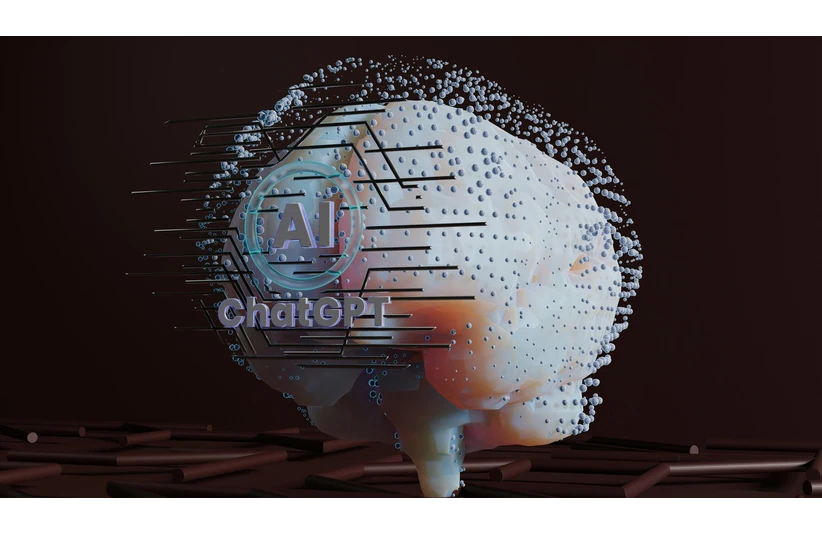
The emergence of AI tools as a quick fix to information gaps has significantly shifted how people source health information. Prolonged periods of uncertainty between appointments and hurried consultations have left people with unanswered questions. Many people now rely on information on the internet for help, even though they don’t entirely trust it. It is a good thing that people have access to information regardless of location. However, accessibility shouldn’t be mistaken for accuracy when using AI for health information. You should be aware of the associated risks and limitations before turning to AI for medical advice.
Privacy Risks When Using AI for Medical Advice
Major privacy concerns still exist about AI. Health Insurance Portability and Accountability Act (HIPAA), the federal privacy law that typically protects sensitive medical data, does not apply to information shared with most AI companies. This means your data may be accessed, stored or reviewed by the company, depending on its privacy practices. So be cautious when disclosing personally identifiable information or a complete medical record. However, some platforms offer HIPAA-compliant versions or enhanced privacy features, depending on how they are implemented. These platforms have robust privacy measures that include an anonymous or incognito mode where chats are not shared with third parties, utilized for targeted advertising, or to train the model, and quickly erased if you’re bothered about privacy.
AI Hallucinations: Why Accuracy Isn’t Guaranteed
AI systems are not flawless despite generating detailed and tailored information; they can sometimes offer incorrect advice. The flaw may involve a technically accurate response that lacks context, thus making it medically inappropriate, or one that contains mistakes of commission (adding unnecessary information) and omission (omitting crucial points). Always consult your doctor or a reliable source if something looks strange or unusual, as AI may be incorporating ideas and methods that might be obsolete. It’s possible for concepts and theories that were once accepted and advised to have evolved due to the medical field’s dynamics.
Why AI Falls Short for Diagnosing Health Conditions
Serious health situations should bypass chatbots and seek urgent medical help. Even in minor cases, AI should be treated with a degree of skepticism, as immediate treatment may be needed. Medicine is contextual. AI chatbots are unable to comprehend a person’s entire medical history, which is essential for proper diagnosis and sound medical advice. A qualified clinician, on the other hand, assesses danger, asks clarifying questions and modifies thoughts in real time.
Checking Sources: How to Verify AI Health Information
Always question where the health information you seek is coming from, and verify that the tools you use cite reputable sources before relying on any AI-generated advice. Confidently ask the AI company how its data is sourced and vetted. Credible AI systems are often transparent about their source and bank only on established medical guidelines. The information verification guarantees that it originates from reliable, qualified sources and aids your decision-making. JAMA and DISCERN are evidence-quality framework examples to evaluate your information.
How Best To Use AI For Medical Advice

AI can be very useful in some situations relating to medical inquiries. Even though it might not be able to provide you with an accurate diagnosis, it can be done by a qualified clinician. It shines in the following ways.
How AI Can Help You Prepare for a Doctor’s Visit
AI can assist you in learning about your health and generate questions for your practitioner. Think of chatbots as your pre-appointment brain dump tool: a place to sort your symptoms, connect the dots, and show up with something resembling organized data instead of mental chaos. Then your doctor steps in as the reality-check engine, helping you separate signal from noise. Afterward, you can loop back to the chatbot to decode the jargon, unpack a diagnosis or map out the trade-offs of different treatment options like you are comparing specs before a big upgrade.
Using AI to Understand Test Results and Medical Documents
Are you confused by any test result? AI can be a helpful companion as you try to understand complex information or medical terminology. Just type in the result or upload a screenshot, and it will explain the report to you like a fifth-grade student. AI chatbots can sometimes highlight patterns that might be overlooked in a standard appointment. It can also help you understand medical documents, such as surgical consent forms and discharge instructions, at your own pace without feeling rushed.
Use As a First Step and To Stay Informed
Consider the AI tool as a starting point for learning to keep you informed, rather than letting it decide your health. The tool excels at extracting broad information or serving as your go-to buddy about well-being. Aside from this, many people have little experience with the tool, and to achieve the greatest outcomes, you must practice crafting questions and closely examining answers supplied, especially when the risks are low. Start experimenting with it, not when you have a serious health issue.
Why You Need to Challenge the Chatbot
In the same way humans have biases in health advice, AI chatbots are no exception. Yet, they make errors even with a vast amount of information. To justify their output, pose challenging follow-up questions to encourage the adoption of diverse viewpoints. This stretches chatbots further and guides the model toward more in-depth responses, with each response evaluated and reconciled.
How to Share Context Without Compromising Privacy
Chatbots only know what you tell them. It’s best to supply them with as much context and detail (age, related illness, symptoms, past medical history, etc.) as you would when making medical inquiries to get a more tailored response or diagnosis due to the number of possible causes. Remember that you will have to trade off between maximizing the bot’s accuracy and safeguarding your privacy. How much information you are willing to divulge in return for tailored, more valuable responses is up to you, depending on your risk tolerance.
Use AI as a Partner, Not a Replacement

AI will continue to influence how patients source health information, improving communication with human clinicians, but won’t take their position. What sets physicians apart is physical examination, which clever machines have not yet mastered. Even more, physicians are relatable, experienced and intuitive, an important factor on which many forms of medical treatment are based. These limitations highlight the need for prudence and critical thinking, but don’t mean you should stop using chatbots. In general, the key to implementing AI in healthcare responsibly is to view it as a support tool rather than a decision-maker.
 Don't stop here
Every Score. Every Story. One Home.
Breaking sports, entertainment and news from across the Total Apex network, updated all day.
Get the Full Story →
Don't stop here
Every Score. Every Story. One Home.
Breaking sports, entertainment and news from across the Total Apex network, updated all day.
Get the Full Story →