
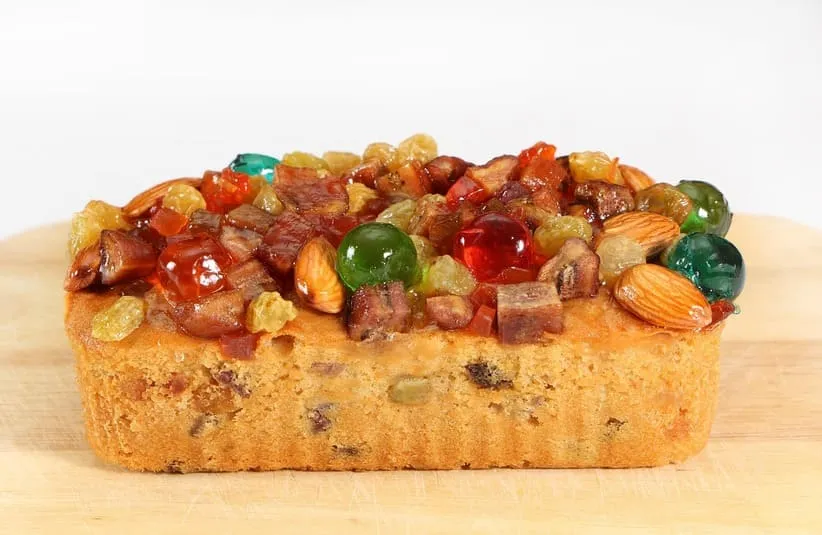
Fruitcake 101: The Truth About Why it is So Terrible

Everyone has heard of fruitcake. But have you ever actually eaten one? Have you even seen one outside of a glossy holiday photo? This dense, mysterious loaf has become the butt of jokes, a culinary relic that somehow survives every December. Some swear it’s tradition, others insist it’s punishment. Either way, fruitcake is one of the strangest foods to hold its place at the holiday table.
Better Ingredients, Better Cake?
Fruitcake is, at its core, a simple concept: dried fruits, nuts, spices, and a heavy batter baked into a dense loaf. The problem is that the “better ingredients” often get lost in translation. Let’s break down what really shows up inside:
Flour, butter, sugar, eggs: the only normal things here. They’re the glue holding together everything else, like cement poured over chaos.
Spices (cinnamon, nutmeg, cloves, allspice): basically, the entire holiday spice rack tossed in at once. Subtlety isn’t the goal; it’s more like a medieval potion designed to ward off evil spirits.
Dried fruits (raisins, cranberries, prunes, dates): the respectable cousins who went rogue. They sink to the bottom like hitchhikers trying to escape, tasting like they’ve been trapped in grandma’s pantry since the Nixon era.
Nuts (pecans, walnuts, almonds): crunch with a side of regret. Imagine nuts dug up from a squirrel’s forgotten stash, roasted in fryer oil salvaged from behind the chicken shack downtown. Every bite is a gamble between “pleasant crunch” and “call your dentist.”
Candied cherries: the infamous party crashers. Once upon a time, they were cherries; now, they’re radioactive gummy cubes that look like drunk gummy bears stumbling home from a rave. Factories simmer them in syrup until they’re sticky and translucent, then dye them red and green so they glow like holiday hazard lights. They don’t taste like fruit anymore — they taste like sugar-coated regret, gelatinous confetti that somehow became the star of the show.
Recipe Card: How to Make Fruitcake (If You Dare)
Prep Time: Eternity Cook Time: Until the smoke alarm cries uncle Servings: Infinite (because no one finishes a slice)
Ingredients:
- 2 cups flour (to glue everything together like cement)
- 1 cup sugar (because apparently neon cherries weren’t sweet enough)
- 1 stick butter (the only normal thing here)
- 3 eggs (to bind the chaos)
- 1 tsp cinnamon, nutmeg, cloves (aka “holiday spice dump”)
- 1 cup dried fruit (raisins, cranberries, dates — the respectable cousins)
- 1 cup candied cherries (drunk gummy bears after a weekend rave, dyed radioactive red and green)
- 1 cup mixed nuts (taste-tested by squirrels three winters ago, roasted in questionable oil)
- ½ cup booze (rum, brandy, whiskey — pick your poison)
Directions:
- Preheat oven to 325°F. Or don’t. Fruitcake doesn’t care.
- Mix flour, sugar, butter, and eggs until it looks like paste.
- Add spices with reckless abandon. Pretend you’re a medieval cook trying to ward off evil spirits.
- Fold in dried fruit. They’ll sink to the bottom anyway.
- Toss in candied cherries. Watch them glow like rave lights in the batter.
- Sprinkle in nuts. Hope your dentist is on speed dial.
- Pour in booze. This is the only step that matters.
- Bake until dense enough to double as a paperweight.
- Wrap in cloth soaked with more booze. Feed weekly like the stray cat that keeps raiding your garbage.
Serving Suggestion: Slice thin. Very thin. Serve with extra alcohol on the side. Smile politely while guests pretend to enjoy it.
Nutrition Facts (Fruitcake Edition)
Serving size: one slice, if you’re brave. Servings per cake: technically infinite, because nobody ever finishes theirs.
Calories: infinite regret. Total fat: about twelve grams, plus whatever mystery oil the nuts were roasted in. Saturated fat: six grams, enough to remind you this is not health food. Trans fat: unknown, because the FDA stopped checking sometime around 1952. Cholesterol: forty-five milligrams, give or take the tears of whoever baked it. Sodium: three hundred twenty milligrams, mostly from holiday stress. Carbohydrates: eighty-five grams, including those glowing rave-bear cherries. Fiber: two grams, if raisins count. Sugars: sixty-five grams, all from candied cubes that look like party favors. Protein: four grams, courtesy of squirrel nuts. Alcohol: variable, depending on how much you “feed” the cake with rum or brandy.
Shelf life: longer than the pyramids. Best before: never. Warning: may double as a doorstop, paperweight, or family heirloom.
Since Most Just Can’t Even, Why Is This a Thing?
Fruitcake has been haunting humanity for a long time. The Romans were the first culprits, mixing honey, wine, dried fruits, and nuts into dense loaves that probably doubled as shields. Fast-forward to medieval England, where people were eating “plum porridge” — basically oats, dried fruit, and spices stirred together like a medieval trail mix. Eventually someone thought, “Hey, let’s bake this sludge,” and boom: fruitcake was born.
By the 1800s, fruitcake had spread across Europe and North America, becoming the holiday guest nobody invited but who always shows up anyway. Its density and sugar content made it perfect for preservation, which is why it ended up in tin cans. By the early 20th century, canned fruitcake was marketed as a miracle food that could last for months… or years… or possibly until the next ice age. That’s why people joke these cakes are 150 years old — because some of them actually might be.
So why did this tradition stick? Because fruitcake used to scream “luxury.” Exotic spices, imported fruits, and alcohol were expensive, so serving fruitcake at Christmas was like flexing your wealth. Today, it’s less about prosperity and more about survival. Fruitcake has become a cultural dare: eat it if you can, re-gift it if you must, and keep the tin can handy in case you need a backup weapon.
Thank the Gods of Artificial Ingredients There Is Booze in the Fruitcake
If fruitcake has one redeeming quality, it’s the booze. Traditionally, fruitcakes are soaked in rum, brandy, or whiskey. Alcohol acts as a preservative, keeping the cake edible for months, and it also softens the dense texture. Some recipes even call for “feeding” the cake with alcohol weekly, wrapping it in soaked cloth to keep it moist — like a pet that requires regular shots of liquor to stay alive.
The choice of alcohol varies:
- Brandy adds sweetness and warmth.
- Rum gives a deeper, spiced flavor.
- Whiskey adds sharpness and bite.
Fruitcake endures because of tradition, preservation, and booze. Without alcohol, it would be little more than a brick of candied fruit and stale nuts. With it, fruitcake becomes a curious relic of holiday history — a dessert that refuses to die, no matter how many jokes are made at its expense.
Consumer Warning
Do not operate heavy machinery after consuming fruitcake. Do not attempt to re-gift fruitcake unless you’re prepared for revenge. Keep out of reach of children, pets, and anyone with taste buds. Can be used for self-defense and stored well in the nightstand drawer.
Disclaimer: This piece is served fresh from the oven of satire. No fruitcakes were harmed in the making of this article (though several were weaponized). All culinary advice herein is strictly comedic—please don’t consult your doctor, lawyer, or local bakery before acting on it. Side effects may include laughter, eye‑rolling, and sudden cravings for holiday desserts. Consume responsibly.
