
Christa Pike execution fails after 2 doses in stunning turn

The Christa Pike execution failed Wednesday night, Sept. 30, when Tennessee’s only woman on death row was still breathing after receiving 2 doses of pentobarbital at Riverbend Maximum Security Institution in Nashville, The Associated Press reported. Pike, 50, was taken by ambulance to a hospital.
Gov. Bill Lee responded by ordering what he called “a comprehensive, third-party review” of the Christa Pike execution attempt and halting the one remaining execution Tennessee had scheduled for the rest of 2026, according to the AP.
How the Christa Pike execution attempt unfolded
The day began with a reprieve. About an hour before the scheduled 10 a.m. execution, a three-judge panel of the 6th U.S. Circuit Court of Appeals voted 2-1 to stay it so judges could examine whether Pike’s history of childhood sexual abuse was fully weighed at her 1996 sentencing. Senior Judge Jane Stranch wrote the order, the Tennessee Lookout reported.
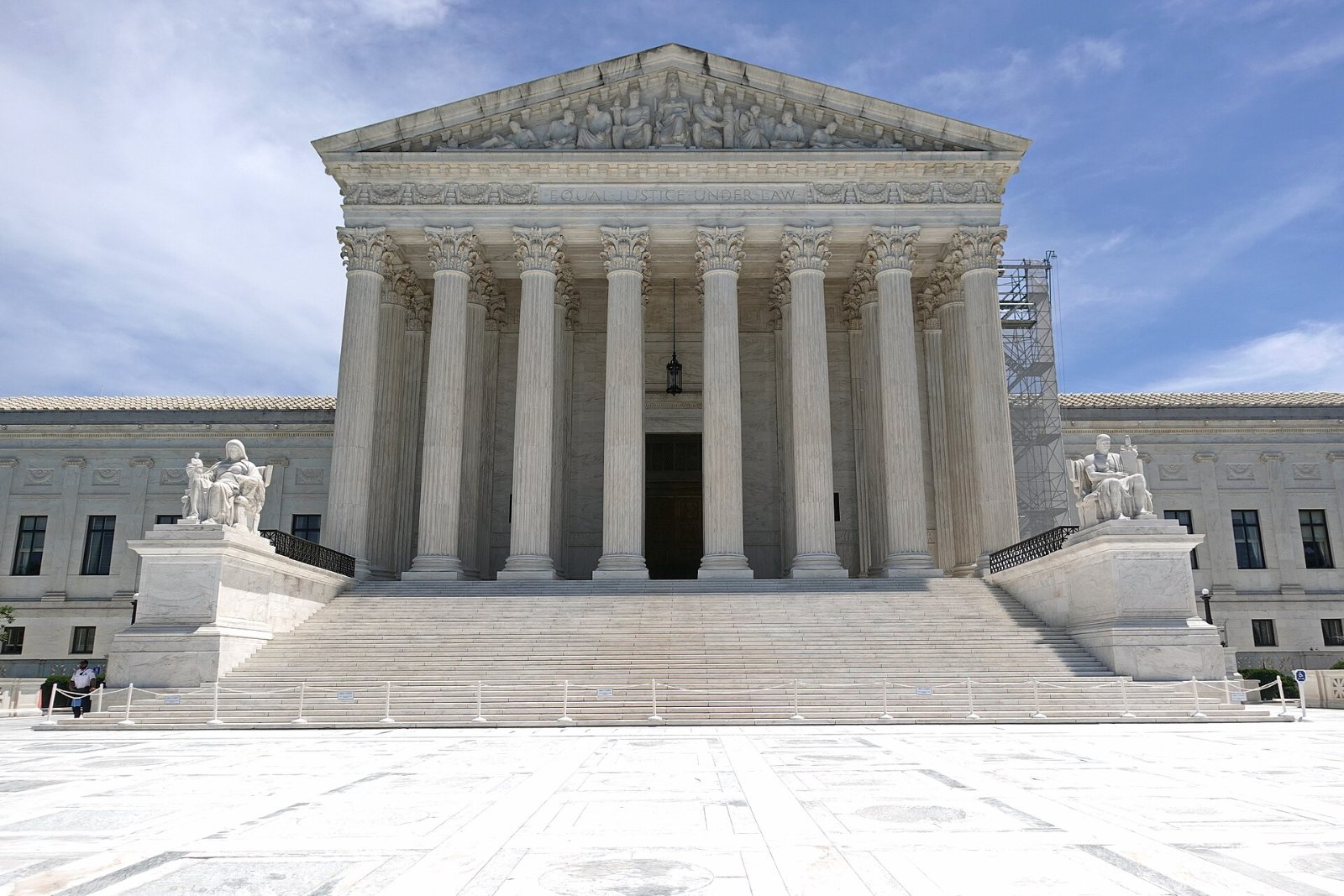
Tennessee Attorney General Jonathan Skrmetti’s office immediately asked the U.S. Supreme Court to lift the stay, accusing Pike’s lawyers of “abusive delay tactics.” Later Wednesday, the court’s conservative majority cleared the way without explaining its reasoning. The three liberal justices dissented, and Justice Sonia Sotomayor wrote that vacating the stay interfered with the appeals court’s routine review, ABC News reported.
Media witnesses saw the curtain to the execution chamber open at 7:27 p.m. CDT. In her final statement, Pike said, “I’m going to leave this world the way I spent most of my life and that is in love,” according to the AP. She later lifted her head and asked whether her arm was “supposed to feel that way.”
A second dose of pentobarbital had been given by 8:26 p.m., the AP reported. Witnesses said they could still hear Pike breathing and loudly snoring. At 8:53 p.m., the microphone in the chamber was cut and the witnesses were led out.
“I’ve witnessed five executions in Tennessee. Nothing about today was normal, typical — at all,” WKRN reporter Tori Gessner said, according to ABC News.
What officials and Pike’s lawyers said
Pike’s legal team said in a statement that “the State of Tennessee once again failed to carry out a lawful execution” and that she was being treated at a nearby hospital. Late Wednesday, the lawyers said they had “not been informed as to her condition,” Axios Nashville reported.
Her attorneys filed emergency motions with the Tennessee Supreme Court, the 6th Circuit and a federal district court, arguing that the Christa Pike execution attempt caused her “unnecessary agony” in violation of protections against cruel and unusual punishment, the AP reported.
The Tennessee Department of Correction said it “followed every step of the State’s lawful, established execution protocol approved by the Attorney General’s Office.”
Lee said in his statement: “Carrying out a lawfully imposed sentence is among the State’s most serious responsibilities, and the people of Tennessee expect it to be done in a manner that is not only legal and constitutional, but is effective.”
Robin M. Maher, executive director of the Death Penalty Information Center, called the situation “singular and unparalleled.” She told the AP that other prisoners who lived through execution attempts survived because officials could not get an IV line working, not after the drugs were given.
The Christa Pike execution was not the state’s first troubled attempt this year. In May, the state called off Tony Carruthers’ execution after officials spent more than an hour unable to set an IV line, according to the AP.
The 1995 killing of Colleen Slemmer
Pike and her then-boyfriend, Tadaryl Shipp, were found guilty of killing Colleen Slemmer, 19, a fellow student at the Job Corps training center in Knoxville. Pike was 18 at the time, and Shipp was 17.
Prosecutors said Pike believed Slemmer was trying to steal her boyfriend. On Jan. 12, 1995, she lured Slemmer to a wooded area, slashed her with a box cutter and beat her with a large piece of asphalt, according to the AP. Shipp has admitted carving a pentagram into Slemmer’s body.
Pike was the only one sentenced to death. Shipp got life in prison with a chance at parole. A third teen, Shadolla Peterson, acted as a lookout, testified against Pike and received probation. According to the Tennessee Department of Correction, Pike was also convicted of attempted first-degree murder in an Aug. 24, 2001, assault on another inmate.
Slemmer’s mother, May Martinez, traveled to Nashville hoping to witness the Christa Pike execution. “Every time I think about it, I think about Colleen feeling that pain and trying to get up and run,” she told the AP.
Why the Christa Pike execution was contested
Pike’s attorneys argued that her trial lawyers did not do enough to present evidence that she was sexually abused and raped starting when she was a toddler. After the killing, she was diagnosed with bipolar disorder and post-traumatic stress disorder. Pike’s lawyers noted the state now says it “does not dispute her history of severe childhood sexual abuse and rape,” WSMV reported.
Assistant Federal Defender Stephen Ferrell has argued that Pike’s death sentence is an outlier because other Tennessee defendants sentenced to death at 18 have since had those sentences vacated.
Lee denied Pike’s clemency request Monday, and the U.S. Supreme Court turned down her own request for a stay Tuesday. In a clemency statement, Pike said: “I was a mentally ill 18-year-old kid. It took me numerous years to even realize the gravity of what I’d done. Even more to accept how many lives I affected. I took the life of someone’s child, sister, friend. It sickens me now to think I had the ability to commit such a crime.”
U.N. human rights experts have said the decades Pike has spent in isolation on death row amount to unlawful torture, CBS News reported.
Had the Christa Pike execution been completed, Pike would have been the first woman Tennessee executed in at least 200 years, according to Maher. Only 18 women have been executed in the U.S. since the Supreme Court reinstated the death penalty in 1976, according to the Death Penalty Information Center. For more on notorious cases involving women, read our look at five women whose crimes still haunt America, and find more true crime in our special interests coverage.
This is a developing story and will be updated.
Reporting from The Associated Press, ABC News, Axios Nashville, WSMV, CBS News and the Tennessee Lookout contributed to this story.