
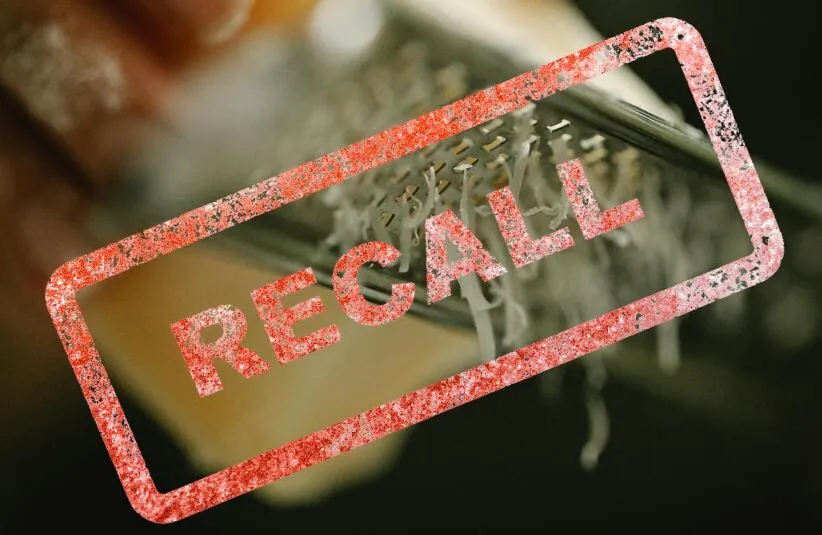
Metal Fragments in Aldi Cheese | Dangerous Recall in 31 States and Puerto Rico

Aldi cheese is a guilty pleasure. But shoppers just got hit with a recall that’s more than a minor inconvenience. Great Lakes Cheese Co. pulled back shredded cheese sold under Aldi’s Happy Farms label after the FDA flagged possible metal fragments in the product. This landed with a Class II risk warning on December 1, meaning the health consequences are usually reversible but still nothing you want in your lasagna.
Recall and Aldi Cheese
Happy Farms Shredded Italian Blend Cheese and Happy Farms Mozzarella Shredded Cheese has a problem. The problem traces back to raw materials delivered by suppliers, where metal fragments may have slipped into the mix. Aldi had already distributed the products across 31 states and Puerto Rico before the warning came down.
Product Details
- Happy Farms Shredded Italian Blend Cheese
- 1,900 cases
- UPC: 4061463330949
- Batch/Sell‑by: 0008922982 / 2/22/2026, 0008926344 / 2/23/2026
- Happy Farms Mozzarella Shredded Cheese
- UPCs: 4061463330864, 4061463369413
- Batch/Sell‑by: 1500560016 / 2/8/2026, 1500562694 / 2/14/2026, 0008915062 / 2/18/2026, 0008921597 / 2/21/2026, 0008914480 / 2/13/2026
Distribution
The cheese was shipped to Aldi stores in 31 states, including Illinois, Texas, Florida, California, New York, and Wisconsin, plus Puerto Rico. Other retailers carrying Great Lakes Cheese products also issued recalls tied to the same contamination risk.
Consumer Guidance
The FDA says don’t eat it. Metal fragments can cause choking, dental damage, or internal injury. Customers should return the cheese for a refund or toss it out. As of December 1, no illnesses had been reported.
How To Stay On Top Of Recalls In Your Fridge
Recalls don’t wait for anyone, and the truth is, most of us only hear about them when a headline pops up or a friend texts us. If you want to keep your fridge safe without living in paranoia, there are a few easy ways to stay plugged in. Think of it like checking the weather — quick, routine, and worth the peace of mind.
Government sites are the most reliable. The U.S. Food and Drug Administration (FDA) and the U.S. Department of Agriculture (USDA) both post real‑time recall alerts. These notices cover everything from milk and meat to packaged snacks. FoodSafety.gov also pulls together recalls and outbreaks in one place, so you don’t have to bounce between sites.
News outlets and apps help too. Major outlets like Newsweek and The Takeout regularly round up recall lists. If scrolling headlines is already part of your day, you’ll catch the big ones without extra effort. Some grocery chains even push alerts through their apps or loyalty programs.
Social media is another layer. Both the FDA and the USDA share recall notices on their feeds. Following them means the updates slide right into your timeline, no digging required.
Practical tip: Make it a habit to glance at recall alerts once a week. It’s not about obsessing — it’s about catching the stuff that could actually be sitting in your fridge before you pour it into a glass or serve it at dinner.
