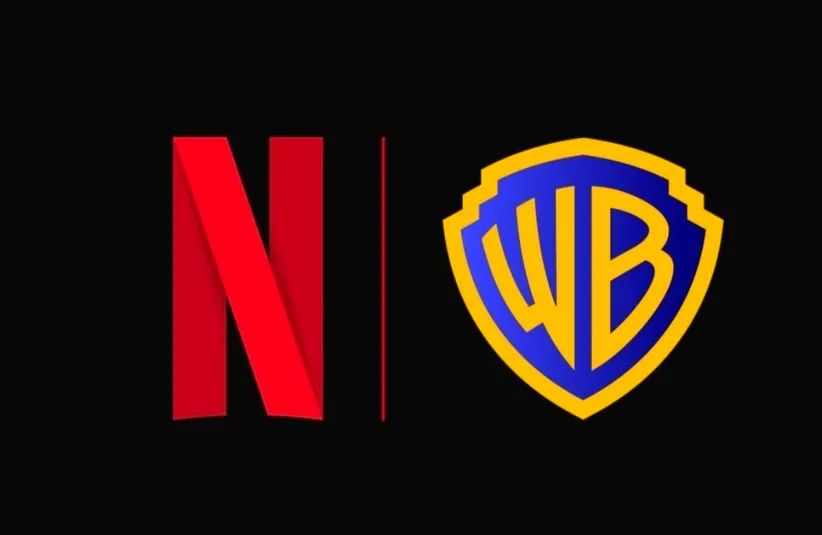
Legendary director James Cameron has voiced significant concerns regarding the potential merger between Netflix and Warner Bros., expressing deep apprehension about what the deal could mean for the future of the theatrical movie-going experience. A staunch advocate for cinema, Cameron shared his candid thoughts on the seismic industry shift, positioning himself as a defender of the big screen.
James Cameron Defends the Sacred Movie-Going Experience
In a recent interview with Deadline, Cameron addressed the pending merger, which would see the streaming giant acquire the storied 102-year-old film studio. He was unequivocal in his critique of Netflix’s historical approach to theatrical distribution, suggesting the company’s ultimate goal is to supplant cinemas entirely.
“It’s no secret that they want to replace theatrical,” Cameron stated, acknowledging that while he might be a “dinosaur,” he fundamentally believes in the power of the shared, public viewing experience. “I happen to think that there’s something sacred about the movie-going experience… you can’t just steamroll theatrical out of existence and I’m going to stay opposed to that.”
His comments come at a time when the industry is closely watching the actions of Netflix co-CEO Ted Sarandos, who has recently softened his stance and expressed a commitment to theatrical releases for Warner Bros. films. However, reports suggest Sarandos favors a short 17-day theatrical window, a model that many, including Cameron, see as a direct threat to the viability of movie theaters.
The Unbroken Stream of Consciousness
For Cameron, whose films like Avatar: The Way of Water have become global box office phenomena, grossing billions, the theatrical window is non-negotiable. He argues that the immersive environment of a theater is essential for a film’s full emotional impact, something that cannot be replicated at home.
“The way it’s meant to be enjoyed is in a theater… in an unbroken stream of consciousness, three hours long, because that’s when the emotion will wash over you,” he explained. “The second you’ve got a remote… you just lost half of the impact.”
Cameron is currently promoting his latest film, Avatar: Fire and Ash, which has a runtime of three hours and fifteen minutes. He insists that this format is designed specifically for the undivided attention that only a theater can provide. While he believes a good story holds up on any screen, he remains steadfast that the intended experience is a communal and uninterrupted one.
As the industry continues to consolidate and evolve, Cameron hopes that if the merger proceeds, Netflix will recognize its new responsibility to help ensure the survival of theaters. For now, he remains a powerful voice championing the art form he has helped define for decades.
 Don't stop here
Every Score. Every Story. One Home.
Breaking sports, entertainment and news from across the Total Apex network, updated all day.
Get the Full Story →