It’s Native American Heritage Month, and so far, we’ve been looking at movies, authors, and musicians that have made an impact on cinema, the literary realm, and the music world. But what about indigenous filmmakers? How have they affected the interpretation of tribal culture through their work? What stories can they tell? It turns out that there are quite a few. Let’s delve into some of these directors, producers, writers, and screenwriters.
5 Indigenous Filmmakers to Check Out During Native American Heritage Month
The five creators we chose have left their mark on the cinematic front. They’ve either written or directed something poignant or substantial in the way of elevating Native American culture. They’ve created ideal projects for watching during Native American Heritage Month.
Chris Eyre (Cheyenne, Arapaho)
Eyre is likely the most recognized name on our list. He has been at the helm of dozens of films and TV projects. Eyre has served as both the director and the producer of many of them. He came on the scene in 1998 with the indigenous movie “Smoke Signals.” Both the film and Eyre received numerous accolades and were the recipients of a multitude of awards. The movie “Skins” was another notable project in 2002. Currently, he is producing and directing episodes of the hit TV show, “Dark Winds.” Eyre, Adam Beach, and Russell Means are featured in “Reel Injun,” a film about Native Americans in the entertainment industry. This documentary is perfect viewing for Native American Heritage Month.
Sky Hopinka (Ho-Chunk Nation)
Hopinka got his start primarily in cinematography. He had an interest in documentary filmmaking and left the Pacific Northwest to enroll at the University of Wisconsin-Milwaukee to pursue his studies in indigenous film. Hopinka is a recipient of the MacArthur Fellowship. During a 2018 interview with Filmmaker Magazine, Hopinka said in part:
Deconstructing language [through cinema] is a way for me to be free from…traditional storytelling and….to explore or propose more of what Indigenous cinema has the possibility to look like.
Sterlin Harjo (Muscogee Seminole)
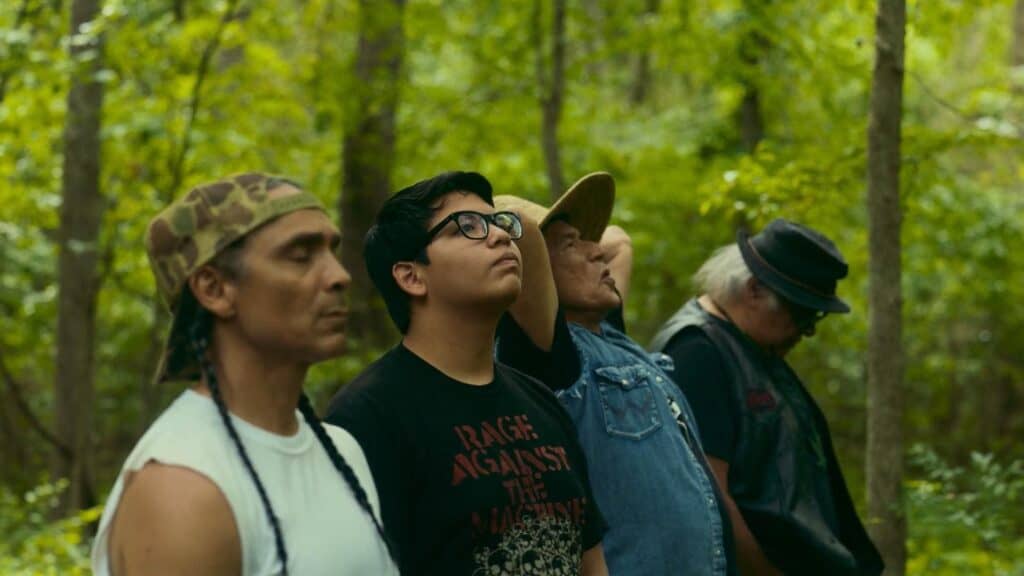
This indigenous filmmaker is triple-talented, in that he is a writer, producer, and director. Harjo has recognition, and he achieved great success with his movie “Four Sheets to the Wind.” It starred talented First Nations actor Cody Lightning. The film won numerous awards and got Harjo noticed. Besides making TV movies and documentaries, Harjo is best known for being the creative force behind “The Lowdown” and the popular coming-of-age TV show “Reservation Dogs.”
Sydney Freeland (Diné)
Freeland’s film, “Drunktown’s Finest,” was sparked by a segment she saw on “20/20” that called the town of Gallup, New Mexico, “Drunktown.” Her response was to give them a movie – and that she did. Having multiple nominations and taking home some of the top awards, Freeland very quickly cemented herself as one of the top indigenous filmmakers. Currently, she directs several TV shows, including “Reservation Dogs,” “Echo,” and “Resident Alien.” She wrote and directed the movie “Rez Ball.”
Tracey Deer (Mohawk)
This indigenous filmmaker is best known for her work on the critically acclaimed movie “Beans,” which takes place in 1990 and references the Oka Crisis that occurred on the Mohawk Reserve. The film was the recipient of many awards and placed Deer as an indigenous filmmaker to watch. She writes primarily coming-of-age stories about Mohawk girls, and she is known for her innovative approach to dramedy. Deer is a recipient of two Gemini Awards and has received a Birks Diamond Tribute Award. This Kahnawake Mohawk is proving herself to be a major player in the field.
A Few Final Thoughts
Before we call it a wrap, there is an honorable mention. It’s unfortunate that he is no longer with us. Canadian indigenous filmmaker Jeff Barnaby (Mi’kmaq) known for “Rhymes for Young Ghouls” and “Blood Quantum” should be recognized for his editing and directing efforts. He was taken away far too soon.
With growing interest in indigenous, First Nations, and Native American material, we will see an influx of films that pay tribute to their culture. Additionally, with expanded mediums in film, like shorts and docuseries, we anticipate more indigenous filmmakers will create captivating projects in the future.
 Don't stop here
Every Score. Every Story. One Home.
Breaking sports, entertainment and news from across the Total Apex network, updated all day.
Get the Full Story →