
Exclusive Feature: Inside Asthenia— The Solo‑Developed Descent Into Grief, Faith, and the Monsters We Carry

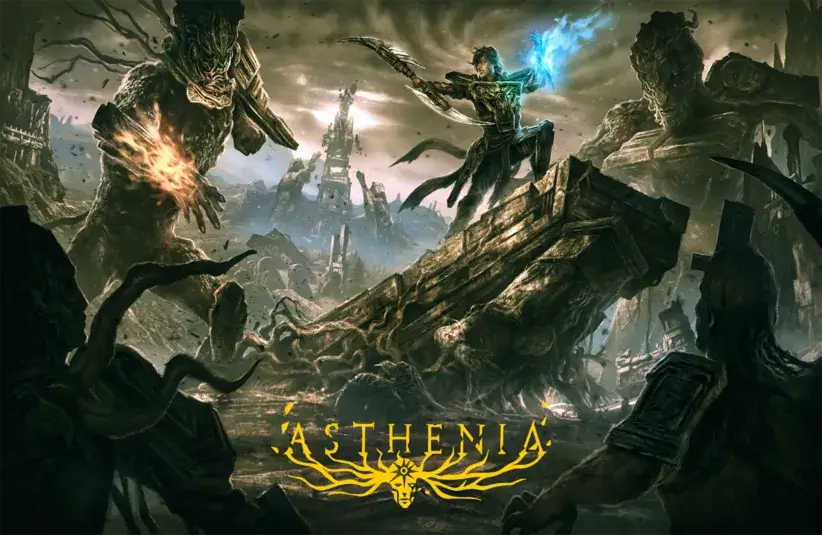
There are horror games that want to scare you, and then there are horror games that want to unsettle you — to crawl under your skin, sit in your chest, and whisper questions you’re not sure you want answered. Asthenia belongs to the latter. It’s a world stitched together from ancient ruins, post‑apocalyptic decay, and the kind of spiritual dread that lingers long after the screen goes dark.
Built by a single developer, Manthos Lappas, Asthenia is not just another entry in the dark‑fantasy survival space. It’s a personal excavation — a game born from loss, shaped by grief, and sharpened by the kind of introspection most of us spend years avoiding. And yet, despite its heavy themes, it’s also a game that knows exactly how to pull in fans of Silent Hill, Resident Evil, and even Dark Souls without feeling derivative.
I spoke with Lappas about the world he’s building, the emotional weight behind it, and why Asthenia refuses to hold your hand — even when the darkness closes in.
“A forsaken civilization merged with a post‑apocalyptic landscape”
Q1: The dark fantasy genre is crowded. What makes Asthenia feel new while still appealing to fans of Silent Hill and Resident Evil?
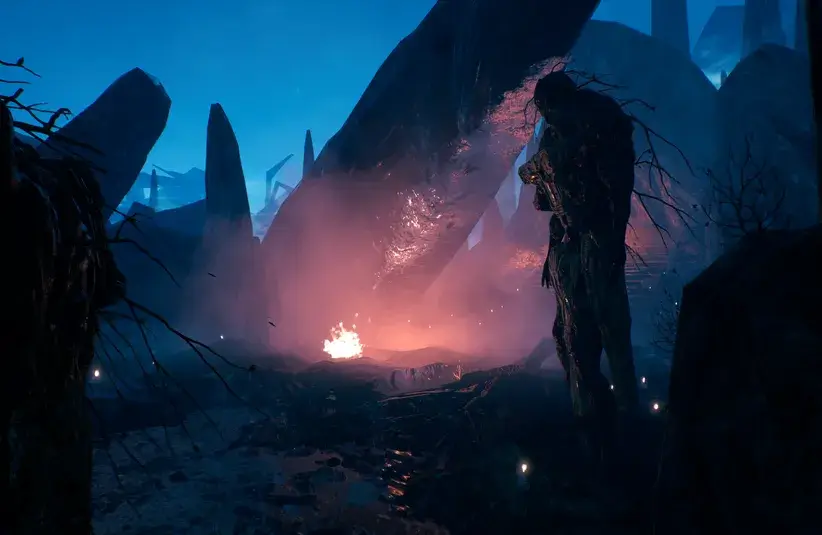
Manthos: “I believe what makes Asthenia unique is its world‑building, art direction, lore, and the inhabitants that roam its world. It is a mix of ancient elements from a forsaken civilization, merged with a post-apocalyptic landscape filled with elements that would not normally coexist. The story will unfold the reasons behind this, and those who explore and experiment may find explanations for it all.
Players who have enjoyed the Silent Hill and Resident Evil series may feel a sense of familiarity in Asthenia, as it touches on themes such as loss, grief, theology, and faith, while also featuring action set pieces, meaningful exploration, otherworldly locations, and horror and survival elements. The game’s aesthetics are a grunge, decayed blend of elements similar to those found in the games mentioned above.
The ‘other inhabitants’—the foes of Asthenia—also show similarities, as they are grotesque figures with deeper meanings and stories behind them. Like Resident Evil, they can mutate and transform, becoming more dangerous. Searching the world for clues, required items to progress, and hidden secrets is another aspect that players of those games should find familiar.”
It’s a world that feels like it’s been abandoned twice — once by its creators, and again by whatever came after.
A world that refuses to guide you — and why that matters
Q2: You mention no hand‑holding and cite Dark Souls as an influence. How steep is the learning curve? Is Asthenia accessible to newcomers?
Manthos: “The Dark Souls inspiration resulted in an experience that, aside from the objectives the player keeps in the form of notes, does not explicitly tell you how to progress. This allows room for full exploration which, like Souls games, can reward players in ways that completely transform the overall experience, difficulty, and end result.
While many testers found Asthenia challenging, by observing enemy patterns and carefully exploring every corner of the maps, they were able to slowly adapt and overcome the challenges presented to them. For those who find it difficult to adapt quickly—aside from some mandatory set pieces—it is absolutely possible to bypass enemies, although exploring the game and uncovering its secrets becomes much harder that way.
The game rewards players who dare to explore even some ‘restricted’ areas of the world, facing optional challenges that will test their skills. The same applies to navigation: like Dark Souls, progression is not presented through simple waypoints. Players must rely on scattered documents, hints, and visual cues to piece together information and go beyond the ‘right’ path if they want the full experience.
I have tried to include as many hints as possible—some subtle, others more direct—to help guide players through the game without forcing them down a single path, allowing the world to feel open and exploratory rather than strictly linear.”
In other words: Asthenia trusts you. And it expects you to return the favor.
The grief beneath the ruins
Q3: You’ve said Asthenia was born from a deeply personal place. Can you expand on that? Do you expect players to connect with it the same way?
Manthos: “Asthenia was created after personal family losses that led me to want to express my emotions—emptiness, pain, and personal growth—through an interactive experience. It became a way to honor those who are gone but somehow still remain close to us.
Players who explore the game may piece together themes related to the afterlife, faith, loss, and love. Those who have experienced similar profound emotions in their lives may recognize references that echo those hollow feelings, while also offering hope that something more may exist beyond them.
I anticipate that players who discover both the apparent and hidden clues—visual cues in the form of iconography and metaphors—will feel something meaningful. Through Asthenia, I hope players connect and discuss what it means to be alive, to fight for loved ones, and to explore a universe where life and death may not function as we believe they do. As with my own experience creating it, I hope the story encourages players to question and reflect on the themes presented to them.”
This is where Asthenia stops being “just a game.” It becomes a conversation — one between the player, the world, and the things we don’t say out loud.
Choices that scar the world — and you
Q4: Every action impacts the story and endings. Can players recover from mistakes? Are there truly “wrong” choices?
Manthos: “I wanted the choices in my game to have real impact, much like in real life, where you cannot truly go back and undo your decisions. While players can choose to reload a previous checkpoint before committing to a critical choice, if they decide not to, they are fully committed to that decision and must witness its consequences—both throughout gameplay and in their final ending.
To help players make informed decisions, the game provides audio cues later on (not present in the demo), written journals from previous inhabitants who may warn about potential outcomes, and visual hints that suggest what may come next.
As designed, there is one decision that could be considered ‘wrong,’ leading to a much darker fate and ending for Adam. This choice also affects gameplay by introducing special story cues, altering parts of the world, and increasing the frequency of enemy invasions.
From the beginning, I had a clear vision of including three endings: a ‘Good’ ending, a ‘Neutral’ ending, and a ‘Bad’ ending. This structure encourages replayability, deeper exploration, and helps make the world feel more alive and responsive to player actions.”
In Asthenia, choices don’t just branch the story — they bruise it.
Combat with consequences
Q5: Combat clearly isn’t the main focus, but it’s still important. What should players expect beyond the Ancient Gauntlet?
Manthos: “While Asthenia focuses heavily on world‑building, story, and atmosphere, there is also a strong balance with combat and action. The Ancient Gauntlet is the primary weapon Adam acquires early on and can receive a major hidden or secret upgrade in the full game. In addition, players can obtain another important weapon if they discover how to unlock it.
Both of these optional artifacts not only make Adam stronger, but also cause the world to adapt to these changes. Stronger and more numerous enemies will spawn to balance the difficulty and prevent Adam from becoming too powerful.
The Gauntlet can also interact with destructible environmental elements to damage enemies from a distance, while secret upgrades focus more on raw power.
As this is my first game, I wanted to keep combat balanced, focused, and relatively simple, ensuring that every combat option feels meaningful and functional. For players who explore further, there are additional ways to deal with enemies and a few more physical upgrade items for Adam, reinforcing a sense of progression and evolution throughout his journey.
I hope players find something special to enjoy in Asthenia, and I look forward to sharing more of what’s to come. Thank you very much!”
Combat isn’t the star — but it’s the heartbeat. And sometimes, it beats faster than you’d like.
Final Word
Asthenia isn’t trying to be the next blockbuster horror game. It’s something quieter, heavier, and far more personal. It’s a world built from grief and mythology, held together by decayed architecture and the stubborn hope that something meaningful still exists in the ruins.
If Lappas delivers on the promise of this vision, Asthenia won’t just be another indie horror title. It’ll be one of those rare games that stays with you — long after you’ve put the controller down.
