
Asthenia: A Dark Fantasy Descent Into a Dying World That Refuses to Let You Look Away

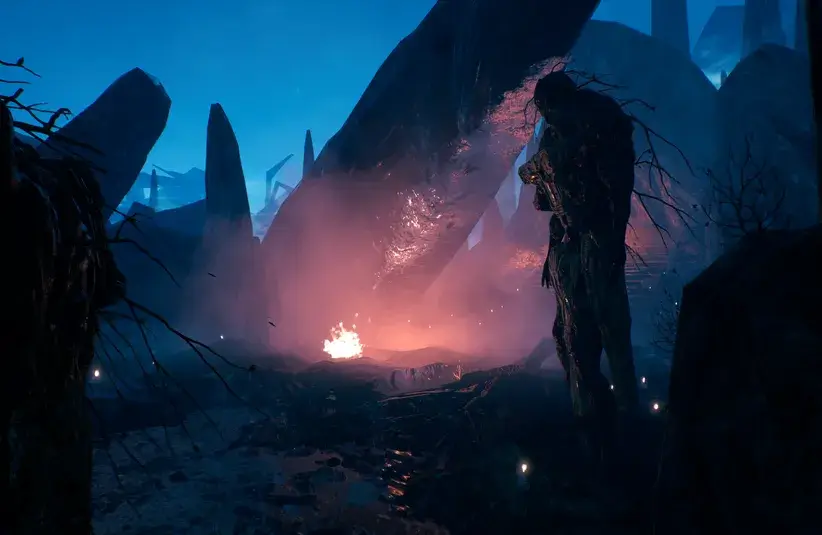
If you’ve been waiting for a dark fantasy game that doesn’t treat you like a toddler with a glowing waypoint, Asthenia just kicked the door in. This is a world that doesn’t want to be saved, doesn’t care if you’re comfortable, and absolutely isn’t interested in holding your hand. And honestly? That’s exactly why Asthenia stands out.
Created by solo developer Manthos Lappas, Asthenia is a grim, atmospheric adventure set in a dimension that’s basically on life support. The place is rotting from the inside out, ancient gods are still lurking around like they own the place, and a mysterious disease is eating through whatever’s left. It’s the kind of setting that makes you wonder why your character didn’t just stay home — but then again, where’s the fun in that.
A World Built on Decay, Grief, and Very Bad Omens
In Asthenia, you play as Adam — an ordinary guy who gets yanked into a dimension that looks like someone mashed together a forgotten civilization, a war‑torn wasteland, and a fever dream. He’s not a chosen hero. He’s not a soldier. He’s just a man trying to survive long enough to find answers and maybe claw his way back to the person he loves.
The world itself is the star here. Every corner of Asthenia feels like it’s been abandoned twice. You’ll move through collapsing towns, industrial ruins, and temples that look like they’ve been waiting centuries for someone to disturb them. And when you do, the world reacts — not with exposition dumps, but with whispers, symbols, and the kind of environmental storytelling that rewards players who actually pay attention.
Combat That Makes You Think Before You Swing
Let’s talk about the Ancient Gauntlet, because this thing is basically the beating heart of Asthenia. It’s a relic, a weapon, a tool, and occasionally the only thing standing between you and something that wants to rearrange your skeleton.
Combat in Asthenia is close‑range, deliberate, and absolutely not designed for button‑mashers. Every strike matters. Every dodge matters. Every mistake is your fault — which is refreshing in a genre that often lets you brute‑force your way through everything.
The Gauntlet also interacts with the environment, letting you break barriers, trigger mechanisms, and uncover secrets. But it runs on limited energy, so you can’t just swing it around like a glowstick at a rave. You have to think. You have to plan. You have to actually engage with the world instead of sprinting through it.
Asthenia Doesn’t Believe in Hand‑Holding — And That’s the Point
If you’re the kind of player who panics when a game doesn’t give you a map, Asthenia is about to test your character development. There are no quest markers. No mini‑maps. No glowing arrows pointing you toward the next objective.
Progression is built on observation, memory, and intuition. You move forward because you’re paying attention — not because the UI told you to turn left. It’s a bold design choice, and it gives Asthenia a sense of authenticity that a lot of modern games have lost.
A Story Told Through Echoes, Symbols, and the Things Left Behind
The storytelling in Asthenia is subtle, atmospheric, and deeply personal. Instead of cutscenes that drag on for ten minutes, you get:
- Fragmented letters
- Visual symbolism
- Sound cues that make your skin crawl
- Environmental details that hint at what came before
- Adam’s own narration
It’s the kind of narrative that doesn’t just tell you what happened — it lets you feel it.
And that’s intentional. As Lappas puts it:
“Asthenia was born from a deeply personal place. I wanted to create a world that feels oppressive, mysterious, and alive — where discovery is earned, not handed to the player, and where every action carries real weight.”
You can feel that weight in every corner of the game.
Choices That Actually Matter (And Yes, They Can Ruin Your Day)
Asthenia features multiple endings shaped by your decisions. Not the fake kind where you pick a color at the end — real choices with real consequences. Some paths are split. Some are hidden. And one choice in particular can send Adam spiraling into a much darker fate.
Replayability isn’t just encouraged — it’s baked into the design.
Asthenia Is Coming — And You Should Probably Wishlist It Now
Asthenia is currently in development for PC via Steam, with a playable demo on the way. If you’re into atmospheric horror, lore‑rich worlds, or games that expect you to use your brain, this is one to watch.
And if you’re tired of games that treat you like you need a babysitter, Asthenia might just be the breath of decayed, god‑forsaken air you’ve been waiting for.
