
Valve Opens Exclusive Queue: Steam Machine Enrollment Ends June 25, 2026

The long-awaited Steam Machine take 2 landed, but with a twist on the morning of June 22, 2026. While other contenders tried to take a share of the pie that Valve carved open with the announcement of the Steam Machine alongside the fabled Steam Controller and Steam Frame VR headset in Nov. 2025, Valve may still end up on top after all. Open enrollment for a randomized queue began at 10 A.M. Pacific with 4 options, but many are balking at the price tag attached.
With the price of RAM and storage options continuing to rise, creating product distribution issues, it makes sense. Other competition in the market for small-form-factor PCs isn’t doing too hot themselves; it all comes full circle to the issue of getting their hands on the coveted RAM and solid-state drive (SSD).
What Valve Unveiled
The Steam Machine reveal came with different options to choose from, with controller separate options, either the 512-gigabyte (GB) model or a 2-terabyte (TB) model, with the price ranging from $1,049 USD to $1,428 USD. It has an integrated semi-custom AMD Zen 4 6-core 12-thread Central Processing Unit (CPU) and AMD RDNA3 28CU (compute units) Graphics Processing Unit (GPU). The available RAM is 16 GB of DDR5, with an accompanying 8 GB of DDR6 virtual RAM, meant to create smooth visuals while you play games.
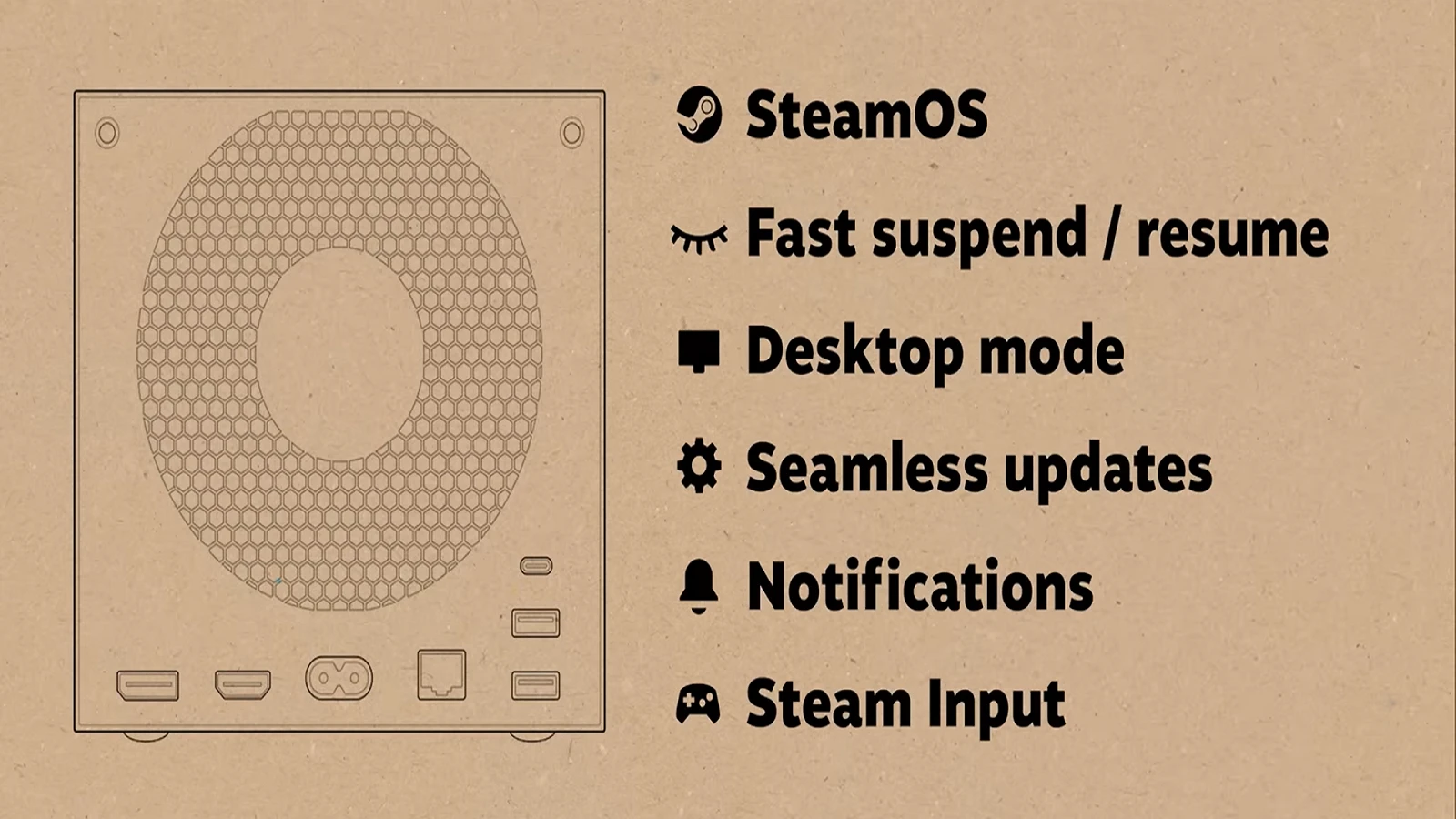
The Steam Machine page claims that the new device has far more raw power than the Steam Deck and can play the full Steam library. With its roughly 6-inch size, it can fit practically anywhere, either under the TV, under a computer desk, or right beside your computer monitor, hidden by a banana you plan to snack on later. The Steam Machine runs on SteamOS 3, designed to deliver quiet, cool performance as you dive into your games.
While there are 2 storage sizes available, this can be expanded with a microSD card. Digital Foundry wrote that the Steam Machine allows users to replace the internal storage using either 2230 or 2280 M.2 SSD. The Steam Machine’s page confirms that the wireless adapter for the Steam Controller is built in, and so is the power supply, eliminating the need for a giant external brick.
Valve Standing Firm on Business

Throughout the Steam Machine page, Valve makes it crystal clear that this is a PC. Toward the bottom of the page is a Frequently Asked Questions (FAQ) section, with the first entry addressing why Valve is randomizing reservation order. Valve conceded that interest in the Steam Controller surpassed anticipation, and the randomized queue is their effort to ensure the Steam Machine’s rollout feels fair rather than frustrating.
The team behind it all is limiting purchases to one device per household by cross-checking shipping address, payment methods, and other methods in order to ensure fairness in distribution. Accounts must be in good standing and have made purchases before April 27, 2026, to qualify for the signup. Missing this critical time frame, however, means you will be added to the back of the waitlist.
The good news is that you can sign up for all the different models. Once the queue is closed, users will be sorted to the highest model you reserved and removed from the rest. There’s the possibility you might not get a reservation for any, though, depending on how many decide to queue, but thankfully, the lists are also separated by region.
The major question that has been circulating online is whether or not the Steam Machine is a console, which Valve vehemently denies and asserts that the Steam Machine is an extension of PC gaming.
How the Steam Machine Stands Up

Digital Foundry published its performance review of the Steam Machine on the same day queue enrollment opened, after spending a couple of weeks testing it. They highlighted its compact size, whisper‑soft noise levels, and sleek overall design. They compared its footprint to a slightly taller Nintendo GameCube and said its performance was in line with an Xbox Series X or PlayStation 5.
According to Digital Foundry, the 2TB model comes with red fabric and solid walnut faceplates, so customization is king once more with Valve’s device releases. Admitting that the Steam Machine is pricey, Valve said in their latest blog that SteamOS works on a variety of hardware, giving users options and the potential to build their own custom PC using the software. The article says that the machine itself is impeccable, the replaceable faceplate has 4 magnets that hold it, and third parties can make their own to personalize the Steam Machine.
The Market: Price Point VS Similar Mini-PCs
While Digital Foundry considers the Steam Machine to be a bespoke mini-PC, we’ve seen other contenders rise to the challenge. Playnix arrived in April of 2026 with a sleek, almost record‑player aesthetic housed in a 3D‑printed chassis. While it is currently out of stock, it is made and shipped from Spain and comes with an 8BitDo Ultimate 2 controller, hosting similar specs of 512 GB SSD, 16 GB of RAM, but with a Ryzen 6 core processor and 9060XT 16GB GPU, all costing $1,179 according to the Playnix Console website.
Valve’s 512 GB bundle with controller runs at $1,128, but many said that when Playnix released, it would outperform based on known specs and ability to play in 4k. Playnix may edge out Valve’s 512 GB model in certain performance metrics, but the Steam Machine’s value proposition isn’t limited to hardware. Valve is leveraging its platform, its OS, and its established user base to create a device that fits seamlessly into the existing Steam ecosystem.
That alone gives it an advantage few competitors can match. As the market begins to crowd with boutique mini‑PCs, the Steam Machine’s launch signals that Valve isn’t content to sit on the sidelines. The real competition may come down to longevity, support, and the strength of the software behind the box.
