

Pokémon Pokopia Turns You Into A Landlord

Pokémon Pokopia shakes up the classic formula in a way that catches a lot of players off guard. People jump into this new world ready to level up their Charmander and watch it burst into a fiery Charizard. They expect the same old grind of experience points and level thresholds. But what happens when that familiar rhythm completely disappears?
Kanto Is Now A Customizable Sandbox
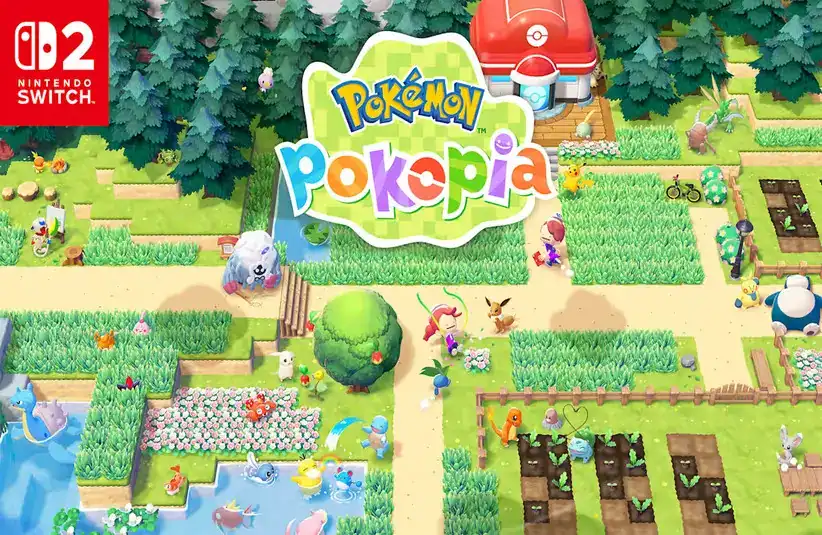
The game drops players into a customizable version of the Kanto region. They get to populate this landscape with creatures from across the entire series, inviting them to live and work together in a shared space. The original Red and Blue starter trio shows up right away, with Charmander, Squirtle, and Bulbasaur making their presence known. Players immediately start wondering how to push those little guys toward their powerful final forms.
The assumption runs deep that evolution works the same way it always has. Does any of that traditional knowledge actually apply here? Here is the massive twist that throws everyone for a loop. Pokémon Pokopia does not include an evolution mechanic at all. No leveling up triggers a transformation. No stones cause a sudden shift. No trading sends a creature off to return changed. The game simply does not operate that way. How does a player ever get a Venusaur if their Bulbasaur stays a Bulbasaur forever?
Evolution Is A Myth In This Region
The answer lies in the habitats scattered across the world. Evolved Pokémon appear as spawns just like any other creature. A player wanders through a grassy area and might spot an Ivysaur walking around. They return later and could encounter a Venusaur in that same spot. The game treats these evolved forms as separate entities rather than the result of raising a base form.
The final stage Pokémon simply shows up less often than the earlier stages. Why would the developers choose this approach over the traditional method? Luckily, the game includes a clever system for hunting down those rare spawns. A player who wants a specific evolved creature can target its habitat and start attracting the other native species first. The catch involves a key restriction.
Pokémon Pokopia does not allow duplicate captures of the same creature. Once a person has caught every other Pokémon that lives in that habitat, the only one left to appear is the rare one. This turns the hunt into a methodical process of elimination rather than pure luck. Does this system feel more satisfying than just grinding experience points?
Blastoise Just Chills In The Tall Grass
Some habitats make the search even simpler. Take Blastoise as an example. The Hydrated tall grass biome contains Blastoise alongside four other Pokémon. A player can work through those four, catching each one until the big water cannon becomes the guaranteed spawn. The process takes some time but offers a clear path forward.
An even better option exists for those willing to build specific structures. The Floating in the shade habitat lists Blastoise as the only creature that ever appears there. Build that one structure, and the final evolved form shows up without any competition at all. What other shortcuts like this exist for the other rare Pokémon?
Habitat Hunting Beats Mindless Grinding
Players quickly learn to think about Pokémon differently in this new setting. The focus shifts from raising individual creatures to building environments that attract the desired species. A person becomes less of a trainer and more of a habitat architect. They scout locations, construct specific biomes, and carefully manage which creatures they already own. The whole approach to collecting turns into a puzzle where each catch affects the next spawn. Does this change the relationship between the player and the Pokémon themselves?
The starter trio still holds a special place in the experience. A player receives those first three creatures early on and bonds with them. They watch those little guys walk around the custom Kanto region they built. But the evolved forms do not come from raising those original partners. A player must go out into the world and find a wild Charizard waiting in the right habitat.
That discovery creates a different kind of excitement than watching a Charmander finally hit level 36. The evolved Pokémon feel like rare treasures found in the wild rather than predictable rewards for grinding. How does that shift in acquisition change the emotional weight of finally adding a Charizard to the collection?
Your Old Pokémon Knowledge Is Useless Here
Pokémon Pokopia asks players to unlearn decades of established habits. It strips away the evolution mechanic entirely and replaces it with a habitat-based spawning system. The result forces a different way of engaging with the world. Players spend time studying spawn tables and constructing the right environments. They carefully manage their collection to manipulate the odds in their favor. The game offers a fresh take on a familiar concept while respecting the original creatures that fans love.
Building out a full collection of base, stage one, and stage two Pokémon becomes a satisfying puzzle rather than a simple matter of leveling up. The rare spawns feel earned through strategy rather than repetition. For longtime fans, the adjustment takes some time, but the new system eventually clicks into place. It delivers the same beloved creatures through a completely different path that rewards creativity and planning over mindless grinding.
