
Hideki Sato, Architect of Sega’s Iconic Consoles, Dies at 77

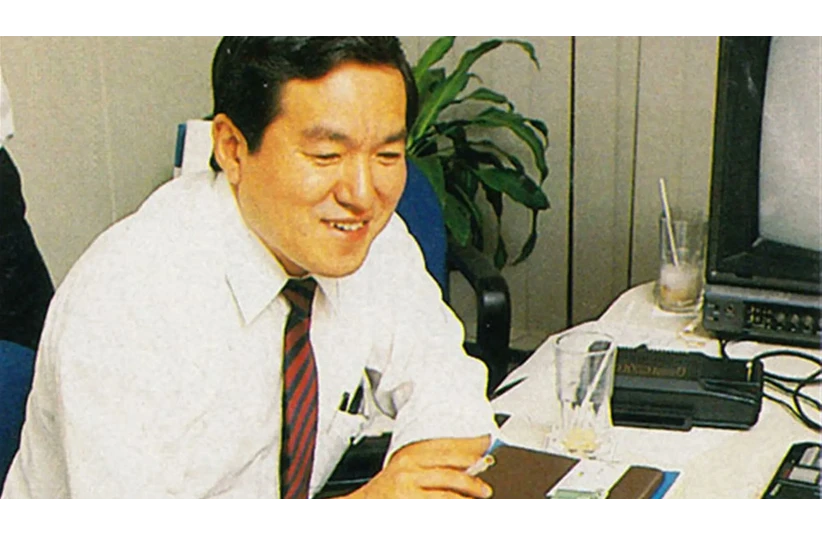
Hideki Sato didn’t just help build Sega. He helped build the childhoods of millions. The legendary engineer, hardware designer, and former Sega president has died at age 77, as reported by Beep21 and VGC. And with his passing, an entire chapter of gaming history feels like it’s closing.
Sato wasn’t a figurehead. He wasn’t a mascot. He was the architect — the quiet force behind every major Sega console from the early ’80s to the company’s dramatic exit from the hardware business in 2001. If you ever held a Master System, a Genesis, a Saturn, or a Dreamcast, you were holding a piece of his imagination.
From Arcade Roots to Console Wars: The Man Who Turned Sega Into a Hardware Powerhouse
Sato joined Sega in 1971, back when the company was still figuring out what it wanted to be. He cut his teeth on arcade machines like Monaco GP, Turbo, and Star Jacker, but his real ascent began when Sega entered the home console market.
And Sato? He was the one they trusted to lead the charge.
His hardware résumé reads like a museum exhibit:
- SG‑1000 (1983)
- Master System (1985)
- Mega Drive / Genesis (1989)
- Sega Saturn (1994)
- Dreamcast (1999)
That list alone cements him as one of the most influential hardware designers in gaming history.
But the stories behind those machines — the risks, the improvisation, the ambition — are what make Sato’s legacy feel almost mythic.
“What if we used arcade tech in a home console?” — The Genesis of the Genesis
Sato often said Sega’s home consoles were shaped by their arcade DNA. They didn’t know how to build consoles at first — but they knew how to push hardware to its limits.
When the team began work on the Mega Drive, arcades were already running on 16‑bit CPUs. Sato saw an opportunity: bring that power home.
Two years later, the Genesis was born — sleek, black, gold‑lettered, and unapologetically aggressive. It was designed to look like high‑end audio equipment, not a toy. And it worked. The Genesis didn’t just compete with Nintendo. It defined Sega’s identity.
Sato once joked that the gold lettering was “very expensive.” But that was the point. Sega wanted to look like the future.
The Saturn, the Dreamcast, and the End of an Era
The Saturn was Sega’s bold, complicated leap into 3D. The Dreamcast was its swan song — a machine so ahead of its time that the world didn’t know what to do with it.
Sato said the Dreamcast’s keyword was “play and communication.” That’s why it shipped with a modem. That’s why the VMU existed. That’s why Phantasy Star Online became the first successful console MMO.
He even wanted the Dreamcast to connect to cell phones — in the late ’90s. Sega was dreaming in broadband before most households even had it.
But the bit‑wars era demanded spectacle. So Sega marketed the Dreamcast as a “128‑bit” machine, even though Sato admitted the SH‑4 CPU was technically 64‑bit. He laughed about it years later. The industry wasn’t ready for nuance.
The Dreamcast didn’t survive the market. But its legacy? Untouchable.
From President to Preservationist: Sato’s Final Years at Sega
After Sega’s chairman Isao Okawa died in 2001, Sato stepped into the presidency during the company’s most turbulent transition — the painful shift from hardware titan to third‑party publisher. He guided Sega through the storm until 2003, then left the company entirely in 2008.
But his influence never faded. Sega’s survival — and its rebirth as a software powerhouse — was built on the foundation he helped create.
A Legacy That Lives: “Sega Does What Nintendon’t” Memory
Sato’s consoles weren’t just machines. They were cultural moments.
The Genesis made Sega a household name.
The Saturn showed the world what 3D could be.
The Dreamcast became the ultimate underdog — a console that failed commercially but won immortality.
Even now, fans are still tinkering with Dreamcast browsers, reviving online servers, and celebrating the VMU as if it were a sacred artifact. That’s the kind of legacy you can’t manufacture.
And now, with Sato’s passing — just months after Sega co‑founder David Rosen — it feels like the end of a dynasty.
Why Hideki Sato’s Influence Still Shapes Gaming Today
Hideki Sato wasn’t just Sega’s hardware designer. He was Sega’s heartbeat during its most daring, most chaotic, most unforgettable era.
He helped build the consoles that shaped the ’80s, defined the ’90s, and inspired the modern indie and retro scenes. His work lives on in every “console war” debate, every Dreamcast revival, every Genesis Mini, every Like a Dragon release, every Sonic game that still carries the DNA of the company he helped steer.
Sato once said Sega didn’t know how to make consoles when they started — they just knew how to dream big.
He never stopped.
