
Women’s History Month: 4 Black Women Who Transformed Beauty Culture in the U.S.


It is Women’s History Month, and while we are rightfully passing out flowers to the political trailblazers and civil rights activists, let’s take a highly necessary detour into the chemistry lab, the salon, and the boardroom. For decades, the mainstream beauty industry operated under the delusion that melanin was a myth and textured hair was an anomaly. But Black women did not just sit around waiting for an invitation to the vanity table. They built their own tables, formulated their own chemical compounds, and patented the very technology that holds the modern beauty industry together.
The aesthetic landscape of the United States simply would not exist as we know it without the Black women who turned systemic marginalization into multi-million-dollar empires. Let’s talk about the architects who gave the industry its actual backbone.
The Chemistry Geeks of Early Hair Care: Annie Turnbo Malone and Madam C.J. Walker
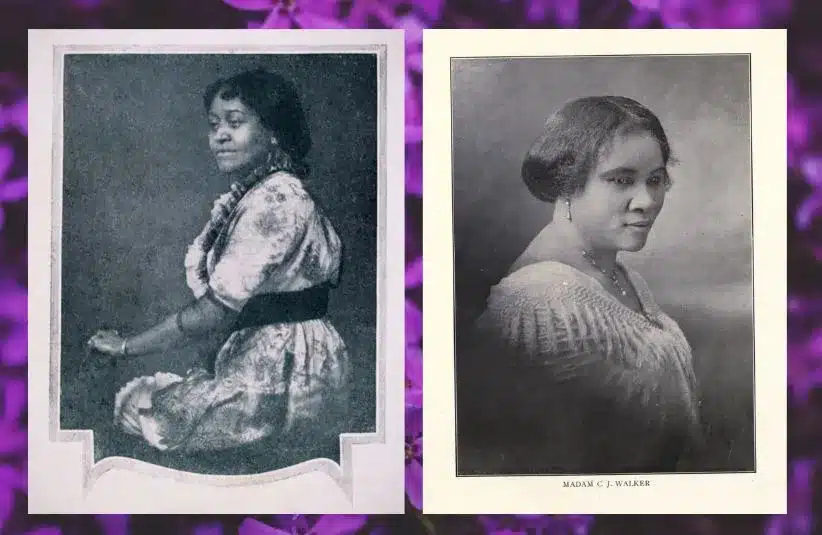
Before the era of digital influencers and endless Sephora hauls, there was Annie Turnbo Malone. A literal chemistry nerd operating in the early 1900s, Malone looked at the severe scalp damage caused by the harsh lye products of the era and said, “Absolutely not.” She formulated a revolutionary, non-damaging hair grower and founded Poro College in 1918. This wasn’t just a salon; it was an educational hub that taught Black women the actual science of cosmetology and the economics of running a business.
Then came her wildly brilliant protégé, Madam C.J. Walker. Walker took Malone’s blueprint and built a skyscraper. She became the first female self-made millionaire in America, but to reduce her legacy to a wealth metric is a disservice. She didn’t just sell her Walker Haircare System; she engineered a massive distribution network that employed thousands of Black women, giving them a taste of financial independence in a society actively trying to hold them back.
Engineering the Sew-In Weave: Christina Jenkins
If you have ever worn, admired, or benefited from the flawless execution of a sew-in weave, you owe a massive debt to Christina Jenkins. In the 1950s, hairpieces were notoriously stiff, prone to slipping, and relied on damaging pins. Jenkins, functioning essentially as a textile engineer for the human scalp, invented the hair-weaving method.
She figured out how to securely sew extensions onto a base of braided natural hair, allowing the hair to lie flat, move naturally, and stay completely secure. She secured a literal U.S. patent for this technique in 1952. The sew-in is the absolute foundation of today’s multi-billion-dollar global hair extension market, and a Black woman wrote the original source code.
Bringing Hood Glamour to the Global Stage: Flo-Jo and Hollywood Royalty
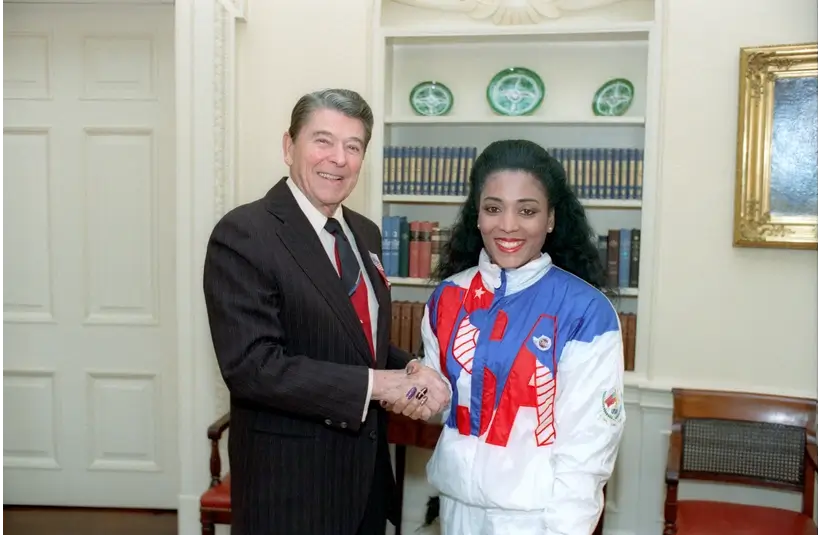
Long before “track girl aesthetic” was a trending aesthetic, there was Florence Griffith Joyner. Flo-Jo did not just shatter Olympic world records; she utterly destroyed them while sporting a full face of immaculate makeup and legendary, six-inch acrylic nails. In the 1980s, she unapologetically brought her own specific brand of glamour to the aggressively rigid sports world. She proved, with absolute sass and dominance, that extreme athletic performance and hyper-femininity are not mutually exclusive.
This same rebellious glamour echoes back to Old Hollywood icons like Josephine Baker and Dorothy Dandridge. Dandridge, the first Black woman nominated for a Best Actress Academy Award, wielded her signature red lipstick and nail polish like armor, cementing a powerful, seductive image that utterly defied the racist constraints of the 1950s film industry.
Redefining Pigment on the Runway: Eunice Johnson and Pat McGrath
For the longest time, a Black woman trying to find a foundation match was a comedic tragedy of chalky, ashy undertones. Eunice Johnson changed the math when she created Fashion Fair Cosmetics, providing a high-end, richly pigmented lifeline for dark skin.
Fast forward to the absolute ruler of backstage beauty, Pat McGrath. McGrath doesn’t just apply makeup; she engineers optical illusions. She is the mother of modern makeup artistry, the first makeup artist to be named a Dame by Queen Elizabeth, and the brain behind a billion-dollar brand. She proved you don’t need to conform to European beauty standards to completely dictate global runway trends.
The Fenty Effect and Modern Skin Science for this Women’s History Month
You cannot properly celebrate Women’s History Month without mentioning the modern juggernauts. When Rihanna dropped Fenty Beauty with 40 foundation shades (now over 50), it wasn’t just a product launch; it was a targeted, devastating strike on the industry’s lazy exclusion. She forced every legacy brand to panic-formulate darker shades to keep up, an event rightfully dubbed the “Fenty Effect.”
But the modern innovation doesn’t stop at cosmetics. We have science-driven entrepreneurs like Shontay Lundy, who looked at the atrocious white cast left by traditional sunscreens and engineered Black Girl Sunscreen to protect melanin without the ghostly residue. We also have Olamide Olowe, who became the youngest Black woman to secure massive venture capital funding for Topicals, a skincare brand aggressively tackling chronic skin conditions with heavy scientific backing and zero stigma.
So, the next time you swipe on a perfectly matched foundation, blend out your sunscreen without a white cast, or sit in the stylist’s chair for a fresh install, remember the architects. Black women didn’t just participate in U.S. beauty culture—they dragged it out of the dark ages, forced it to be inclusive, and made it infinitely more brilliant.
Author
