
Automotive History: The Stutz Bearcat 1914 and 1928 Stutz Blackhawk


The Stutz Bearcat was an American sports car first produced in 1914. Stutz also produced the Blackhawk in 1928. Interestingly, the Bearcat was reproduced in the 1970s and again in the 1980s. This article will summarize the Bearcat first.
Essentially, the Bearcat was a shorter (120-inch wheelbase) and lighter version of the standard Stutz passenger car’s chassis. It was originally powered by a 390-cubic-inch, 60-horsepower four-cylinder engine produced by the Wisconsin Motor Manufacturing Company. The Stutz Blackhawk of the 1920s was nondescript; the company revived in 1967, and the first new Blackhawk was purchased by Elvis Presley. Did you know Elvis collected cars?
Stutz Bearcat
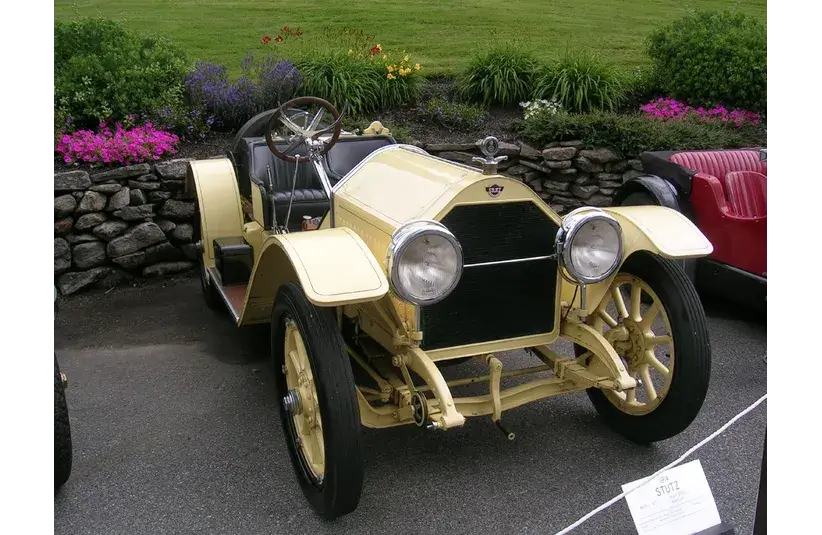
The Stutz Bearcat was a racing car. Racing cars of the period had minimal bodywork, and the Bearcat was similar. There were a few distinctive bodywork characteristics, though. It had a “dog house” style hood, open bucket seats, and a “monocle” style windscreen for the driver. There was also a cylindrical fuel tank on the rear deck.
Production Bearcats differed from the racing version. The factory Bearcats had fenders, lights, and a trunk. The factory literature from 1913 said, the Bearcat “was designed to meet the needs of the customer desiring a car built along the lines of a racing car with a slightly higher gear ratio than our normal torpedo roadster, has met with great favor with motor car owners and meets the demand for a car of this class.”
Originally produced for the 1913 model year, the Stutz Bearcat was first mentioned in an advertisement for the Indianapolis 500. The Series E of 1913, the production car that was available to the public, had electric lights and a starter. A six-cylinder engine option was available for an extra $250.00. There was a doorless body style, which lasted through 1916. Available colors for the Series E were vermillion, gray, and red. Red was by far the most popular color.
Stutz Bearcats won twenty-five of the thirty races in which they were entered. Erwin “Cannon Ball” Baker drove a Bearcat from California to New York in 1915. It took 11 days, seven hours, and 15 minutes, setting a new record. This drive also inspired the “Cannonball Run” movie and race.
Stuzt Blackhawk
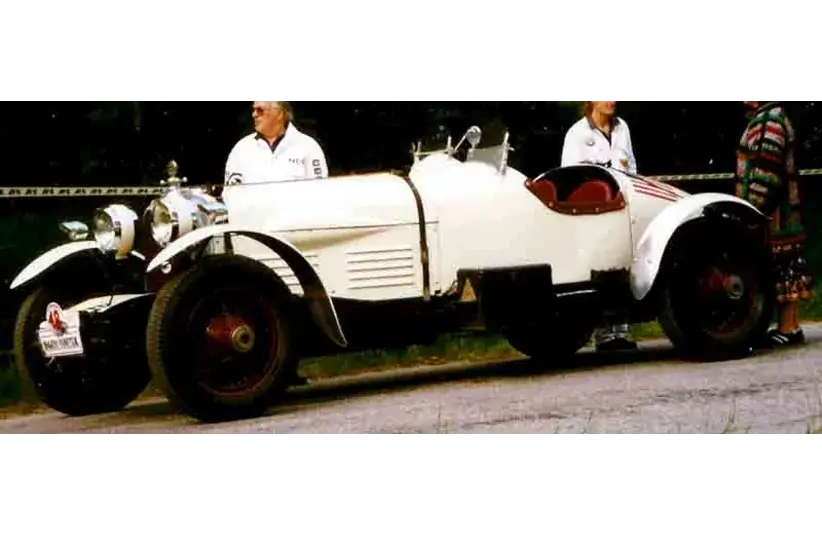
In 1928, there was a Stutz model called the Blackhawk. The Blackhawk was less powerful and expensive than some other Stutz models. It was designed by Moscovics and Lockhart and was marketed as a separate make. The car was available with either an overhead-cam six-cylinder or an eight-cylinder single engine with twin carburettors, with a maximum output of 95 horsepower at 3,200 revolutions per minute. It was the most powerful car available at the time.
The chassis was comprised of pressed-steel side members, with a wheelbase of 127 inches and an original version of 131 inches. Many body styles were available on the 127.5″ wheelbase chassis, including five-passenger sedan, five-passenger coupe, and two-passenger speedster, and others. Custom coachwork was also available, with prices for non-custom Blackhawks ranging from $ 1,995 to $ 2,785.
Parting Shots
There is a long history of muscle cars in the United States. In a very real sense, the Stutz cars started that tradition. Therefore, they are important. The Bearcat, though available to the public, was primarily a racecar. It won twenty-five of the thirty races it entered. Both cars were reproduced in the 1970s and 1980s. A Blackhawk was purchased by Elvis Presley as part of his car collection.
Author
