
Melania Producer Fires Back Over Phantom Thread Music Controversy

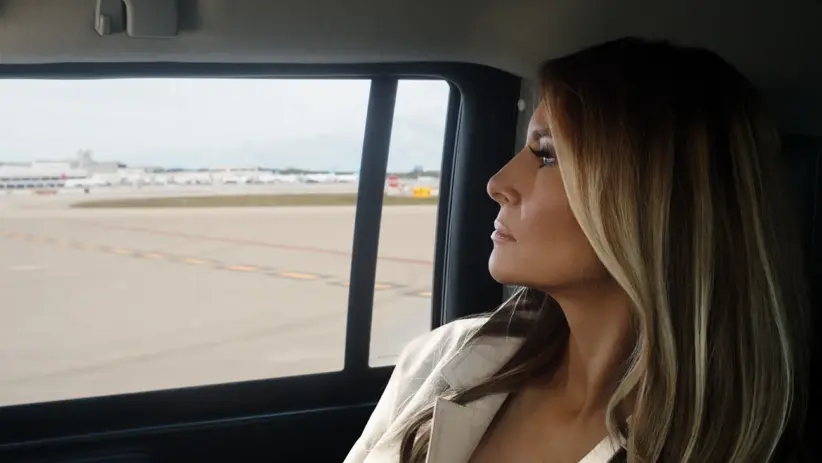
The world of documentary filmmaking is often fraught with legal and ethical landmines, but few controversies become as public as the recent clash over the Melania documentary. The film, which profiles former First Lady Melania Trump, has found itself at the center of a heated debate involving two of Hollywood’s most respected artists and the film’s production team.
Melania Documentary Under Fire
At the heart of the issue is the film’s use of music from the 2017 masterpiece Phantom Thread. The film’s director, Paul Thomas Anderson, and its composer, Radiohead’s Jonny Greenwood, publicly objected to their work being featured in the documentary. However, the film’s producer, Marc Beckman, has now fired back, insisting that the production team followed all legal protocols and that the artists’ claims are a “blatant lie.” This “he said, they said” battle sheds light on the murky and often misunderstood world of music licensing in film.
The Artists’ Objection
The controversy began when Paul Thomas Anderson and Jonny Greenwood released a joint statement expressing their disapproval of the Melania documentary’s use of Greenwood’s Oscar-nominated score. Their complaint wasn’t just about creative differences; it was a matter of contractual obligation.
“It has come to our attention that a piece of music from Phantom Thread has been used in the Melania documentary,” their statement read. “While Jonny Greenwood does not own the copyright in the score, Universal failed to consult Jonny on this third-party use which is a breach of his composer agreement.”
They concluded with a clear request: “As a result Jonny and Paul Thomas Anderson have asked for it to be removed from the documentary.”
Their statement is key because it directs the blame not at the Melania filmmakers but at Universal, the studio behind Phantom Thread. This points to a breakdown in the licensing chain, where the original artist’s contractual rights to be consulted may have been overlooked when the music was licensed out for a new project.
The Producer’s Scathing Response
Marc Beckman, a producer for Melania and a longtime senior advisor to Mrs. Trump, did not take the accusation sitting down. In an exclusive interview with Breitbart News, Beckman vehemently denied any wrongdoing on the part of his production.
“It’s a blatant lie,” Beckman stated. “We have a legal right and permission to use every song and piece of music in the film. We have the legal rights to use it. We’ve done everything the right way. We followed protocol. We respect artists. We compensated everyone for their music.”
Beckman’s defense is that his team secured the necessary rights through the proper channels. From his perspective, they have legally binding contracts that allow them to use the music. He argues that if there was a breach, it occurred somewhere between the artists and their own studio, and it should not reflect poorly on the Melania documentary.
“This is just ridiculous,” Beckman added, expressing frustration that his team was being targeted in the media without being contacted for comment.
Understanding Music Licensing in Film
This controversy highlights the complex nature of music licensing. It’s not as simple as just paying a fee and using a song. There are multiple layers of rights involved.
First, there is the synchronization license (sync license), which grants permission to pair a piece of music with visual media. This is what the Melania producers would have obtained.
Second, there is the master use license, which is for the rights to the specific recording of the song.
Where this case gets complicated is the composer agreement. Jonny Greenwood’s contract with Universal likely contained a clause that gave him the right of consultation or approval before his music could be licensed for other projects. It appears Anderson and Greenwood believe Universal failed to honor this part of their deal.
So, it’s entirely possible that both sides are telling the truth from their point of view. The Melania team likely paid for and received a sync license from the rights holder (Universal). However, Universal may have granted that license without fulfilling its own contractual obligations to the original composer.
A Politically Charged Battle
It’s impossible to ignore the political context surrounding this dispute. A documentary about a polarizing figure like Melania Trump was always going to attract attention. It’s plausible that Anderson and Greenwood, who are prominent figures in a largely liberal Hollywood, do not want their art associated with a political documentary tied to the Trump family.
Their statement, however, wisely focuses on the legal and contractual issue rather than making a political argument. This gives them a stronger foundation for their complaint. Meanwhile, Beckman’s decision to give his response to a right-leaning outlet like Breitbart suggests he views the controversy through a political lens, framing it as an unfair attack from the mainstream media and Hollywood establishment.
Ultimately, this is a mess of contracts, politics, and artistic integrity. While the Melania producers insist they are in the clear, the public outcry from two Oscar-nominated artists has cast a shadow over the film. It serves as a powerful reminder that in filmmaking, securing the legal rights to a piece of music is only half the battle; respecting the original artist’s intent is just as important.
