
The Legendary Chrysler Six: A Celebrated Icon of Early American Engineering


The Chrysler Six was a series produced by the Chrysler Motor Corporation, which had acquired the former Maxwell Automobile Company and Chalmers Automobile Company. The most notable fact about this car is that its engine was technically advanced and ran for twenty-four hours at Le Mans. It ran in 1925, 1928, and 1928. It came in third and fourth in 1928.
Walter Chrysler had a new company and needed a bigger, more luxurious vehicle to compete with the Buick Master Six, his former employer. The vehicle was also meant to compete against the offerings from the General Motors Corporation. There was a new body for the car, but it had that powerful engine. Do you think the power of this car helped start the muscle car tradition in the United States?
Chrysler 6 Summary
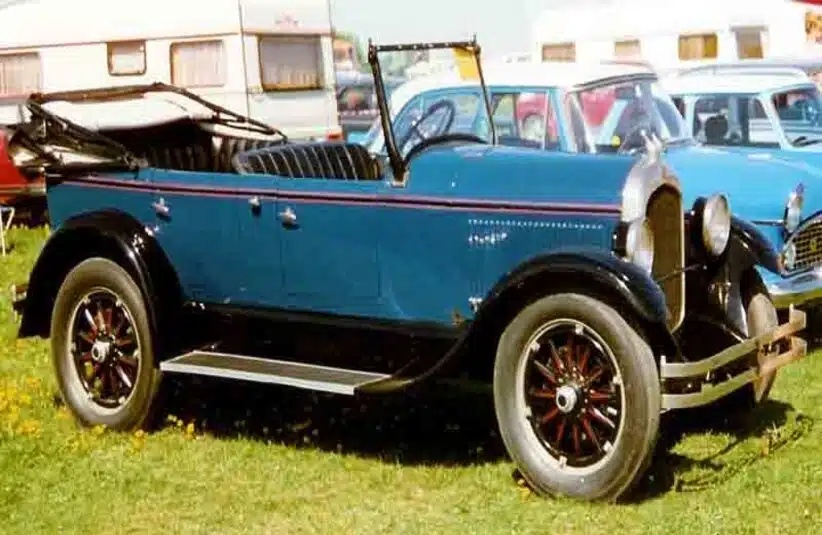
The Chrysler Six was a full-size car that was the first car produced by the new Chrysler company in 1924. It replaced the cars of Maxwell, whose brand was bought by Walter Chrysler in 1921. There were a variety of body types available. Nine different bodies supplied from Fisher Body Co. were offered in the first year of production.
The cars were attractive and appealed to consumers. The open cars first had horizontally split windshields, inspired by the Brewster windshield, and 30-inch wheels with five lug nuts, attached to hydraulic four-wheel drum brakes. It became the most successful car ever. About 32,000 cars were sold by December 31, 1924. That was a new record for the introduction of a new model.
The entry-level Chrysler Six with rumble seat was sold for $1,595, and the top model documented was the Town Car listed at $3,725. The new Chrysler offered many choices for consumers, including technology and body styles that had become extra-cost items from other manufacturers, but Chrysler included them for no extra cost. The car, nevertheless, was priced in the medium price field.
The Chrysler Six cars with the high-performance engines reached a top speed of 75 miles per hour. In one of the more notable speed records, Ralph DePalma won the Mt. Wilson hill climb driving a stripped-down touring car 1,000 miles in 786 minutes on January 5, 1925. Sir Malcolm Campbell set a lap record of 100 miles per hour at Brooklands in a streamlined roadster.
Improvements for 1928
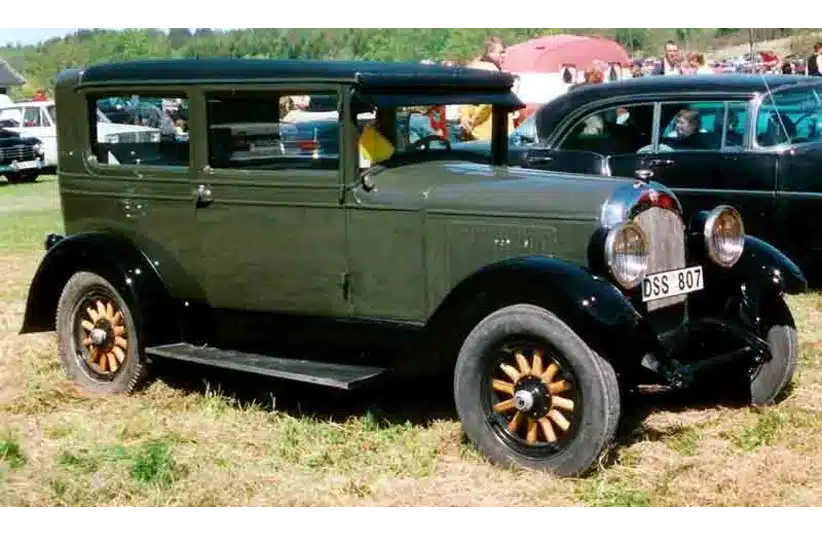
For 1928, the Chrysler Six Series 62 and Series 72 offered yet more upgrades and improvements, adding more standard equipment while keeping retail prices unchanged. These upgrades and improvements included a more pronounced radiator, headlight posts attached to the chassis, a tubular front axle, which produced a completely different look, rubber shock insulators on the wheels, and throttle and headlight controls installed on the steering wheel. There were several convenience items, including an electric gas gauge installed in the instrument panel, an ignition lock on the dashboard, and an exterior-mounted sun visor. All of these conveniences are now standard.
The Chrysler Six Series 62 was listed at $1,235, and the five-passenger 72 at $3,595. These prices were close to the prices from the middle of the decade, and the cars retained their commercial popularity. This mid-range price point made the car available to most Americans.
Parting Shots
Although the Chrysler Six series of cars ended officially in 1928, there were future generations that were produced into the 1930s. That production included the Series CJ, CM, CI, CO, CA, and CB. The tradition of offering consumers many updates and variations continued. However, they were all built around that powerful engine, which was a hallmark of the car.
Author
