
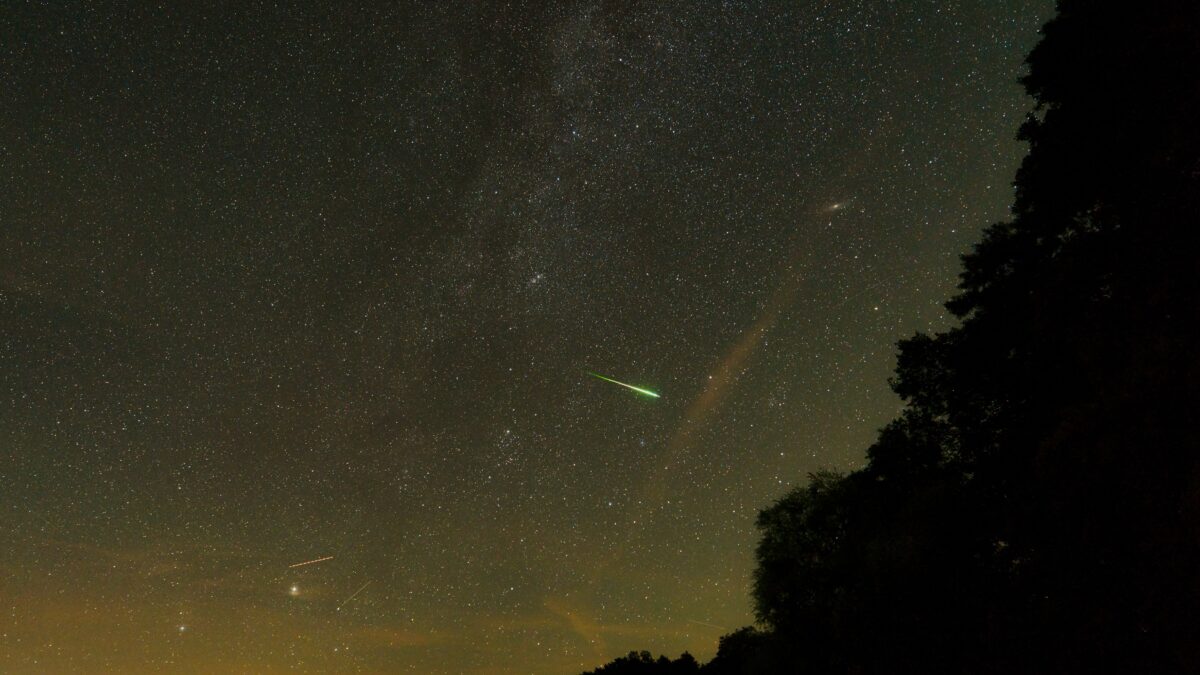
The Draconid meteor shower reaches its peak the evening of Thursday, Oct. 8 into the early hours of Friday, Oct. 9, 2026, giving skywatchers a rare chance to catch shooting stars without staying up past midnight, according to USA Today. The shower is active from Oct. 6 through Oct. 10, but the peak night offers the best odds of a good show.
Unlike many meteor showers that demand a 2 a.m. wake-up call, the Draconids put on their display early. That makes this year’s peak especially convenient for families or anyone who wants to watch without losing a full night’s sleep.
Draconid Meteor Shower: Peak Timing And What To Expect
The best viewing window opens around 7 p.m. to 9 p.m. local time on Oct. 8, when the constellation Draco sits high in the northern sky, per USA Today. That timing sets the Draconids apart from showers that only become visible after midnight.
Skies are expected to be almost moonless, a condition that improves visibility by cutting down on competing light, per USA Today. Meteors should be visible to the naked eye, though actual sky conditions and local visibility will still affect what viewers see.
Finding A Dark-Sky Location
No special equipment is needed to watch the Draconids. Binoculars and telescopes actually narrow the field of view and make it harder to catch fast-moving meteors streaking across a wide stretch of sky.
The biggest factor in a good viewing experience is getting away from artificial light. City glow and streetlights wash out fainter meteors, so heading to a park, rural area or any spot with a clear, unobstructed view of the northern sky improves the odds of spotting activity.
Tips For Watching
Give your eyes at least 20 minutes to adjust to the dark before expecting to see much, USA Today recommends. That adjustment period is easy to undo: checking a bright phone screen resets night vision and means starting the 20-minute clock over.
Dress for the weather and bring a blanket or reclining chair for comfort during the wait. Meteor showers reward patience: lying back and taking in as much of the sky as possible beats scanning one small patch.
What’s Next
The Draconid shower remains active through Oct. 10, 2026, so viewers who miss the Oct. 8 peak still have a couple of additional nights for a chance at catching meteors, though activity typically tapers off after the peak night.
 Don't stop here
Every Score. Every Story. One Home.
Breaking sports, entertainment and news from across the Total Apex network, updated all day.
Get the Full Story →
Don't stop here
Every Score. Every Story. One Home.
Breaking sports, entertainment and news from across the Total Apex network, updated all day.
Get the Full Story →