First Autistic Representing Barbie Released by Mattel

In partnership with ASAN, the Autistic Self Advocacy Network, Mattel has released the first Barbie representing an autistic person. The doll was unveiled on January 11, 2026, and was created with guidance from ASAN to ensure positive and accurate representation.
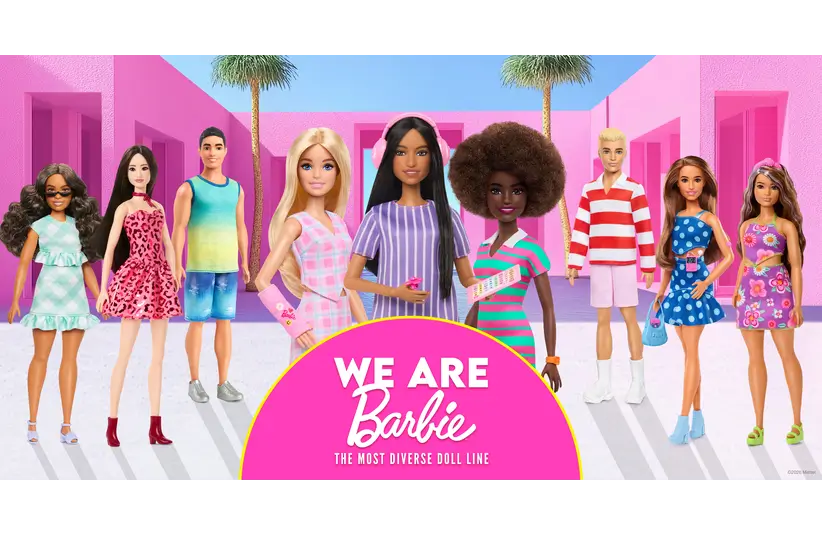
The new Barbie, Fashionista #245, joins a line that is already filled with diverse skin tones, body types, medical conditions, and disabilities. But Barbie isn’t the first doll that is coded as autistic! More on that later.
The Autistic Barbie Doll
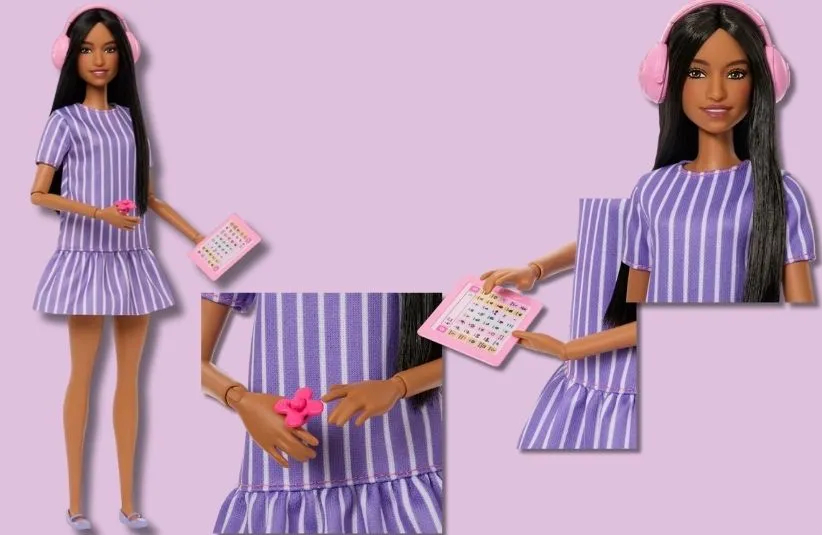
The new Barbie Fashionista from Mattel has the standard Barbie body, except that her arms are articulated at the elbows and wrists. This was a deliberate choice so children can play out their own stims, such as hand flapping. Her eyes are also positioned to be looking just a little off-center to represent the tendency for many autistic people to feel uncomfortable with eye contact.
Her clothing was also a careful choice. She is wearing a loose-fitting dress with short sleeves and a flowy skirt. Some autistic people experience discomfort from the feel of fabric against their skin. It’s nice to see this demonstrated through her dress! And her shows are flats. This isn’t always a popular choice for Barbie, but in this case, it makes sense. The flat purple shoes give her more stability than high heels would.
Finally, her accessories represent those that an autistic child (or adult) may be familiar with. She has a fidget spinner that clips to her finger, and it really spins! Autistic people frequently have small toys, jewelry, or other items that allow them to regulate their emotions when dealing with a lot of sensory input and stress. She also wears noise-canceling headphones and carries a tablet. The tablet has icons for Augmentative and Alternative Communication apps (AAC), which can help with communication.
ASAN, the Autistic Self Advocacy Network
ASAN is a disability advocacy nonprofit organization that is run for autistic people and by autistic people. On their About page, they say, “ASAN believes that the goal of autism advocacy should be a world in which autistic people enjoy equal access, rights, and opportunities.”
Representatives from ASAN met with Mattel to discuss how the new doll could best represent an autistic person. They knew they couldn’t make it represent everything about autism, but they aimed to share some of its traits so that children could see themselves in the doll. They also chose for her to be a person of color because women and people of color are underdiagnosed. Colin Killick, the Executive Director for ASAN, was quoted in the press release as saying:
“As proud members of the autistic community, our ASAN team was thrilled to help create the first-ever autistic Barbie doll. It is so important for young autistic people to see authentic, joyful representations of themselves, and that’s exactly what this doll is. Partnering with Barbie allowed us to share insights and guidance throughout the design process to ensure the doll fully represents and celebrates the autistic community, including the tools that help us be independent. We’re honored to see this milestone come to life, and we will keep pushing for more representation like this that supports our community in dreaming big and living proud.”
Mattel’s Other Autistic Doll
Though this is the first time Barbie has been represented as autistic, it isn’t the first time Mattel has released a doll that was coded this way. In 2022, Mattel rebooted the “Monster High” doll line. Then, in 2023, they released the Generation 3 (G3) Twyla Boogeyman doll.
Twyla is the daughter of the Boogeyman. She can enter dreams, walk in shadows, and read books with her eyes closed and sleeping (to name a few of her abilities). She’s introverted, quiet, and she’s autistic.
Other characters in the “Monster High” line, as well as “Every After High” and others, have been interpreted as having autism by members of the neurodivergent community but have not been official labeled as autistic by their creators.
What’s the Big Deal?
With autistic girls (and especially girls of color) going undiagnosed, the representation absolutely matters. Education is the first step to understanding, and many adults have now been diagnosed with autism as a result of their children’s diagnosis. Bringing the difference into the open, where it can be better understood, can also help to dispel the myths and mysteries of it.
Also, when a child is different from other children, they feel it acutely. Until now, there hasn’t been a widely discussed toy that truly tried to represent a person with autism. This Barbie may not be perfect (no single toy could be), but she’s a step in the right direction. Thank you, Mattel, for seeing us.
If you want to purchase the Autistic Barbie for yourself or someone in your life, she’s widely available at multiple retailers. As of the writing of this article, the best price seems to be at Target, where she’s $10.99.