
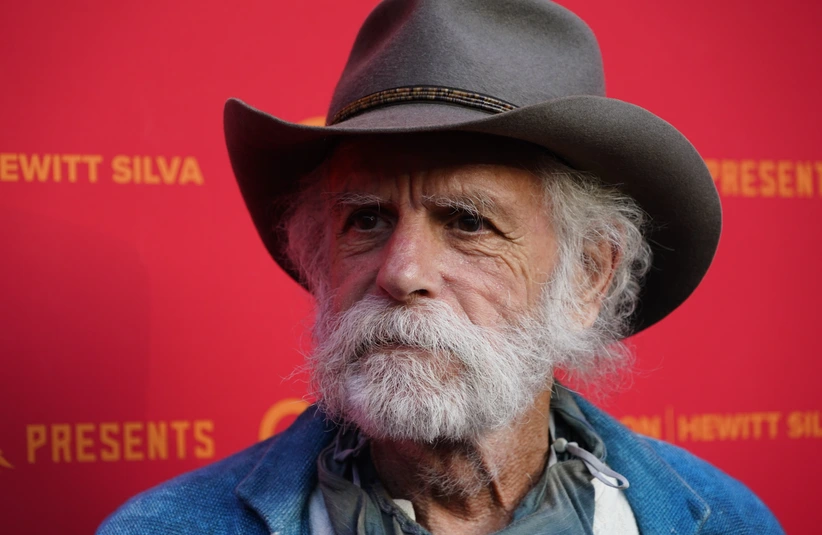
Bob Weir, Grateful Dead Co‑Founder and Jam‑Band Architect, Dies at 78

Bob Weir—the rhythm guitarist who refused to play rhythm like anyone else, the voice behind some of the Grateful Dead’s most enduring anthems, and a lifelong road warrior who helped build one of the most devoted musical communities on Earth—has died at 78. His family announced the news late Friday, sharing that Weir “transitioned peacefully, surrounded by loved ones” after overcoming cancer but facing complications from chronic lung issues.
For Deadheads everywhere, this loss hits like a sudden drop into silence after a long, spiraling jam. One of the last original architects of the Dead’s sound has left the stage.
A Life That Changed American Music
Born October 16, 1947, in San Francisco, Weir’s story is the kind of cosmic accident Deadheads love to mythologize. On New Year’s Eve 1963, a teenage Weir wandered into a Palo Alto music shop and met Jerry Garcia—an encounter that would alter the trajectory of rock history.
From their early jug‑band days to the Warlocks to the formation of the Grateful Dead in 1965, Weir became the band’s rhythmic counterweight: angular, melodic, unpredictable, and utterly essential. His playing wasn’t background—it was architecture.
Songs like “Sugar Magnolia,” “Playing in the Band,” “Cassidy,” “Estimated Prophet,” and “Throwing Stones” became pillars of the Dead’s live universe, many written with lyricists John Perry Barlow or Robert Hunter. Weir’s voice—sometimes tender, sometimes wild, always unmistakably Bobby—was woven into the DNA of the band’s nightly explorations.
Bob Weir – The Relentless Road Warrior
Even after Jerry Garcia’s death in 1995, Weir never stopped carrying the torch. He led or co‑led a constellation of projects—RatDog, Further, Dead & Company, Wolf Bros—each one a new chapter in the Dead’s ever‑evolving musical ecosystem.
He didn’t treat the Dead’s catalog as sacred relics. He treated them as living organisms. Songs shifted, stretched, breathed. New collaborators came in, younger players learned the language, and Weir kept the music alive for new generations.
His family’s statement captured it perfectly:
“For over sixty years, Bobby took to the road… His work did more than fill rooms with music; it was warm sunlight that filled the soul, building a community, a language, and a feeling of family that generations of fans carry with them.”
Illness, Passing, and the Final Curtain
Weir had quietly battled cancer in recent years, even performing shortly after his diagnosis during the Dead’s 60th‑anniversary shows in Golden Gate Park. According to his family, he beat the disease “as only Bobby could,” but complications from underlying lung issues ultimately took his life.
He died surrounded by loved ones, leaving behind his daughter Chloe, who shared the family’s tribute online.
Grateful Dead: A Legacy That Will Outlive All of Us
Bob Weir didn’t just help create a band—he helped create a culture. A community. A way of life.
His guitar style influenced generations of jam‑band musicians. His songwriting shaped the emotional core of countless Dead shows. His presence—barefoot, grinning, sometimes wearing shorts when no one else would dare—became part of the Deadhead mythos.
And for fans—those of us who have danced in fields, cried in parking lots, traded tapes, chased setlists, and found pieces of ourselves in these songs—this loss is personal.
Tonight, Deadheads everywhere are doing what you’re doing right now: reading about the legend, turning up the music, letting the riffs and harmonies wash over the grief, and remembering the man who helped soundtrack so many lives.
Grateful Condolences
The music never stopped. And because of Bob Weir, it never will. What a long strange trip it will continue to be for all of the fans, new and old, who will love their one-of-a-kind sound forever. On behalf of all of us at Total Apex Media, our condolences go out to the family, friends and all the fans. See you all down by the riverside.