
Collective Soul’s ‘Shine’: From Demo To Defining—The Daily Earworm

Collective Soul struck gold with “Shine” in 1994, literally. The first single from the band’s debut album, Hints Allegations and Things Left Unsaid, sold over 500,000 copies and was certified gold by the Recording Industry Association of America (RIAA). The album followed suit and eventually ended up double-platinum in the United States and quintuple-platinum in Canada. “Shine” topped Billboard’s Mainstream Rock chart for eight weeks and reached #11 on the Hot 100 Singles chart.
“Shine,” however, did not have an easy path to success. Collective Soul frontman Ed Roland had the riff that would later become the centerpiece of the song bouncing around in his head for almost five years. The story of how Roland’s riff became the catalyst for the band’s success is an interesting one. In today’s Daily Earworm, we examine how that riff became the song that put the band on the map, and all the unusual stories along the way.
The Riff that Gave the Band Its Shine
Roland graduated from music school in Massachusetts and moved to Georgia to start his music career in the late ’80s. He started a few bands, but nothing was working. One of those bands was even named Collective Soul, but that version of the band did not last long. Feeling defeated, Roland began thinking that he might have to transition to becoming a songwriter for hire. He had already written a number of songs over his first few years out of school.
During a trip home to visit his parents, he learned that his brother Dean, who was 10 years his junior, had begun to play guitar. As they messed around on guitars in his family’s living room, Ed Roland decided to play a riff for his brother that he had been holding on to for years. His brother loved it, and the elder brother decided right then that he was going to finally turn that riff into a song. Roland did just that right there in the living room with his brother.
Determined to give being a musician one more try, Roland soon gathered together some musicians in Georgia, and they recorded a demo of “Shine” and some of the other songs he had written for his various short-lived bands. As the patchwork group of musicians recorded the tunes in a basement on an eight-track recorder, Roland did not like the way the distinctive “yeah” in “Shine” sounded. He unwound all the toilet paper from the roller in the bathroom and sang through the tube into the recorder for that part each time it came up in the song.
When the demo was finished, Roland sent it to publishing companies, hoping to sell the songs. However, that little glimmer of hope inside him also guided him to send the demo to a small local college radio station. “Shine” soon became the station’s most requested song. It wasn’t long before the commercial stations in the area started picking it up as well.
With the popularity of “Shine” came the opportunity to play some shows. Roland began contacting the musicians that he had assembled to record the demo. Roland, his brother, guitarist Ross Childress, and drummer Shane Evans began playing some local gigs, including some live radio concerts. Indie label Rising Storm pressed copies of the demo for the band, and soon Atlantic Records came calling. The name Roland had used on the demo was Collective Soul, and the album’s title was, of course, Hints Allegations and Things Left Unsaid.
The band added bassist Will Turpin and asked Atlantic if they wanted the band to re-record the album before the label released it. Atlantic liked the basement demo version, toilet paper tube and all, and that is the version that went multi-platinum.
Collective Soul’s Debut Single Collects Awards
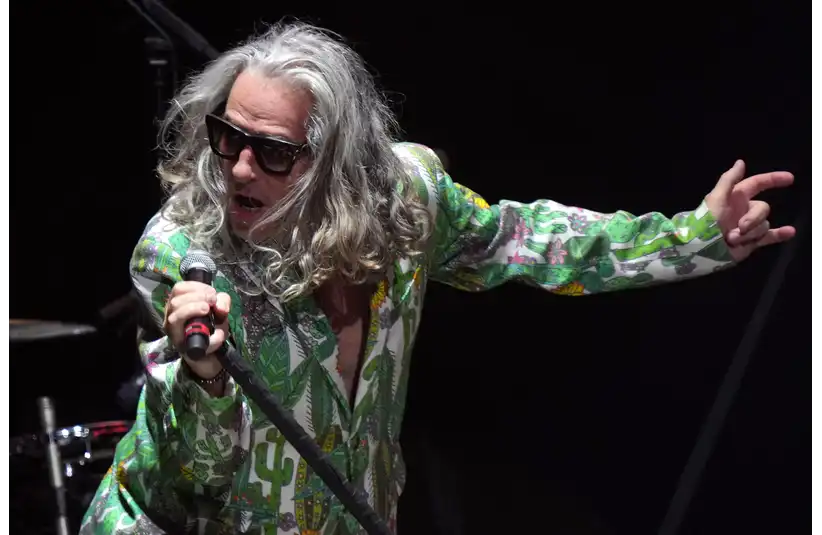
On top of the chart and retail success that Collective Soul achieved with “Shine,” the band also raked in some honors. “Shine” won a Billboard Music Award for Top Rock Song in 1994. In 1996, the single added an ASCAP Pop Music Award for Most Performed Song, and in 2020, the band’s signature hit was recognized with BMI’s Million-Air Award.
Oddly enough, the song also won a Grammy, but not for Collective Soul. Country legend Dolly Parton recorded a cover of the song with members of the bluegrass band Nickel Creek in 2001. Her version netted her the Grammy for Best Female Country Vocal Performance.
From the Basement to the Penthouse
Collective Soul is still making music 33 years after their inception. They have racked up seven Top 40 albums and 13 Top 10 Singles, seven of which topped Billboard’s Mainstream Rock chart. The band is credited with selling over 15 million albums. All of this was because Roland believed in a riff that took five years (and a toilet paper tube) to come to fruition.