
“In The Beginning…A Catholic Understanding of the Creation and the Fall” by Joseph Ratzinger

“In The Beginning…A Catholic Understanding of the Creation and the Fall” is a book comprised of four homilies (an introduction and a conclusion) by Joseph Ratzinger, who later became Pope Benedict XVI. The homilies were given in 1981, when the Pope was just Joseph Ratzinger. The debate over creationism versus evolution has been a hot political topic of late. So, it is good that we have a theological reflection of one side of the debate from a future Pope. Do you believe in creationism or evolution?
“In the Beginning…,” The Homilies
The book, “In the Beginning…A Catholic Understanding of the Creation and the Fall,” is based on four homilies. It is organized by those four presentations at Mass. Reading the book is like hearing Ratzinger talk. It is difficult to say how important this is to Catholics.
Based on four Lenten homilies delivered in 1981, this book examines the first three chapters of Genesis in light of the Church’s teaching on creation. It is useful to get an account of creation according to the Church. Despite the fact that these are homilies, Ratzinger was always extremely learned, so “In the Beginning…” is a theological study, not a scientific one, but Ratzinger does grapple with how the sciences have affected our theological understanding of these foundational texts.
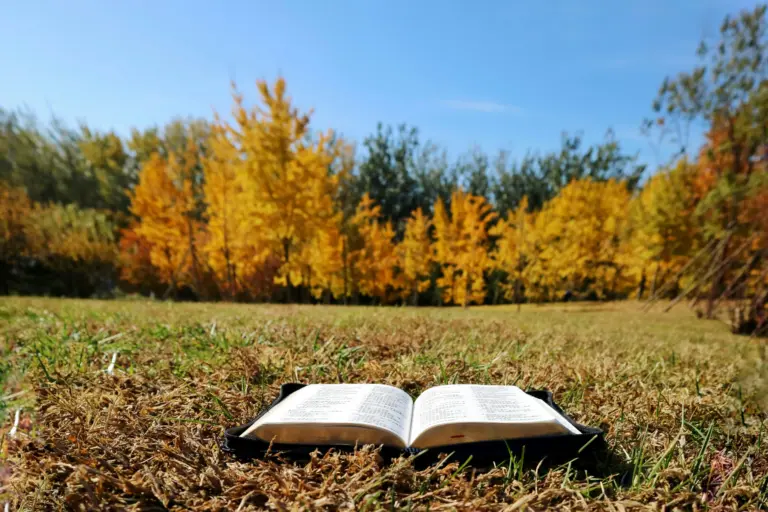
The basic point of “In the Beginning” is that the Bible is not a scientific text and should not be read as one. Scripture varies in how it sees God’s creation; it gives two distinct creation accounts, so that we are to understand that we should distinguish the content that is being said from the form in which it is said. And what is being said is something theological, not scientific at all.
The Bible and Creation

The purpose of the Bible is to say one thing: God created the world. Although it is interesting, there is no explicit treatment specifically of Adam and Eve in the Garden of Eden in the homilies. The sun and the moon are not deities who rule the earth, and the sky is not full of mysterious or adversarial divinities. Rather, there is only one power that exists, God’s eternal Reason. The Reason of God became in the Word the power of creation. For Ratzinger, all of creation boils down to the will of God.
For Catholics, the sacred scriptures are read and interpreted with the understanding that they form a unity founded on Christ. This understanding, as applied to the Creation accounts, means that we should not be surprised to find that the God of Abraham, Isaac, and Jacob, who is the Creator of all things, is the God and Father of all things. This belief deeply informs the proper Catholic understanding of the creation of the world.
There are the seven days of creation, of course, but also instances of three and four, and the phrase “And God said” occurs ten times in Genesis. But what does it mean to talk about Creation in an age that can give a thorough and persuasive temporal account of how the world came to be the way it is? Ratzinger has an answer in “In the Beginning…A Catholic Understanding of the Creation and the Fall.”
Parting Thoughts
It is useful to many people to get a theological understanding of creation, and that is provided in “In the Beginning…A Catholic Understanding of the Creation and the Fall.” It is also interesting to get the perspective of someone who became a pope before becoming one. It is said of Ratzinger that he was learned and dense. “In the Beginning…A Catholic Understanding of the Creation and the Fall” proves it by being definitive.