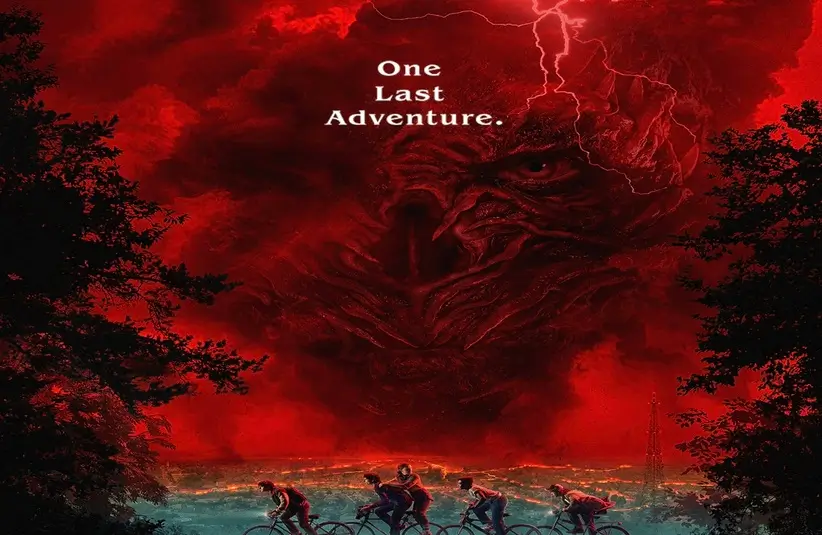
Jamie Campbell Bower Reveals Intense Vecna Moments “Stranger Things Vol. 2”

As the cultural phenomenon “Stranger Things” approaches its conclusion, the narrative focus has shifted significantly toward the antagonist at its center. In the final volume of Season 5, the boundary between the fictional town of Hawkins, Indiana, and the alternate dimensions threatening to consume it is rapidly dissolving.
Jamie Campbell Bower Explores the Human Side of Horror in “Stranger Things” Season 5
At the heart of this convergence is Bower, the actor tasked with portraying Henry Creel, also known as Vecna. While previous seasons established Vecna as a formidable creature of prosthetics and CGI, the final episodes aim to deconstruct the man behind the monster.
The Duffer Brothers, creators of the series, have reportedly pivoted the character’s direction to utilize more of Bower’s natural appearance and performance capabilities. This shift allows the narrative to explore the psychological underpinnings of the villain, rather than relying solely on supernatural intimidation.
Jamie Campbell Bower on the Evolution of Henry Creel
The penultimate episodes of the series have revealed that the threat facing Hawkins is not merely the “Upside Down,” but a darker realm known as “The Abyss.” Within the narrative, this dimension serves as a holding cell where Henry Creel has been operating. For Bower, the challenge in “Stranger Things” Season 5 involved navigating the duality of his character—balancing the monstrous entity Vecna with the human Henry Creel.
Apparently, the showrunners expressed a desire to bring the character back “more as [Bower]” rather than strictly as the prosthetic-heavy villain. This decision required the actor to delve into the character’s distorted memories. Key sequences involve the characters Max and Holly traversing Henry’s “mind prison,” a narrative device that required Bower to enact scenes of Henry’s past, including a pivotal moment involving a murder in a cave that catalyzed his transformation.
Cinematic Influences Behind the Villain
To ground such a fantastical character for “Stranger Things,” Bower looked to disparate and surprising sources for inspiration. While many actors playing villains look to classic horror tropes, the actor turned to figures associated with comfort and safety to find the unsettling nature of Henry Creel. Volume. 1 of “Stranger Things” scored big when it first hit streaming on November 26.
According to Entertainment Weekly for the insight, Bower explained his process regarding these influences: “Mr. Rogers was a really interesting reference because that actually bled into music as well. I used “Tom Hanks in A Beautiful Day in the Neighborhood,” but that score is really eerie as well, with some real moments of spook.” This juxtaposition of the benign with the malevolent mirrors the show’s aesthetic, where suburban safety is constantly threatened by underlying darkness.
The Emotional Toll of Playing Vecna
Beyond the physical demands of the role, which involved navigating complex sets and heavy makeup, the psychological aspect of portraying Henry Creel required a significant emotional investment. The character is defined by resentment and a warped sense of justice, traits that the actor had to internalize. In a statement provided by Deadline, the actor elaborated on the necessity of empathizing with a character who commits heinous acts.
As stated in Deadline, Bower described this internal approach: “So much of this character is based on the idea of loneliness. So much of this character is based on the idea of salvation. I had to fall in love, and I did fall in love with Henry Creel. I had to want to protect him. I had to want to nurture him and love him, because that’s my duty as the person that’s playing him.”
As the series moves toward its finale, the merging of worlds signifies the endgame for the characters of Hawkins. Bower has characterized the final episode as “explosive,” following immediately from the events of the penultimate chapter. The merging of the human world with the dimension controlled by Henry Creel suggests a confrontation that is as much psychological as it is physical.
Final Thoughts
With the lore of the Abyss now fully established, the conclusion of the series rests on whether the human connection—both among the heroes and within the villain himself—will be the deciding factor in the outcome.