
Abraham Joffe on Making ‘Trade Secret’ and Exposing Polar Bear Trade

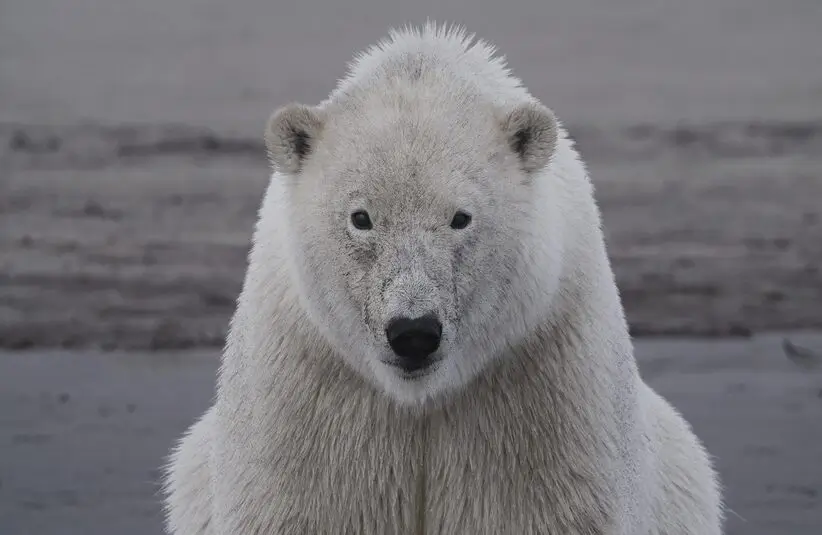
As an icon of Arctic wildlife, the polar bear is one of the most prominent poster species for climate-change activism. However, “Trade Secret,” a documentary that has been screened two times and counting (going back to this past June), aims to blow the whistle on an even more immediate threat to Earth’s largest living terrestrial carnivore: this mightiest of (non-human) predators has fallen prey to an underground market of which even many environmentalists are not widely aware.
A Veteran Environmental Documentarian Still “Shocked” by This Secret
“Trade Secret” is directed by Abraham Joffe, whose previous nature-documentary credits include the series “Our Oceans” (2024) and “Big Cat Tales” (2018-20), as well as the polar-bear-based 2017 short “Ghosts of the Arctic.” It was six years in the making and filmed in nine different countries around the world.
In a December 7 interview with Deadline, Joffe explained that “It took many years and a lot of brave people to do a lot of undercover work… I could never have known the story we ultimately told… I felt as, you know, as a filmmaker, that we had to follow the story wherever it went.” He cited “Hoop Dreams,” a much-acclaimed 1994 documentary that was shot over five years to chronicle the lives of two poor Black teenagers in Chicago, as “the first film I ever saw” and the principal inspiration for the ambition that led him to embark upon the years-long project that was “Trade Secret.”
As for its subject matter, “Trade Secret” had its origin in a trip to the Arctic that Joffe took in 2013; it was on this trip that he learned how “if you have enough money, you can buy a polar bear skin. You can actually go shoot one yourself. I was sort of shocked… as someone who’s worked in a conservation-wildlife realm for so many years, I thought, ‘How do I not know about this?’ But if I don’t know about this… surely the world widely doesn’t know about this.”
Canada: The World’s Only Polar Bear Exporter
In the interview, Joffe cited estimates that the current wild polar bear population numbers between 22,000 and 31,000 animals (the estimate is so wide-ranging, he explained, because of the difficulty of tracking and counting these bears in the wild), that there are wild polar bears in a total of five countries, and that two-thirds of the global population inhabits Canada.
Unfortunately, Canada is also the only country in the world in which the commercial killing and export of polar bears is still legal. The interviewer, Matt Carey, brought up one particularly powerful segment of “Trade Secret” in which the documentarians film “a facility” containing the hides of between 300 and 400 polar bears – even by the most conservative estimate, these slain animals represent nearly one percent of the entire species.
The Polar Bear Trade: A Global Problem
Joffe didn’t discuss at length most of the other information covered in “Trade Secret” – naturally, he wasn’t about to recap the entire documentary to those who hadn’t yet seen it. However, he did feel the need to point the finger at a few non-Canadian countries, as a reminder that those who import and buy polar bear products are just as culpable as the one nation that allows large-scale hunting within its borders. Enter Norway, which has ensured the protection of its own bears since 1973, but is nonetheless a major importer and (indirectly) the second-largest exporter in the polar bear trade.
Another major player in this field is China; Deadline’s video of the interview contains a two-minute clip from “Trade Secret,” in which a covert documentarian named Iris Ho visits a facility where polar bear remains are taxidermized and sold for ¥450,000 – “more than what most people make a year.”
Conclusion – An Urgent Must-See for the Environmentally Concerned
At present, the polar bear (Ursus maritimus) is designated by the International Union for Conservation of Nature (IUCN) as a “Vulnerable” species. This is just one spot removed from “Endangered,” and considering the various pressures that humankind is putting on them, there’s no reason to think that they won’t slide over anytime soon. The ongoing commercial market for these majestic animals poses a serious threat to their future, all the more so because of how few people are actually aware of it. With luck, Abraham Joffe’s “Trade Secret” will be an effective and far-reaching wakeup call.
“Trade Secret,” which was screened at the Sheffield DocFest on June 21 and the Hamptons International Film Festival on October 5, will be shown again at the Palm Springs International Film Festival on January 5, 2026.
