
Iconic and Often Controversial Architect Frank Gehry Dies at 96

It’s a dark moment for the world of both art and architecture. Frank Gehry, the visionary architect who gave us some of the most influential and soul-stirring buildings of our time, has died at the age of 96. His passing was confirmed on Friday, December 5th; he died at his home in Santa Monica, California, after a brief respiratory illness. He leaves behind a world that is immeasurably more beautiful and interesting because of his impressive work.
Frank Gehry Didn’t Just Design Buildings – He Sculpted Designs
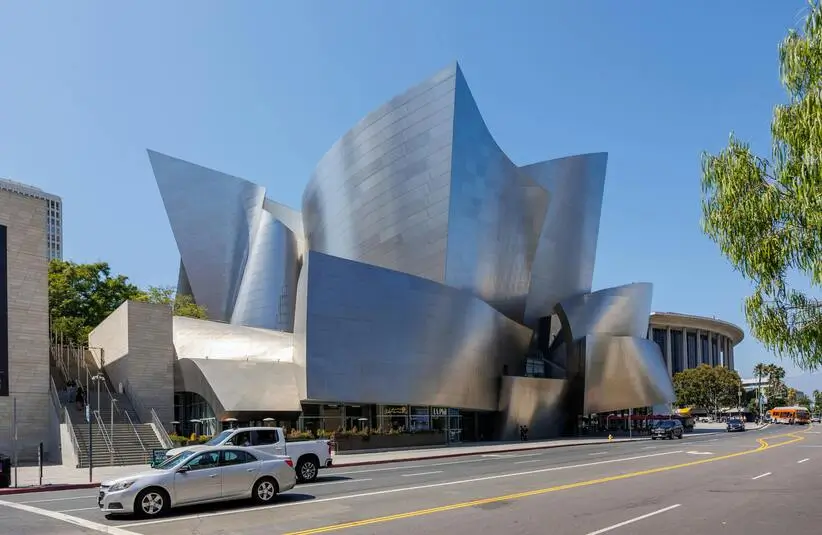
If you’ve ever seen the metallic sails of the Walt Disney Concert Hall in Los Angeles or the titanium waves of the Guggenheim Museum in Bilbao, Spain, then you’ve felt the power of architect Frank Gehry. He wasn’t just building structures; he was sculpting cityscapes; he created stunning landmarks that became living, breathing parts of their communities. His imaginative work was more than just a place to be – it was an experience.
The Man Behind the Structural Masterpieces
Born Ephraim Owen Goldberg in Toronto, Canada, in 1929, Frank Gehry moved to Los Angeles as a teenager. He later changed his name, partly on the advice of his first wife to avoid the sting of antisemitism that was sadly prevalent at the time. After studying at the University of Southern California and at Harvard, his career didn’t take off overnight. He spent time driving a delivery truck and designing more conventional projects before finding the courage to unleash his true creative spirit.
The turning point came when he transformed his own modest bungalow into a radical and unusual statement with chain-link fencing and corrugated metal, accented by exposed wood. It was a risky move, but it was pure, unadulterated Gehry. That same moxie and audacity would eventually shape and define his career. earning him the prestigious architectural Pritzker Prize in 1989.
Frank Gehry’s Global Impact
Gehry’s influence was worldwide. From the mind-bending DZ Bank building in Berlin to the whimsical “Binoculars Building” in Venice, California (now a Google campus), his designs challenged our perceptions of what a building could actually be. He jointly worked with fashion giants like Louis Vuitton and with Tiffany & Co. He even found a kindred spirit in Mark Zuckerberg, who commissioned him to design a campus for Facebook.
Gehry’s work wasn’t without its critics. Some found his disarming and deconstructed style jarring. He famously faced opposition from Dwight D. Eisenhower’s family over his design for the president’s memorial. Yet, he took it all in stride, even parodying himself in an episode of “The Simpsons.” In the show, he designs a concert hall by crumpling up a piece of paper. It’s a playful nod to how some people have perceived his work.
The Legacy of Frank Gehry
When he died, Frank Gehry’s net worth was estimated at around $10 million, but his true wealth lies in the architectural legacy he built. He didn’t just create buildings; he created “places.” His structures have revitalized cities. They continue to draw tourists from across the globe – and inspire awe in those who see and experience them. The Guggenheim in Bilbao, for example, has generated hundreds of millions in revenue for the city. It’s a phenomenon now known as the “Bilbao effect.”
Frank Gehry is survived by his wife, Berta Aguilera, and his three children, Brina, Alejandro, and Sam. He was predeceased by his daughter Leslie, who tragically passed away from cancer in 2008.
Frank Gehry was a true force, a man who saw the world not as it was, but as it could be. He innovatively bent steel and glass to his will, creating fluid, organic forms that feel as though they rose from the earth itself. He showed us that architecture could be art, and that buildings could have a soul. And for that, his spirit will live on in the breathtaking and astonishing skylines which he forever changed.
