Family Activities to Celebrate Kwanzaa with Kids

The holiday season often feels like a blur of wrapping paper, shopping lists, and busy schedules. But when the dust settles after December 25, Kwanzaa offers families a beautiful opportunity to pause, reflect, and reconnect. Running from December 26 to January 1, this week-long celebration isn’t just about lighting candles; it is a vibrant affirmation of family, culture, and community.
For parents, Kwanzaa provides a unique chance to teach little ones about African heritage and the values that build strong communities. If you are looking for meaningful ways to get the whole family involved this year, we have gathered some simple, hands-on ideas. Here is how you can bring the joy of the holiday into your home with these engaging Kwanzaa activities with children.
Understanding the Magic of Kwanzaa
Before diving into the crafts, it helps to set the stage. Kwanzaa comes from the Swahili phrase “matunda ya kwanza,” meaning “first fruits.” It’s a time to honor roots and look toward the future.
You don’t need to be an expert to guide your children through the celebration. The holiday centers on the Nguzo Saba (the Seven Principles): Unity, Self-Determination, Collective Work and Responsibility, Cooperative Economics, Purpose, Creativity, and Faith. The goal is to explore one principle each day, but you can also weave them into fun projects that make these big concepts easier for little minds to grasp.
Get Creative with a DIY Kinara
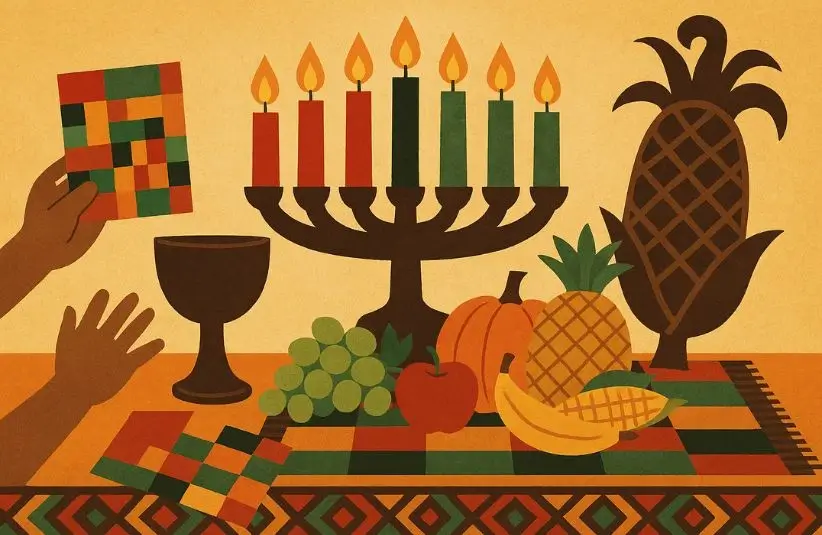
The centerpiece of any Kwanzaa celebration is the Kinara, the candleholder that supports the seven candles (Mishumaa Saba). While you likely have a family heirloom or a store-bought version for the table, letting the kids build their own is a wonderful way to spark their interest.
Clear off the kitchen table and gather some cardboard tubes (toilet paper rolls work perfectly), paint, and tissue paper. Have your children paint three tubes red, three green, and one black. Glue them together with the black candle in the center, the red on the left, and green on the right. You can use yellow tissue paper to “light” a new candle each night. This craft isn’t just fun; it’s a tactile lesson in the holiday’s symbolism.
Weave a Paper Kente Cloth
Kwanzaa colors—red, black, and green—are bold and beautiful, mirroring the vibrant patterns found in traditional African Kente cloth. Introducing your children to this textile tradition is easier than you might think.
Using construction paper, you can set up a simple paper weaving station. Cut a black piece of paper into a frame with slits, and have your kids weave strips of red and green paper through it. As they work, you can talk about how weaving is a lot like a community: individual strands are lovely on their own, but they are much stronger and more beautiful when woven together.
Host a “Karamu” Feast for Kids
The Karamu is the communal feast usually held on December 31, but you can host a kid-friendly version any night of the week. This doesn’t have to be a stressful, elaborate dinner party. In the spirit of Ujima (Collective Work and Responsibility), make the meal a potluck or a family cooking night.
Get the kids involved in the kitchen. They can help shuck corn (Muhindi), which symbolizes the children in the family, or help arrange a fruit bowl to represent the harvest. If you want to make it festive, put on some music and have a dance party in the living room. Celebrating heritage should be joyous, loud, and full of laughter.
Design Meaningful Placemats (Mkeka)
Tradition says the Kinara should be placed on a Mkeka, a straw or woven placemat that represents the foundation of ancestry. This is another perfect opportunity for art time.
Give your children large sheets of paper and markers or crayons. Ask them to draw what “foundation” means to them—maybe it is a drawing of their grandparents, their house, or their friends. Once they are done, laminate their artwork or cover it with clear contact paper. Use these special placemats during your family dinners throughout the week to remind everyone that we build our lives on the foundation of those who came before us.
Practice Giving Back
One of the most touching aspects of Kwanzaa is Ujamaa (Cooperative Economics) and Nia (Purpose). Teach your children that celebration is also about lifting others up.
Instead of just buying gifts, organize a mini food drive or toy drive right from your living room. Have your kids go through their pantry or toy chest to find items to donate to a local shelter. Explain that by helping others, they are strengthening their entire community. If you do exchange gifts (Zawadi), consider focusing on educational books or handmade items that celebrate their heritage, or support Black-owned small businesses to put Ujamaa into practice.
Create a Family Unity Cup
During the Karamu feast, everyone sips from the Kikombe Cha Umoja, or Unity Cup. You can make a special chalice just for the kids using a plastic goblet or a decorated cup. Let them adorn it with jewels, stickers, or ribbons.
When you sit down for dinner, pour some juice or water into the cup. As it passes from person to person, encourage each child to say something they are grateful for or something they love about the family. It’s a simple ritual, but it creates a powerful moment of connection that you will cherish long after the holiday ends.
Making Kwanzaa Memories
Celebrating Kwanzaa doesn’t require perfection; it only requires presence. By engaging in these Kwanzaa activities with children, you aren’t just making crafts—you are making memories and planting the seeds of culture and community that will grow for years to come.