
Winter Strength Training: Simple Routines for Home

It’s wintertime, and many are staying at home, forgoing strength training and other exercises they were once accustomed to when it was warmer. However, you must continue to have a winter workout plan to remain physically active, even if you’re at home.
It doesn’t matter if you don’t have a home gym or any equipment to get started; you can keep your fitness up with home exercises when it’s too cold outside. You want to maintain your agility, strength, and health. Don’t feel you have to be sidelined because you’re at home. Let your home be a place where you remain physically fit and active. Here are six exercises that you can adjust to fit your needs.
Planks
Your posture and core greatly benefit from planks. While lying face down, lift yourself onto your forearms and toes. Then hold your body in this position as long as you possibly can. Planks are highly recommended for strengthening your core. Planks engage your shoulders, lower back, and abdominal muscles, while helping reduce back pain and building endurance. This is helpful if you’ll be sitting during the winter months.
Push-ups
This strength training exercise is great for your winter workout. This upper body exercise strengthens your shoulders, chest, triceps, and core. You can position your body into a plank with your hands flat on the floor, slightly wider than shoulder-width. Next, lower your body, allowing your chest to almost touch the floor, then push up to your original position. If you’re a beginner, you can modify your push-ups by bending your knees. Push-ups are excellent for strengthening your upper body and boosting your metabolism. They’re simple, and you can go at your own pace. As you do this exercise more often, you’ll find a comfortable rhythm.
Squats
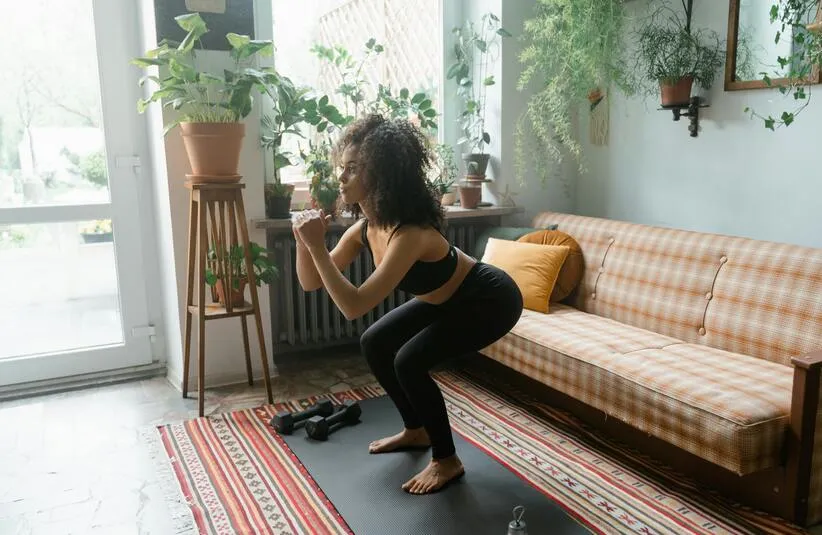
This foundational exercise benefits your core, glutes, and legs. Stand firmly with your feet shoulder-width apart. Then lower your hips as if you were sitting in a chair. Keep your back straight as you return to the first position. This strength-training exercise improves flexibility, helps maintain mobility, and builds lower-body strength, even in the colder season.
Jumping Jacks
This simple cardio exercise stimulates different muscle groups. Stand with your feet close together, with your arms gently at your sides. Then jump as you spread your feet and raise your arms overhead. Then jump back to your starting position and repeat. Jumping jacks help boost your heart rate and warm up your body. It’s a simple strength training exercise for your indoor winter workout. Jumping jacks are doable because of their simplicity and jump-in-place movement.
Lunges
For this strength training exercise, you’re targeting your calves, glutes, hamstrings, and quadriceps. Take a step forward with one leg, then lower your hips as both knees bend forward at about 90 degrees. Then push up to your beginning position. Alternate between both your legs to improve coordination, balance, and lower-body strength, making lunges an excellent winter workout. Lunges are a great alternative to leg weight machines; they’re natural and more effective.
Chair Dips
You’ll need a sturdy chair for chair dips, which help strengthen your arms and shoulders. This is an effective exercise that begins with you sitting on the edge of your chair. Then, while placing your hands next to your hips and bending your elbows to lower your body, push back up. This strength training move helps tone your shoulders and triceps with just a chair for support. It’s important to stay toned during the winter, and you can do this exercise anywhere.
Conclusion
Cold weather isn’t an excuse to skip physical activity when you can do squats, planks, push-ups, jumping jacks, lunges, and chair dips right at home. These six exercises or a combination of them don’t require any gym equipment. They can easily fit into your daily routine because you don’t need much space. You can maintain your flexibility, strength, and overall health with these strength-training exercises for the best winter workout plan ever.
Disclaimer: The information provided in this article is intended for general informational and educational purposes only. It should not be taken as professional medical advice, diagnosis, or treatment. Always consult with a qualified healthcare provider before beginning any new exercise program, especially if you have existing health conditions or concerns.
