
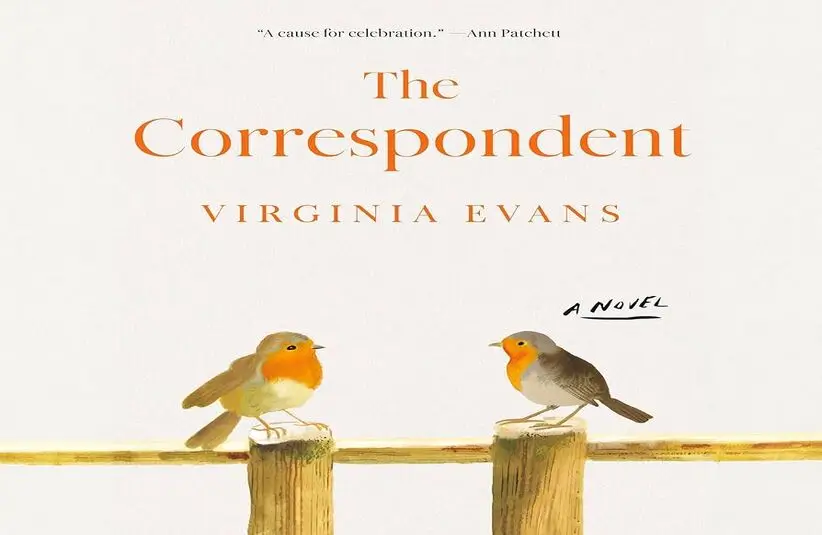
“The Correspondent”: The Breakout Novel With Readers Obsessed — Here’s Why

We all love a good underdog story. There is something so undeniably special about watching someone chase a dream for decades, facing rejection after rejection, only to finally cross the finish line when they least expect it. That is exactly what happened to Virginia Evans, the author behind the runaway hit novel, “The Correspondent”.
If you haven’t heard of it yet, you’re in for a treat. It’s the kind of book that feels like a warm cup of tea on a rainy afternoon—comforting, thoughtful, and quietly powerful. But the story of how it came to be is just as compelling as the novel itself. It involves a closet, a global pandemic, and a whole lot of resilience.
A Novel Born in the Darkest of Times
Let’s rewind a few years. Imagine hitting what feels like rock bottom. You’ve spent nearly twenty years trying to get published, moving your family across the ocean to Dublin to pursue a creative writing degree, only to come back home empty-handed. That was the reality for Evans.
It was 2020. The world was in lockdown, her father-in-law was ill, and the weight of disappointment was heavy. Evans found herself writing not in a sun-drenched office, but in a bedroom closet. It was there, amidst the coats and shoes, that she began to pour her grief and frustration into a new story. She wasn’t writing for an audience anymore; she was writing to survive.
The result was “The Correspondent”, a beautiful epistolary novel—meaning it’s told entirely through letters. It follows Sybil Van Antwerp, a spirited 70-something woman from Maryland who chronicles her life through correspondence. It wasn’t flashy, and Evans didn’t even plan to show it to anyone. It was simply an exercise in healing.
Why Readers Are Falling for The Correspondent
When the book was finally published in April, it didn’t explode onto the scene with fireworks. There were no celebrity book club stickers on the cover initially, and it wasn’t a viral sensation on TikTok. For a while, it was quiet.
But then, something magical happened. The book started to find its people.
Readers began discovering Sybil’s voice and falling in love with the intimate, old-fashioned art of letter writing. It turns out, in our fast-paced digital world, we are all craving connection. “The Correspondent” offers exactly that. It’s a reminder of the power of words and the importance of reaching out to one another.
Celebrated author Ann Patchett, who knows a thing or two about great storytelling, called the book a “unicorn.” She noted that while novels told in letters are rarely blockbusters, this one was special. “The only thing that sells a book is one person reads it and tells two others to read it,” Patchett said. And that is exactly what happened here.
A Sleeper Hit That Defied the Odds
By October, months after its quiet release, “The Correspondent” had climbed its way onto the bestseller lists. Barnes & Noble named it one of the best fiction books of 2025, and it is now in its 14th printing.
It is a rare feat in the publishing world, where books usually have a short window to make a splash. But this novel’s slow-burn success proves that quality still wins out. Readers are smart—they know when a story has heart.
For Evans, the success has silenced the doubts that plagued her for years. She told the Wall Street Journal that the “noise” of failure and disappointment is finally gone. It’s a poignant reminder for all of us: just because your dream hasn’t happened yet, doesn’t mean it never will. Sometimes, the most beautiful things are created in the quietest, darkest moments.
Is “The Correspondent” Your Next Read?
If you are looking for a book that celebrates the resilience of the human spirit, this is it. Whether you are a lifelong fan of fiction or just looking for something to lift your spirits, Sybil’s letters might be just what you need.
So, next time you’re at your local bookstore, keep an eye out for “The Correspondent”. You won’t just be buying a book; you’ll be holding proof that it is never too late for a second act.
