
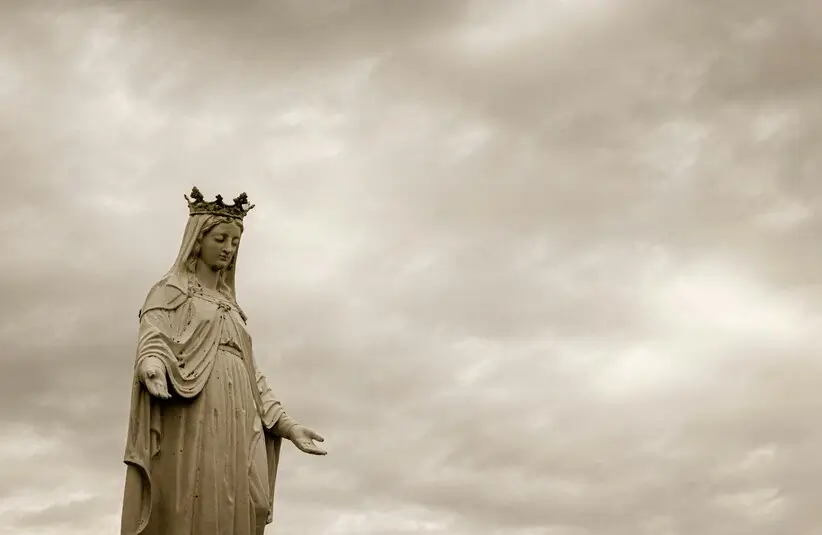
Mary Said Yes To God 2,037 Years Ago and Changed the World, and it Doesn’t Matter What You Believe!

Mary said yes to God 2037 years ago when the Angel Gabriel came to her and told her she would bear a child and should name him Jesus. It does not matter what you believe. If you are Catholic, you believe Mary was a Virgin and Jesus came to redeem the world. If you are a Christian, you probably believe Jesus came to save the world, and Mary was his mother. If you are agnostic, you believe none of this, but historians agree that Jesus existed, and Mary was his mother. Millions have died in wars about him; they are still dying today. Do you think Mary saying yes to God is the most important event in human history?
Dogma of the Immaculate Conception
Catholics must attend Mass on Monday, December 8. The Feast of the Immaculate Conception commemorates when Mary said yes to God’s messenger, the angel Gabriel. A little Dogma on what Catholics believe is in order. The Immaculate Conception is the doctrine that the Virgin Mary was free of original sin from the moment of her conception. It is one of the four Marian dogmas of the Catholic Church. Mary’s Immaculate Conception was not defined as a dogma until 1854 by Pope Pius IX.
Some History
The Immaculate Conception may have only been declared a Dogma in 1854, but the idea has been around for a long time. According to a church historian named Frederick Holweck, in the Catholic Encyclopedia, Justin Martyr, Irenaeus, and Cyril of Jerusalem developed the idea of Mary as the New Eve, drawing comparison to Eve, while yet immaculate and incorrupt – that is to say, not subject to original sin.
Saint Ambrose asserted Mary’s incorruptibility, attributing her virginity to grace and immunity from sin. Severus, Bishop of Antioch, concurred, affirming Mary’s purity and immaculateness. John Damascene extended God’s supernatural influence to Mary’s parents, suggesting they were purified by the Holy Spirit during her generation. According to Damascene, even the material of Mary’s origin was deemed pure and holy. This perspective, which emphasised an immaculate active generation and the sanctity of the conceptio carnis, found resonance among some Western authors. Notably, the Greek Fathers did not explicitly discuss the Immaculate Conception.
The idea of the Immaculate Conception remained popular in the medieval ages. By the 4th century, the idea that she was free from sin became widespread, but original sin raised the question of whether she was also free of the sin passed down from Adam. The doctrine of the Immaculate Conception caused an actual civil war between Franciscans and Dominicans during the Middle Ages, with Franciscan ‘Scotists’ in its favour and Dominican ‘Thomists’ against it. In 1439, the Council of Basel, in schism with Pope Eugene IV, who was at the Council of Florence, declared the Immaculate Conception a “pious opinion” consistent with faith and Scripture
Why This is Important
It was, thus, only a matter of time before a Pope declared the Immaculate Conception as Dogma. This is important because two billion Catholics believe in the Immaculate Conception. This is also important because wars were fought over the idea. It is also important because her son, Jesus, was the most influential person in human history, and millions have died in wars fought over him. It does not matter whether you believe that these events happened is a fact.
Conclusion
The feast of the Immaculate Conception is a Holy Day of Obligation for Catholics. That means they have to go to church. It is the commemoration of her being impregnated by God, at least that is what Catholics believe. Even if you do not believe, there is no denying that Jesus existed, Mary was his mother, millions have died in wars fought in his name, as Jesus is the reason for Christmas.
